PMA says foundations of public health in Sindh completely neglected in budget allocations
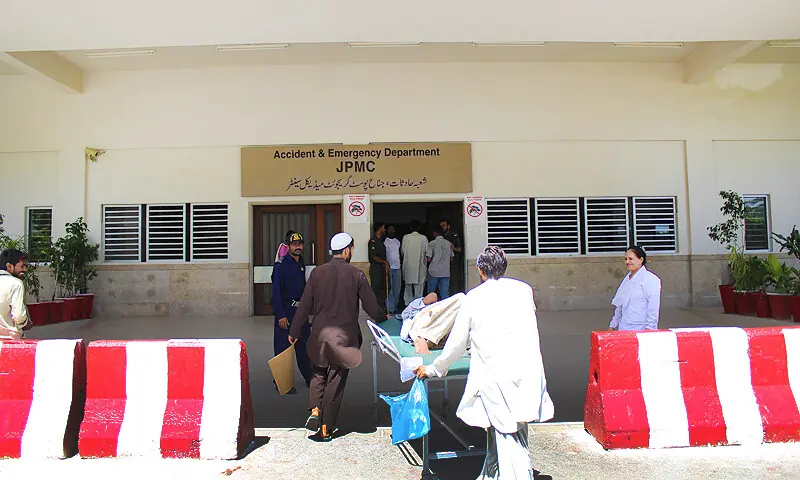

KARACHI: The Pakistan Medical Association (PMA) has issued a critical review of the newly announced Sindh health budget allocation of Rs393.16 billion for the financial year 2026-27.
A statement issued by the PMA said that while the provincial government continues to showcase multi-billion rupee grants to select non-governmental organisations (NGOs), public-private partnerships, and autonomous specialised bodies, it is concerning that the foundational pillars of public health — disease prevention and primary healthcare — have been “completely neglected.”
A deep dive into the budgetary allocations indicates a structural crisis where a massive portion of the overarching public health fund continues to be swallowed by recurring administrative affairs, bureaucratic overhead, and bloated salary setups, rather than delivering active patient care, vaccines, or grassroots wellness, it added.
The PMA said the budget heavily favours centralised urban curative setups by funnelling large-scale grants into specialised treatment. A massive portion of funding goes toward mega-grants for non-governmental institutions to provide treatment.
While these treatment service providers perform essential functions, the PMA pointed out that no one is actively working on public health or the baseline prevention of disease. Treating advanced ailments after they reach tertiary-level medical setups is an unsustainable and financially catastrophic model.
“It is highly tragic that the government’s primary budget strategy relies heavily on outsourcing its core responsibilities to public-private sectors and NGOs. While specialised curative centres are doing commendable work, where is the vision for public health? Where is the budget for preventing waterborne diseases, malnutrition, polio, tuberculosis, or maternal-fetal crises at the early tiers? We are building massive hospitals while letting our basic healthcare foundations rot.”
PMA emphasised that neighbouring countries have achieved stellar health metrics not by building massive hospital networks, but by ring-fencing budgets for primary-tier facilities and grassroots public health frameworks. It added that Sri Lanka and Thailand did so by channelling consistent public funding to sub-district health units and preventive primary care packages, and they successfully reduced maternal and under-5 mortality rates to the lowest in the region, keeping tertiary hospitals from system collapse.
Bangladesh capitalised on over 14,000 localised community clinics focusing strictly on basic immunisations, nutritional security, and maternal monitoring yielding massive health indicator improvements at a fraction of the cost.
Similarly, said the PMA, Iran built a universally acclaimed Primary Health Care (PHC) network utilising rural “Health Houses” and trained community health workers (Behvarz). This strict primary framework drastically cut rural-urban health disparities, elevated vaccination coverage, and rapidly lowered infant and maternal mortality indicators across the nation.
The PMA highlighted that the heavy skew toward localised mega-grants in urban centres completely sidelines the vast network of Basic Health Units (BHUs) and Rural Health Centres (RHCs) across Sindh.
Published in Dawn, June 19th, 2026