
Dads scold us, ignore us and give us the look that ends all arguments — but we love them anyway. That’s just the dad way.
Whether it’s a human dad, an animal dad, a bird or a bug dad, all these fathers have their peculiar parenting skills. Nature is full of amazing stories of dads who go to the ends of the earth for their tots and also, tragically, the ones who don’t even remember if they have any kids.
In honour of Father’s Day, here’s our roundup of the best and worst dads in the wild. The list was too long, but we have narrowed it down to a few. Let’s have a quick read!
GENDER EQUALITY
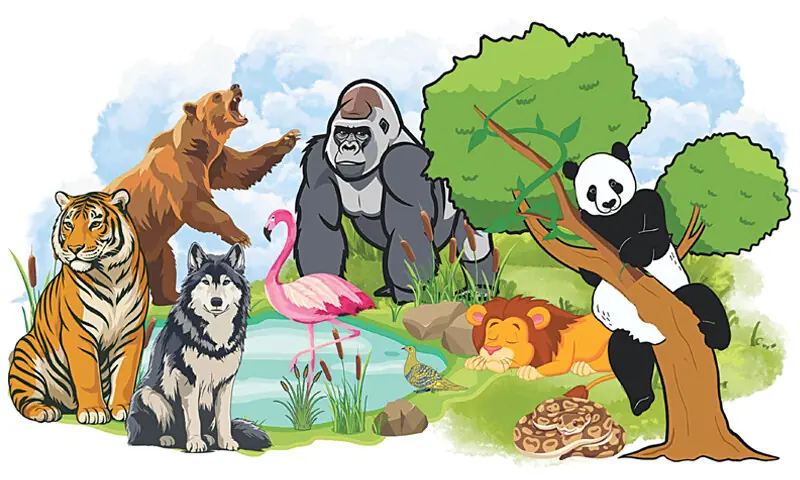
The flamingo: Both parents build the nest together, which takes up to six weeks. Then they take turns sitting on the egg, keeping it warm and keeping it safe for around 27 to 31 days. When the chick comes out, both parents produce a milk-like substance from their digestive systems and feed it to the baby. No one rests; both parents are on duty.
The gorilla: A silverback leads a group of up to 30 gorillas and is responsible for finding food for all of them. But what’s surprising is how gentle he is with the little ones. An animal that is so huge and looks aggressive is actually the opposite.
Gorilla dads are known to let their infants climb on them, play most irritatingly and even sleep on them. One of the cutest and most admirable traits of the gorilla is that it eats with the mother first before the rest of the group, which, in gorilla terms, is a sign of respect.
Red fox: Red foxes do their duty differently. When the cubs are born, the mother stays in the den because the cubs need constant warmth and feeding. The father goes out and brings food back every four to six hours for the mother and the babies. He does this for months. And if the mother dies or disappears, the father doesn’t leave; he raises the cubs alone until they can survive on their own.
LOYALTY AND PROTECTION
The grey wolf: When it comes to loyalty, I found a few animals and birds like the albatross, the bald eagle and a couple more, but the grey wolf stood apart from all. Because a wolf doesn’t just show up for his pups. He shows up for everything.
When the pups are born, they are blind, deaf and weigh barely a pound. The mother stays in the den with them and doesn’t leave. So the father hunts alone and brings food back for her every single day until she can move around again.
The father also patrols the territory constantly, keeping rival packs away. But what separates the grey wolf male from most other animals is that they pair up for life and, secondly, they adopt orphaned pups that aren’t even their own. The grey wolf raises them anyway, the same way he’d raise his own. The wolf is one of the best dads in the animal kingdom.
SINGLE DADS
The seahorse: The female transfers her eggs into a pouch on the male’s body, and her job ends there. He carries them. He gives birth to hundreds and sometimes over a thousand babies at once. Everything after that is the father’s duty.
Darwin’s frog: It has the same level of commitment. The mother lays eggs on plants and leaves. The father stays and watches over them. When the eggs turn into tadpoles, he scoops them into his large vocal sac, keeping them safe from predators until they are fully developed. And when the time comes, he opens his mouth and the babies hop out.
SACRIFICE
The emperor penguin: Antarctica, where temperatures drop to minus sixty degrees, is already a terrible place to raise a baby. The female emperor penguin lays the egg, hands it to the father and leaves for the sea. The father balances the egg on his feet, tucks it under a flap of warm skin on his belly and stands there — for two months, at least! No food, nothing to do.
He shuffles into a huddle with other penguin fathers when it gets unbearable; they take turns standing on the outside so no one freezes alone. By the time the mother comes back, he’s lost almost half his body weight. And if the chick hatches before she makes it, he feeds it himself, producing something milky from his throat.
The sandgrouse: This small bird lives in the desert, so there’s no water anywhere near the nest and the chicks need it to survive. So the father flies out to find some. Sometimes that’s 50 miles away. He gets there, dips his chest into the water and soaks his feathers like a sponge, then flies the 50 miles back. The chicks drink straight from his chest. He does this over and over. A hundred miles of flying through desert heat, carrying water in his feathers, because this is the only way to survive.
Mouth-brooding fish: Like Darwin’s frog, several species protect their eggs by holding them in their mouths after fertilisation. The father of the mouth-brooding fish cannot eat while the eggs are in his mouth. He just holds them, keeps them safe and waits. No matter the exhaustion and starvation, he lets them out only when he realises they are developed enough to swim freely.
BULLIES
The lion: Notorious for being lazy and aggressive, the lion spends most of his day lying in the shade. The females hunt and raise the cubs. When food arrives, the male eats first and often leaves barely anything for the cubs.
The grizzly bear: This dad is the worst. Male grizzlies will kill cubs, sometimes their own, sometimes others’. It sounds senseless, but biologists believe it’s about proving that they are in control.
The sea bass: The sea bass starts off as a decent chap. He builds a nest, guards the eggs and protects them from predators. Then the eggs hatch, most of the young swim away and very few stay behind. So when hunger hits the dad, he eats the ones that are left. Yes, the same eggs he protected for weeks become his meal!
THE INDIFFERENT ONES
In the animal kingdom, the indifferent dads are so common that the full list would fill a book. So, we selected a few carefully. These dads have nothing to do with their kids. These fathers aren’t violent, but they’re completely uninterested.
Pandas: Male pandas have zero interest in parenting. The mother takes care of the cub by feeding it, protecting it and teaching it everything. The father simply continues his life as if nothing had happened.
Tigers: The behaviour is the same across all tiger subspecies: the Bengal, Siberian, Sumatran and white tiger. They prefer being solitary. The tigress raises the cubs entirely alone for two to three years. The father never returns. He may not even know the cubs exist.
Python: Here is the same story. The father is nowhere in the picture; it is the mother that coils around the eggs for months without eating, keeps them warm through the night, and stays with the babies for two weeks after they hatch.
The animal kingdom doesn’t give out Father of the Year awards. But if there were any, the grey wolf would win the contest. And the sea bass would have a hard time explaining himself.
Published in Dawn, Young World, June 20th, 2026