Ginners foresee downward spiral in cotton sector
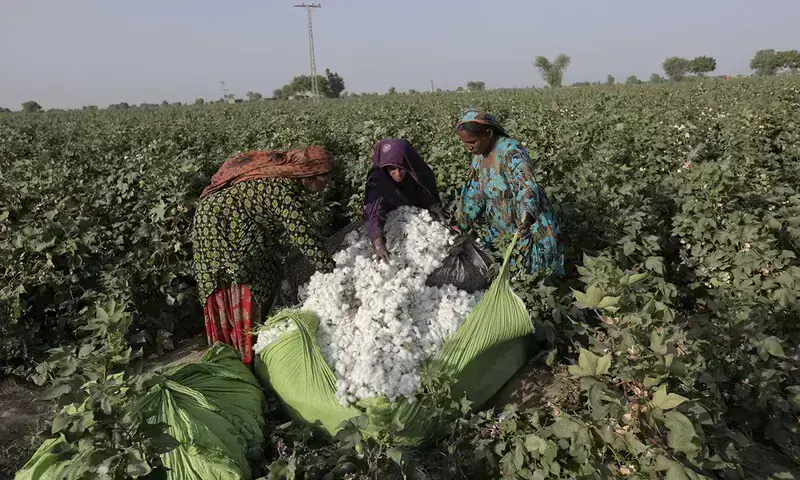

LAHORE: The cotton market crashed during the last four consecutive trading sessions, shedding up to Rs2,500 per maund, following the federal government’s failure to introduce much-needed fiscal reforms for the cotton ginning and textile sectors in the federal budget 2026-27.
Market sources warned of a further downward spiral in the coming days, triggering a wave of anxiety across the textile supply chain.
Representatives of the sector have demanded urgent cuts in sales tax, income tax, and electricity fixed charges before the passage of the finance bill.
The Karachi Cotton Association (KCA) slashed its spot rate by Rs2,000, bringing it down to Rs19,500 per maund. The situation in the open market was even bleaker, where prices plummeted by up to Rs2,500, dragging cotton rates down to Rs20,000 per maund in Punjab and Rs19,000 per maund in Sindh.
Speaking to Dawn, Cotton Ginners Forum Chairman Ihsanul Haq revealed that the cotton ginning sector was currently burdened with an aggregate sales tax of over 86 per cent. He claimed that ahead of the budget announcement, high-ranking federal officials had assured the industry that sales tax on two primary sectors of ginning would be abolished, alongside major relief across other heads.
“The complete omission of these assurances in the federal budget has sent shockwaves through the market,” he added.
Beside the heavy sales and income tax regimes, recent exorbitant hikes in electricity fixed charges have pushed ginners into a severe liquidity and economic crisis.
Haq warned that excessive taxation was rapidly forcing the sector toward informal channels.
“The heavy tax net is driving undocumented business within the ginning industry, which ultimately bleeds the national exchequer,” he noted.
The market crash is compounded by adverse weather conditions across cotton belts. Industry experts fear a drastic drop in total domestic production due to record-breaking heatwaves in some regions and erratic rainfall in others.
Regional developments are expected to further depress local prices. Following a de-escalation in the Iran-US friction, the anticipated reopening of the Strait of Hormuz maritime route is likely to ease global shipping, potentially accelerating cheaper cotton imports.
Trade circles indicate that Beijing-led diplomatic efforts to fully operationalise the Pak-Afghan border could soon see an influx of 300,000 to 400,000 bales of Afghan cotton into the domestic market, adding further bearish pressure on local cotton rates.
Published in Dawn, June 18th, 2026