0
0

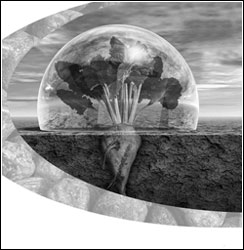 ONE third of the 130 million tons of sugar production worldwide is derived from sugar beet while the remaining from sugarcane.
Sugar beet is grown in cold climate, mostly in Europe, the US, Russia and Turkey, while the sugar crop in warm, humid and tropical/sub-tropical climate as in Asia, Africa, Australia and South America. In Pakistan, only one per cent of sugar is obtained from sugar beet (mostly grown in the NWFP), and the rest 99 per cent from cane.
Three out of five sugar mills in the NWFP are processing sugar beet which is done soon after the cane crushing ends. The unused bagasse left after cane processing is used as fuel thus keeping the production cost of sugar beet down.
The government on realizing a serious sugar shortage in future began to consider replacing the cane crop with sugar beet as it is a low delta crop requiring less water and takes less time for maturity, with high recovery rate along with minimum liability of insects/pests attack on the crop.
Keeping in view these factors, the ministry of food and agriculture began advocating sugar beet cultivation, particularly in Sindh where the climate is favourable. It was also considered because a second crop could be raised after beet. As a result of this campaign, the farmers along the Badin coastline in Sindh took interest and initiated this crop.
In 2002, it was reported that the crop grew successfully on 1200 hectares with an expected yield as high as 800-1000 maunds (of 40kg). The press also reported that a mill manufacturing sugar from it has also been set up in the vicinity. This created an excitement among those concerned with the agriculture development. But there were others who were of the view that although crop could be grown successfully, but it might (or would) not help in reducing the area under sugarcane because processing of sugar beet was considered to be possible and economical only in conjunction with or as a supplement to, sugarcane processing.
Taking note of these views, President of Pakistan set up a Committee with his Advisor on food and agriculture as its Chairman with representatives from the concerned ministries, provincial governments and other stakeholders.
The Committee visited Badin and the mill there along with the provincial minister of agriculture and submitted its report in January 2003 to the President with the following recommendations:
i) Sugar beet can be grown successfully in Sindh and in some parts of Punjab with less water. The Committee however felt that more research in terms of agronomic practices, insect attack, ‘shelf-life’ of the produce, cost of producing sugar from beet, etc., was needed to confirm the results before launching a full-scale campaign.
ii) This exercise should look into the impact of sugar beet cultivation on wheat area as both these crops are likely to compete for water and land, particularly in southern Sindh where sugar beet can be grown more favourably.
iii) To market the crop, a sugar beet processing plant needs to be set up exclusively but which is uneconomical because fuel cost will make production much higher as against cane processing. The issue is discussed in its report based on a detail exercise carried out by the Advisory Cell of the ministry of industries.
iv) But if the saving of water is not an objective in shifting cropping pattern then, as recommended by the Advisory, sugar beet-processing equipment could be added to sugar mills. It would be economical if the capacity of such equipment is of 2,000 to 2,500 tons per day.
v) Under existing conditions, sugar beet processing plant is only feasible if operated as a supplement to cane. The surplus bagasse can be used in keeping down sugar production cost. It should be carefully considered whether the objective of reducing area under sugarcane could be achieved.
vi) It was advisable that before launching a campaign one or two mills in each province should be selected as a basis for experiment for which the government should provide necessary incentives.
vii) To keep the cost of installing additional equipment low, the possibilities of importing second-hand equipment from Poland or some other countries like Spain can also be explored.
The committee submitted the above mentioned report to the President’s office in January 2003. Soon thereafter, the then minister of food and agriculture along with the Cane Commissioner went to East European and other countries to study sugar beet cultivation and a sugar industry based on this crop.
They must have obtained knowledge on it. The questions which arise are:
i) What are the recommendations of the group as a result of its visit abroad as they must have got deeper knowledge of the issue? Will it help all those interested in the subject?
ii) To what extent do these recommendations differ from, or, are a supplement to those made by the committee set up by President.
iii) As a result of the findings so far, what is the policy of the government in connection with the cultivation of sugar beet? This issue is important in view of water shortage?
iv) If the policy is to reduce area under cane, what measures need to be taken to accomplish it, keeping in view the future of the existing around 78 mills – more so when further four are reported to be set up in the Punjab and its impact on wheat cultivation?