Middle East war fuels global hunger crises: WFP
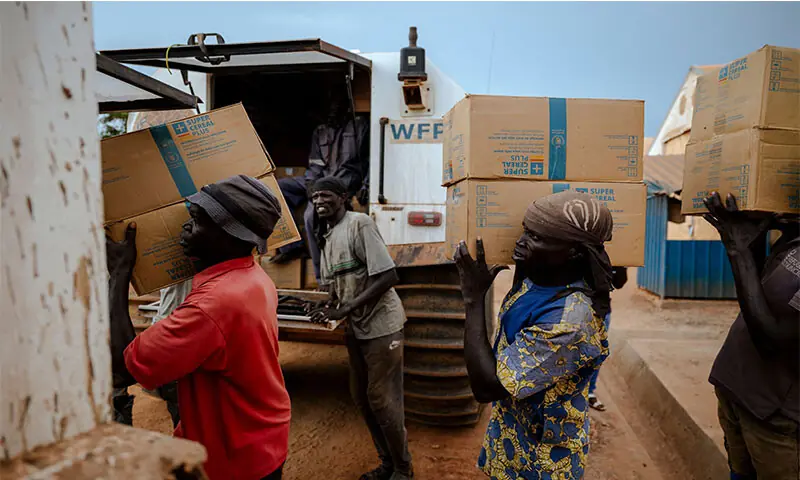
GENEVA: The Middle East conflict is pushing millions of people closer to hunger, as rising fuel and transport costs drive up food prices while funding shortfalls force aid agencies to scale back assistance, the UN World Food Programme said on Friday.
Joint US-Israeli strikes on Iran in February triggered a regional conflict stretching across the Gulf and into Lebanon, disrupting key shipping routes, including the Strait of Hormuz, forcing vessels to reroute and sharply constraining global energy flows and supply chains.
In March, the WFP forecast as many as 45 million people could fall into acute food insecurity if oil prices remained around $100 per barrel through June. That scenario is now unfolding, the agency said, with benchmark crude prices staying above that level since early March.
Households in Afghanistan, Somalia and Sri Lanka are among the most seriously affected and face mounting pressure due to higher fuel costs, food price spikes, income losses and disrupted trade.
In Somalia, 6.5m people — roughly a third of the population — are expected to face severe hunger in 2026, while Afghanistan could see 17.4m people affected, the WFP said.
The situation is projected to worsen, with an additional 2.5m Somalis and 2.3m Afghans at risk of falling into food insecurity if disruptions persist. Both countries are reliant on imported energy and food.
‘Very vulnerable children’
The Middle East crisis comes amid a deep funding shortfall for aid agencies. The WFP said it expected to serve 1.5m fewer people globally in 2026, and 9m fewer if the situation persists for six months.
In Somalia, supplies of nutritious food for children under 5 suffering from moderate malnutrition will run out as soon as July, as the WFP faces an 89 per cent funding gap in the country.
“We are running out of food. The food is not available for distribution, and the ones who will experience the impact of this are going to be very vulnerable children,” said Jean-Martin Bauer, the director of WFP’s Food Security and Nutrition Analysis Service. The situation is being worsened by supply chain issues, with fewer ships stopping in Somalia.
Published in Dawn, June 6th, 2026