US, South Korea in talks over commander's remarks that drew sharp criticism from China
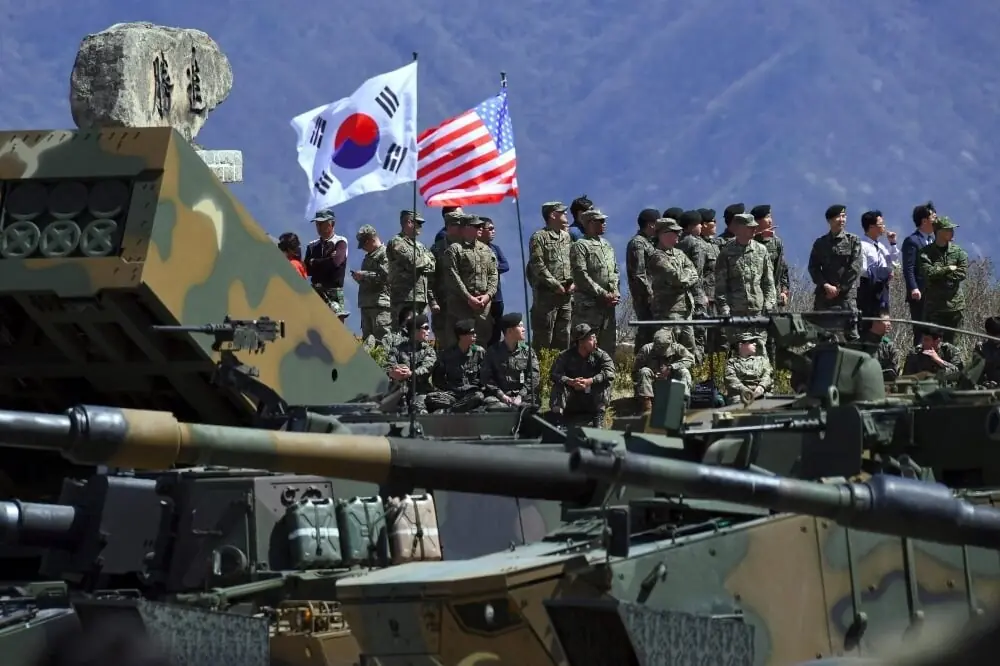
South Korea and the United States are in talks over recent public remarks by the commander of US Forces Korea (USFK), Seoul’s presidential office said on Saturday, after the comments drew sharp criticism from China.
In a recent podcast interview, Xavier Brunson described South Korea as “the dagger in the heart of Asia” from China’s east coast, prompting the Chinese embassy in Seoul to say this week that he had “truly crossed the line”.
The interview came amid growing speculation that Washington may seek to expand the role of USFK in countering the growing regional influence of China, a key ally of North Korea and Russia.
Brunson last year also underscored South Korea’s strategic value in the broader Indo-Pacific, describing the US ally as a “fixed aircraft carrier” in the region, Yonhap reported.
South Korea’s presidential Blue House said on Saturday that it was “aware of Commander Brunson’s recent series of public remarks” and that Seoul and Washington “have been maintaining communication at various levels regarding all relevant issues”.
South Korea’s local media outlet News1 said the presidential office complained to the US over the remarks, while broadcaster JTBC reported that such concerns had been raised 10 times previously.
The Blue House said it was “unable to confirm the specific details of the discussions held through diplomatic and security channels between South Korea and the United States”.
“When they (the Chinese) look out from the east coast of China, what they see is there’s Korea, the dagger in the heart of Asia,” Brunson said, according to a transcript posted on the Strategic Studies Institute of the US Army War College.
Then there’s Japan, he added, “sort of that shield that’s sort of a backstop, if you will, for them trying and their ambitions beyond that into the South China Sea and then down to their southeast is the Philippines”.
The Chinese Embassy in Seoul said Brunson’s comments “truly crossed the line”, and asked the USFK commander: “Are your remarks rife with hostility and aggression regarding China authorised by Washington?”
“By calling your host nation an ‘aircraft carrier’ or ‘dagger’ or other such instruments of war, are you merely showing your own belligerence, or are you seeking to use another country as a pawn?” an unnamed spokesperson said, according to a transcript posted on the embassy’s website on Friday.
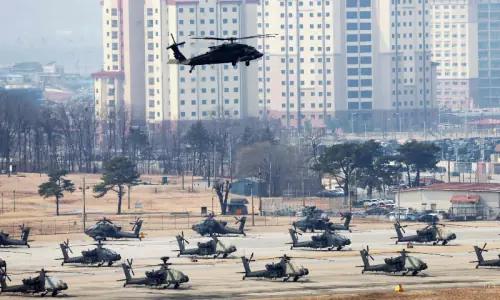
About 28,500 US troops are stationed in South Korea to help guard against the nuclear-armed North.