Takwaan is the last hamlet of the Chakwal district, located at the border with Jhelum in the striking landscape of the Salt Range. A stony trail near its dried pond zigzags into the heart of a jungle known as the Kussak Reserve Forest. The ridge that descends into this forest houses the crumbled Kussak Fort on its right flank—once the bastion of Janjua rulers, where Ranjit Singh had to wage a tough battle —while on the far left nestles the Pir Chambal Shrine, which is frequented by those suffering from psoriasis.
The site located at the centre of this forest is called Chunala, where a stretch of land denotes that it was ploughed in the past. The deep silence of the jungle is broken only by the chimes of the bells hanging from the necks of goats grazing in the woods, and by the chirping of birds.
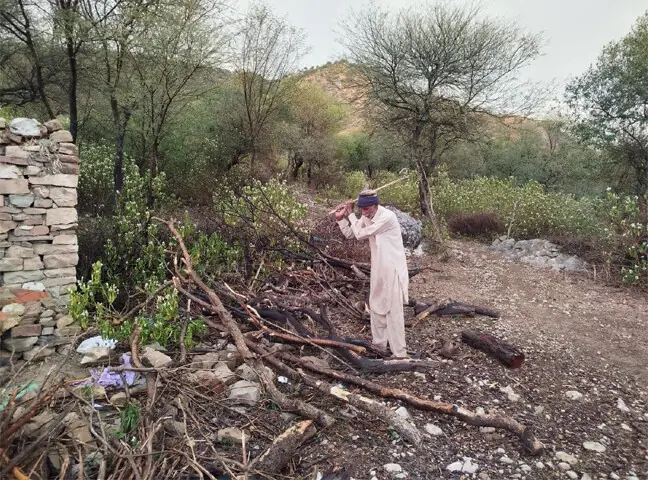
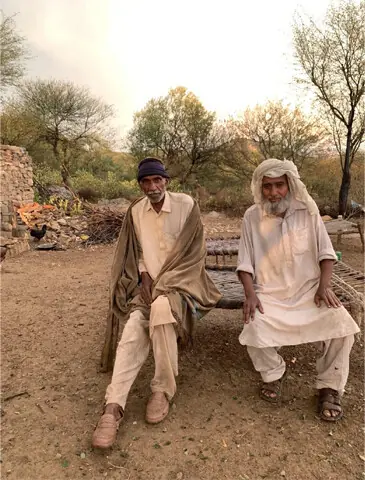
As one approaches Chunala after a forty-minute walk, three dogs with their barks try to shoo the unusual visitors away. They belong to Mohammad Haneef, 67, and Mohammad Rafique, 65, two elderly brothers from Khewra who live here alone, leading a secluded but content life.
Unlike the characters who are constantly praying and meditating in Tolstoy’s The Three Hermits, Haneef and Rafique lead a laborious life.
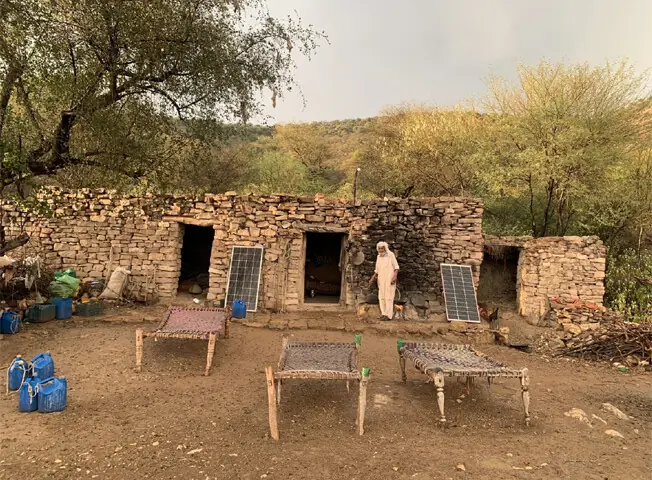
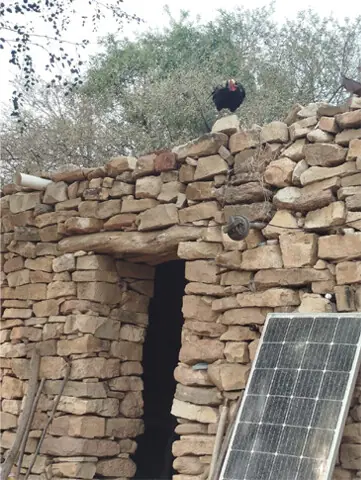
Three rooms have been built here with local limestone and wooden ceilings. Two of the rooms contain charpoys and everyday household items. Along the wall of one room lie two solar panels, which are enough to power two or three bulbs and charge mobile phones. On a charpoy laid out in the room, there is a radio which keeps the two brothers abreast of what is happening in the outer world. In the corner of the courtyard, a ‘tandoor’ is installed, while gallons of water are placed next to a nearby tree. Four or five pairs of nightingales, a rufous treepie (also called ‘Takka Chor’ and ‘Mataa’ by locals) along with several other birds can be seen perched on the high branches of the tree.
“Our great-grandfather Lal Khan and his brother Lahore Khan were employees at the Khewra Salt Mines, and the British government gave them 165 kanal of land here,” Haneef tells Dawn.
Many other miners also got land here, but they left the place long ago, finding it hard to survive in the jungle. Their father, Muhammad Latif, was born in this very wilderness, where he sired eight sons. Three have passed away, while three others now reside in Khewra. Yet the eldest, Haneef, and his younger brother, Rafique, have clung to their ancestral land for the last many years. Though both men are widowers, their sons are well-settled in Khewra and keep asking them to relocate to the town, but to no avail. Their grandchildren occasionally visit them, briefly stirring the stillness.
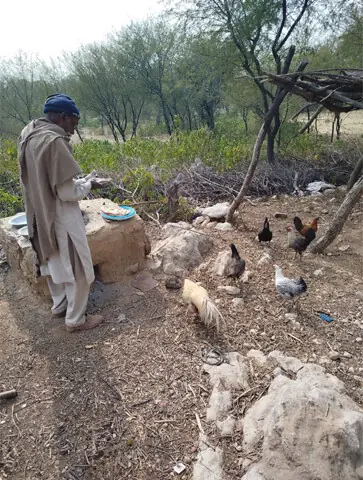
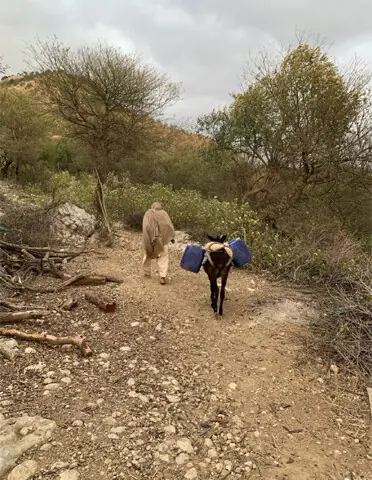
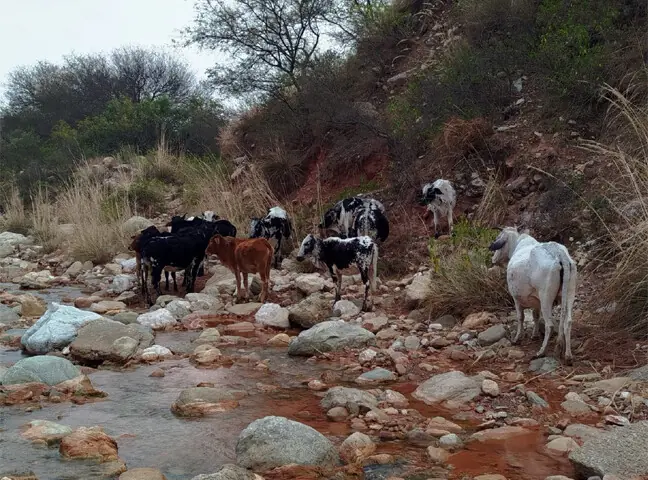
To eke out a living, the two brothers rear almost 30 goats, about a dozen cows, and a flock of a hens, guarded by their three dogs. They also have a few donkeys on which they fetch water from a nearby spring on the mountain.
At dawn, one brother takes the goats for grazing while the other prepares meals at home and handles other domestic chores. However, the cows remain in the forest. Only the lactating cow, which has a calf back at home, comes back in the evening, and it is her milk that makes tea and lassi for both brothers and their occasional visitors. The other cows appear once every four or five days, spend a single night at the dera, and vanish into the jungle in the early morning.
Wolves, which disappeared from the Salt Range long ago, are now being reported again, and Haneef and Rafique claim that a few of their goats had been preyed upon by wolves just a few months ago. Wild boars rarely attack cattle, but these two brothers say that a giant wild boar killed their goats a month ago by thrusting its tusks into their bellies.
“Till 1997, we used to cultivate our land, but in 1997 I went to Saudi Arabia while my elder brother’s knee developed a problem,” tells Rafique, who adds that both brothers resettled here in 2013.
“We have no worries here. The only problem which we face is the scarcity of drinking water. The government can redress it, but why should it do it for just the two of us and the wild animals and birds?” says Haneef in a gloomy tone.
Published in Dawn, May 25th, 2026