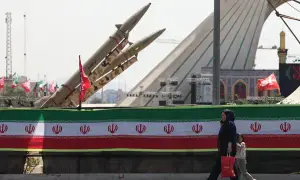
PAKISTAN is enjoying a rare ‘sunny’ moment thanks to its success in last May’s conflict and its current eminent role in mediation in the US-Iran war. Pakistan has had a few sunny moments earlier.
In June 2003, when I was posted in our Washington embassy, the then president Gen Pervez Musharraf visited Camp David. Seen as a hero in America, by both the government and its people, he drew large crowds. President George Bush would have given him the moon had he asked for it. He could have asked for resources for a water reservoir or a $10 billion economic package for infrastructure. Instead, both sides celebrated a defence/ economic package of $3bn. There was no discussion on support measures for the targeted Pakistani community either. Similarly, Pakistan’s performance in capitalising on the CPEC promise has been a mixed bag. Many projects have stalled, though analysts say it is back on track.
Pakistan couldn’t utilise these two sunny moments due to one basic flaw: the absence of a central nervous system to foresee opportunities, to analyse Pakistan’s needs, and to proceed with a strategic vision. For long periods, we didn’t have proper professionals to process multidimensional issues such as CPEC.
The current hybrid leadership is better placed because of lack of friction within. Currently, it is not dealing with legitimacy issues that could weaken it. And for once Pakistan is giving the world an opening for peace instead of asking something for itself. To consolidate its position, Pakistan will need a strategic vision and some policy parameters to convert this bright moment into a longer period of sunshine.
Opportunities must yield longer periods of sunshine.
While working on its strategic economic and defence partnerships with Turkiye and Saudi Arabia, Pakistan must forge a defence partnership with Iran — easier to do if peace is achieved now rather than after Donald Trump’s presidency. This will protect Iran and bring oil and trade dividends to Pakistan. The oil and gas pipeline must be started immediately.
Pakistan should realise that Indian Prime Minister Narendra Modi’s visit to Israel, shorn of the messaging, was to seek help in neutralising the PAF’s multi-domain superiority in last May’s conflict. Israel will also help India enhance its assassination skills through technology. Pakistan must create a technological shield around its leaders, maybe with Chinese help. More importantly, the army should have centres of technological excellence along PAF lines and the CDF’s office must create jointness for advancement of contact-less wars that include drones and missiles. Institutions like Nust and Pakistani science graduates abroad can be inducted and trained in the army setting.
Amongst the many positives, one weakness was in neutralising Brahmos. Pakistan’s Taimoor and Fatah-3 plus missiles, indigenous and technologically superior to the Brahmos, might be the aggressive answer. The defensive answer may lie in revamping our air defence with foreign help.
For economic revival, Pakistan must first reduce its fiscal deficit. Until then, the government should reallocate development funds and provincial surpluses to protect citizens from rising fuel and electricity costs. Achieving global relevance at the cost of brutal price hikes for ordinary Pakistanis is immoral and can’t last long. Global relevance can be achieved through courage and vision.
Protecting overseas Pakistanis in the Middle East should be prioritised. Our leaders should visit the UAE to allay misgivings and revamp embassy systems to support Pakistanis. Ambassadors should have social media conversations with the Pakistani community, resolve problems related to passports and Nadra, and provide shelter from the heat on the premises, while employing interns to assist Pakistanis and save them from officials without empathy. Clerical community welfare attachés are not capable of helping Pakistanis abroad.
One of India’s biggest mistakes in the May conflict was its narrow decision-making dominated by ideologues such as its PM, foreign minister and national security adviser. The services chiefs were not listened to or maybe lacked professional courage. They were hesitant and kept changing their stance compared to Pakistan’s clear, consistent and prompt narration of events. Pakistan’s decision-making rested on excellent ties between the civil and military leadership, supported by the Foreign Office and national security institutions. Fear of contrarian viewpoints of professionals led to India’s defeat. There is a lesson in it for Pakistan. There should brainstorming and contrarian opinions in higher levels of our decision-making. Emasculating contrarianism in government and the press leads to decision-makers believing their own untruths and hurting the nation.
The writer, a Fulbright scholar, served as Pakistan’s ambassador to Oman.
imranalichaudhry@gmail.com
Published in Dawn, May 23rd, 2026