Ebola risk high regionally, low worldwide, says WHO
GENEVA: The risk from a deadly Ebola outbreak is high in central Africa but remains low globally, the World Health Organisation said on Wednesday, adding that the virus had likely been spreading for months.
The outbreak of the highly contagious haemorrhagic fever was declared in eastern Democratic Republic of Congo last Friday. Ebola has killed more than 15,000 people in Africa in the past half-century, and the UN health agency has declared the latest surge an international health emergency.
The 17th Ebola outbreak to hit the DRC is already suspected of having caused 139 deaths from around 600 probable cases. “We expect those numbers to keep increasing, given the amount of time the virus was circulating before the outbreak was detected,” WHO chief Tedros Adhanom Ghebreyesus told reporters.
“Given the scale, we are thinking that it has started probably a couple of months ago,” said Anais Legand, WHO technical officer on viral haemorrhagic fevers.
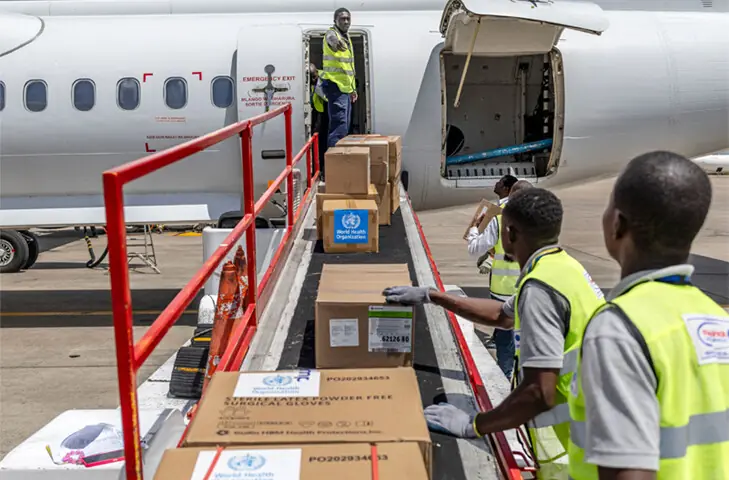
At a hospital near conflict-torn Ituri’s main city, Bunia, equipment to isolate suspected cases of Ebola and full protective gear for nurses has only just begun arriving. “We dig graves and bury dead people without gloves or any protection,” said Salama Bamunoba, a youth organisation representative.
On Sunday, Tedros declared the outbreak a public health emergency of international concern — the second-highest level of alarm under the legally-binding International Health Regulations (IHR). But he said Wednesday it had been determined that the situation was “not a pandemic emergency”.
Following a meeting of the WHO’s emergency committee, he said the agency “assesses the risk of the epidemic as high at the national and regional levels, and low at the global level”.
The European Commission in Brussels insisted that the risk of infection in the EU was “very low” and that “there is no indication” that Europeans should take specific measures.
No vaccines
Ebola is a deadly viral disease spread through direct contact with bodily fluids. It can cause severe bleeding and organ failure. The WHO has highlighted the complexity of detecting and responding to the current outbreak, which has been spreading in hard-to-reach areas of the DRC’s conflict-torn Ituri province.
Complicating things further, the rare Bundibugyo strain behind the outbreak does not show up on tests for the more common Zaire strain of Ebola. And with no vaccines or specific treatment available for Bundibugyo, measures to curb its spread are limited.
The WHO has said it is examining whether any candidate vaccines or treatments could be used to rein in the outbreak. WHO officer Legand stressed though that the organisation’s priority was to “cut the transmission chain” through contact-tracing, isolation and care for all suspected and confirmed cases.
Travel restrictions
With the recent cases largely concentrated in remote areas, few samples have been laboratory-tested and figures are based mostly on suspected cases. So far, 51 cases have been confirmed in the DRC’s eastern provinces of Ituri and North Kivu, while two cases have been confirmed in the Ugandan capital Kampala, including one death.
A US doctor who contracted Ebola in the DRC has been admitted to a hospital in Germany that will also treat his family, health officials said. WHO’s emergency alert and response director Abdi Rahman Mahamud stressed that “all contacts, all cases should not travel”.
Published in Dawn, May 21st, 2026