0
0

KARACHI: Highlighting how AI-enabled research is being applied in contextually relevant and ethical ways across low-and middle-income settings, speakers at a programme held on Tuesday spoke of the need for building human-centred AI to strengthen research and expand what people can achieve, stressing that the modern innovations must remain grounded in trust, ethics, and societal benefit.
The hybrid event — AKU Global Research Showcase: Harnessing AI and Digital Intelligence for Impact — was organised by the Aga Khan University (AKU) Research Office and attended by faculty, students, alumni, donors, partners, policymakers and members of the public in large numbers.
It featured AKU researchers’ innovations, from AI-powered cough analysis for the diagnosis of tuberculosis to machine learning models supporting maternal and child health, aimed at addressing some of today’s most pressing challenges in health, education and development.
Opening the event, Dr Sulaiman Shahabuddin, AKU president and vice chancellor, emphasised that universities must play an active role in shaping the future of AI responsibly.
“At AKU, we are not bystanders in the age of AI,” he said. “We are innovators who are discovering how this powerful technology can advance health, education and scholarship, while working to ensure its use is ethical and reinforces the trust the public places in the health care and higher education sectors”, he added.
The showcase featured lightning presentations by AKU faculty and students on topics ranging from AI-assisted cancer diagnostics and digital twins in radiotherapy to AI-supported learning tools in nursing and mathematics education.
Other presentations explored AI applications in respiratory disease diagnosis, maternal and foetal health, childhood development, public health hotlines, dementia research, and large-scale text transcription.
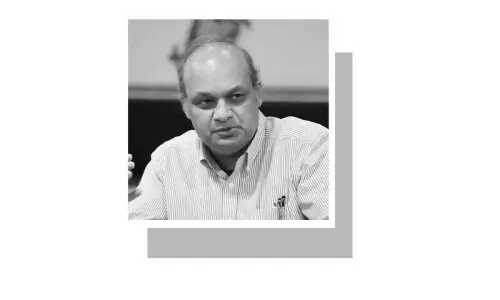
Delivering the keynote address titled ‘Human-Centred AI in Action: Reimagining Research for Global Impact’, Dr Ravi Pendse, vice president for information technology and chief information officer at the University of Michigan, underscored the importance of ensuring that AI innovation remained grounded in trust, ethics and societal benefit.
“AI is not a replacement for human judgment, empathy, or responsibility,” said Dr Pendse.
“Our opportunity is to build human-centred AI that strengthens research, expands what people can achieve, and helps solve important problems responsibly. Institutions that lead with a clear strategy and a strong sense of purpose will help shape the future of AI, rather than simply react to it”, he added.
The programme included the presentation of AKU’s first institution-wide Digital Innovation Mapping Report, which identified over 300 digital and AI-enabled initiatives across the university’s education, research, health care and operational functions.
Published in Dawn, May 20th, 2026