The term dhola in Punjabi culture signifies far more than merely a lover or beloved. It embodies an entire emotional, musical, and poetic universe rooted in vichhora (separation), intimacy, memory, longing, and rural experience. Across Punjab, Rajasthan, and North India, dhola evolved from a term of affection into one of South Asia’s oldest living oral traditions, carrying nearly a millennium of cultural history. In Punjab especially, it became a deeply human and non-sectarian mode of expression that transcended religious identities and articulated the shared emotional life of ordinary rural people.
The earliest layer of the tradition emerges from the medieval romance of Dhola–Maru, traced to the desert cultures of Rajasthan around the 11th century. The story narrates the separation and eventual reunion of Prince Dhola and Princess Maru after an interrupted childhood marriage. Yet over time the word dhola ceased to refer merely to a heroic figure and instead became a universal symbol for the absent beloved. In Punjabi usage, a wife could call her husband dhola, a lover could address the beloved as dhola, and singers could invoke the word simply to express emotional attachment. Thus, in Punjabi cultural memory, dhola is less a proper name than an emotional condition.
Punjabi literary scholars have emphasised that Punjabi folk genres must be understood within the broader social and historical life of the Punjab countryside. Najm Hosain Syed repeatedly argues that Punjabi oral poetry preserves a collective civilisational memory shaped by migration, longing, seasonal rhythms, and agrarian existence. Within this framework, dhola becomes one of the principal emotional languages of Punjab, closely related to the larger tragic-romantic tradition represented by Heer, Sassi, Sohni, and Mirza.
Manzur Ijaz similarly notes that oral genres such as dhola preserve social memory not through individual authorship but through recurring melodies, formulas, symbols, and communal performance.
A striking characteristic of dhola is its fundamentally non-communal nature. Unlike courtly or doctrinal literature tied to a specific religious identity, dhola belongs equally to Muslims, Sikhs, Hindus, pastoral tribes, peasant communities, and artisan groups of Punjab. Its emotional universe is rural rather than sectarian. The landscapes of dhola are fields, wells, spinning wheels, caravan paths, village fairs, and desert routes. The figures who inhabit it are lovers, camel drivers, wandering faqirs, peasant women, shepherds, and village bards. Even when Islamic, Hindu, or Sufi references appear, they function culturally rather than dogmatically. The genre, therefore, reflects the composite folk civilisation of Punjab before modern communal divisions hardened cultural boundaries.
This rural grounding is central to understanding dhola. The genre emerged from agrarian and pastoral societies where migration, seasonal labour, military recruitment, and caravan trade often separated men from their homes for long periods. Consequently, vichhora became not simply a poetic metaphor but an everyday social reality. The woman waiting at the village doorway, the traveller crossing distant deserts, the spinning wheel turning at dusk, or the camel caravan moving through the bar landscapes of western Punjab are recurring images because they arose directly from lived rural experience. In this sense, dhola is the lyrical expression of Punjab’s village civilisation.
Structurally, Punjabi dhola developed in two major forms. The first is the “fixed-form dhola” associated with Pothohar and northern Punjab. It usually consists of five phrases with patterned rhyme and musical cadence. Thematically, it revolves around intimacy, teasing affection, feminine adornment, and separation. Formulaic openings such as “bazaar vikenda…” (“In the market is sold…”) or “main ethe te mahi gujratay” (“I am here while my beloved is in Gujrat”) immediately establish a world of emotional distance and rural familiarity.
The second and more expansive form is the Dhola of western Punjab’s bar regions. That form of dhola unfolds through open-ended streams of rhyming couplets performed dramatically by male bards. Here the genre becomes not merely lyrical but civilidational in scope. It incorporates romance, Sufi meditation, heroic resistance, tribal feuds, historical memory, and social commentary. Performed without instrumental accompaniment and often in a high, sustained vocal style, dhola carried the emotional intensity of collective rural memory.
Within Punjabi dhola, the figure of Sammi occupies a particularly important place. In western Punjab, especially in the Dhola-Sammi tradition, Sammi emerges as the feminine embodiment of longing and fidelity. She is often portrayed dancing and singing in separation from her beloved Dhol. Her songs express not only romantic sorrow but also the emotional endurance of rural women whose lives were marked by waiting, absence, and uncertainty. Over time, Sammi became inseparable from Punjabi women’s performative traditions, especially the Sammi dance associated with circular movement, rhythmic clapping, and collective female singing.
The importance of Sammi lies in the fact that she transforms dhola from a purely masculine heroic narrative into a profoundly feminine emotional tradition. Through Sammi, the voice of waiting women enters Punjabi folklore with extraordinary force. Her songs are sparse, repetitive, and haunting precisely because they arise from oral village performance rather than literary ornamentation. In many respects, Sammi stands beside Heer and Sassi as one of Punjab’s archetypal women of longing.
Importantly, dhola was never merely entertainment. It functioned as oral archive, village newspaper, moral commentary, and emotional history. Historical dholas memorialised figures such as Ahmad Khan Kharal and other local heroes; mystical dholas transformed Sufi metaphysics into the language of spinning wheels and wandering lovers; humorous dholas reflected village wit and social criticism. In pre-modern rural Punjab, where literacy remained limited, dhola became a communal repository of memory and experience.
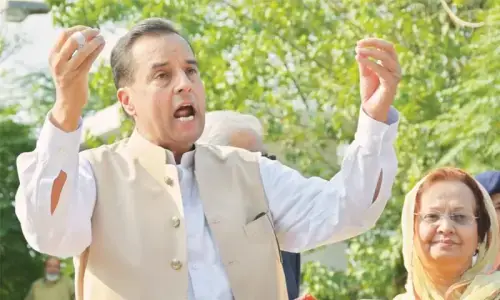
Musically, the genre is associated with ragas such as Pahari, Bhairavi, and Tilang, and with rhythmic traditions like jhummar and luddi. Performances commonly took place at weddings, fairs, harvest gatherings, and caravan halts. Camel-drivers sang dholas at night to remain awake during journeys, while village bards recited them in open gatherings. The singer’s dramatic gesture—one hand placed over the ear while sustaining a long melodic hek—became emblematic of Punjabi oral performance itself.
What distinguishes dhola most profoundly is its remarkable ability to transform the ordinary material life of rural Punjab into a universal emotional language. Unlike elite literary traditions that draw upon royal courts, theological abstractions, or refined urban aesthetics, dhola emerges directly from the lived experiences of peasants, pastoralists, village women, camel-drivers, artisans, and wandering singers. Its imagery is therefore intensely local, yet emotionally expansive. Everyday objects—bangles, wells, spinning wheels, buffaloes, turbans, anklets, plaited hair, dusty pathways, charpoys, and caravan roads—are not decorative details; they function as emotional symbols through which people articulate longing, absence, memory, fidelity, and attachment to place.
In Punjabi folk imagination, the rural landscape is never passive background scenery. The village well, for instance, is not merely a physical location but a social and emotional space where women gather, exchange confidences, and silently remember absent lovers. Similarly, the spinning wheel (charkha) becomes a metaphor for the repetitive cycles of longing and fate. The buffalo tethered in the courtyard, the blowing wind across the bar plains, or the sight of caravan dust on distant roads all acquire emotional resonance because they are embedded in everyday village life. Through dhola, ordinary existence is elevated into poetry without losing its simplicity or intimacy.
This is precisely why scholars such as Najm Hosain Syed consider Punjabi oral poetry to be the deepest archive of Punjab’s civilisational consciousness. In dhola, emotion is inseparable from landscape and labour. Love is expressed not through abstract declarations but through concrete rural signs: preparing a bed for an absent beloved, drawing water from a well, braiding hair at dusk, or waiting at the doorway for the return of a traveler. The emotional power of the genre lies in this fusion of the material and the lyrical.
One frequently cited dhola verse illustrates this beautifully:
Main ethe te mahi Gujratay,
ranglay palang sajatay,
te chitte vichhaune dhola…
“I am here while my beloved is in Gujrat,
I have adorned the colorful bed,
and spread the white sheets, O dhola…”
The imagery is entirely domestic and rural. There is no grand drama, yet the emotional effect is profound. The decorated bed and white sheets symbolise waiting, fidelity, and hope. Separation is expressed not philosophically but through household preparation for someone who has not arrived. The village home itself becomes a site of emotional suspension.
Another example from the Jangli dhola tradition reads:
Kannan noon sohne bunde,
sir te bodi jhul pai,
dhola mera botal sharab da…
“Beautiful pendants hang from the ears,
a loose braid sways upon the head,
my dhola stands like a bottle of wine…”
Here adornment becomes memory. The earrings and plaited hair are not merely physical descriptions of feminine beauty; they evoke youth, intimacy, and the fragile emotional world of village romance. The comparison of the beloved to wine suggests intoxication, desire, and emotional vulnerability. Such verses reveal how dhola transforms simple rural details into symbols of universal human feeling. The language of dhola reflects a Punjab where shared labour, seasonal rhythms, migration, and village life produced a common cultural imagination that transcended religious boundaries.
For this reason, dhola remains one of the clearest expressions of Punjab’s shared cultural inheritance. It preserves not the ideology of rulers or institutions but the emotional consciousness of ordinary people. Its poetry arises from the fields, wells, caravan tracks, and courtyards of Punjab, yet speaks to universal experiences of love, waiting, exile, and belonging. In elevating the textures of rural life into enduring poetic symbols, dhola achieves a rare synthesis of simplicity, intimacy, and universality.
Published in Dawn, May 17th, 2026