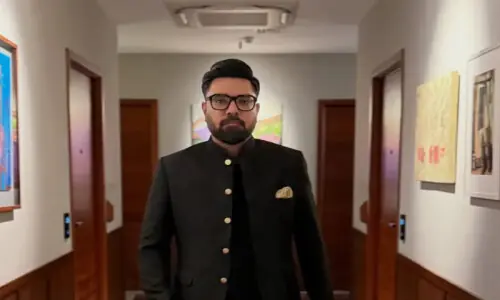
PRIME TIME: THE TRAUMA TRAP
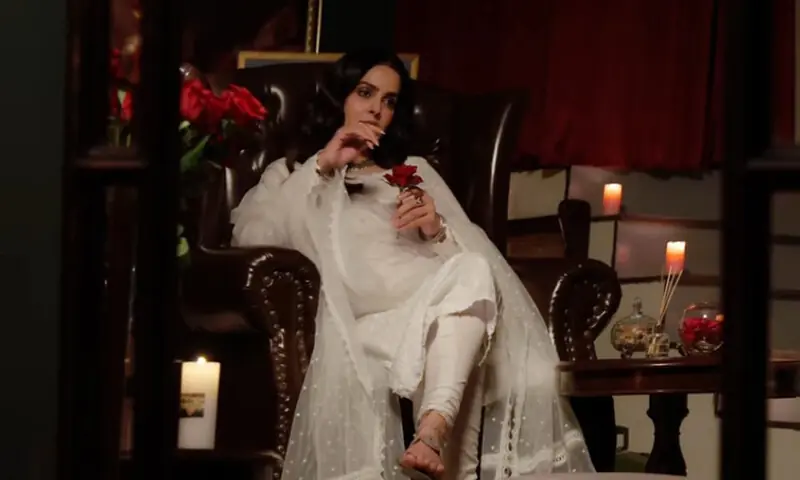

At first glance, Muamma — the psychological thriller starring Saba Qamar, that recently concluded — appeared to be a taut tale of seduction, betrayal and revenge.
A mysterious middle-aged woman, Jehan Ara, lives alone in a sprawling house, bakes cakes with Swiss finishing-school precision and rents her annexe only to newlywed couples. Then, with calculated charm, she seduces each husband, manipulates him into confessing his desire for her, humiliates him for his infidelity and then sides with his betrayed wife.
Gripping television. But beneath the noir surface lies something far more unsettling: a clinical portrait of unresolved trauma acting as a broken record, causing the same devastating behaviour to repeat itself for decades.
Muamma is not just a thriller. It is a case study in the Karpman Drama Triangle, a social model of human interaction proposed by San Francisco psychiatrist Stephen B. Karpman in 1968, and an unflinching look at how victims become persecutors, rescuers and prisoners in their own minds.
Beneath its noir-like tale of seduction and revenge, Muamma offers a chilling portrait of unresolved trauma, repetition compulsion and the destructive cycles of the Karpman Drama Triangle
The Original Wound
Jehan Ara was not always the cool, cake-baking femme fatale. She was a middle-class girl in love with Shahjahan (Usman Mukhtar), a weak man. On her wedding day, right after their nikaah, Shahjahan divorced her.
Why? Because Jehan Ara’s wealthy stalker Sarmad (Syed Jibran) assassinated her character, fabricated an affair with her and bribed her father and brother to participate in his plan. Her own blood betrayed her and the man she loved did not believe in her or fight for her.
That event — public shaming, betrayal by the men who should have protected her, the violent erasure of her innocence — froze trauma into her psyche. She later framed Sarmad and he went to jail. But, by then, the pattern was already engraved.
The Drama Triangle in Full Swing
The Drama Triangle, evident in Muamma, describes how we often adopt one of three unhealthy roles when attempting to resolve conflict: Victim, Persecutor and Rescuer. Most people cycle through all three without ever escaping. Jehan Ara is a textbook case who adopts all three roles.
1. Victim: She is the wronged bride, abandoned and slandered. Even now, when Jehan Ara sees that a man’s wife discovers that he is lusting after her instead of his wife, she sees her younger self. That re-identification is devastatingly real.
2. Persecutor: She deliberately seduces unsuspecting husbands. Emotionally needy of attention, she sends them delicious food and charms them until they find fault with their “clumsy” wives. Then, once they confess love and longing, she rejects and berates them for their unfaithfulness. She persecutes them for the very sin she engineered.
3. Rescuer: She allies with the wife after her husband’s confession. She validates her pain. She becomes the older, wiser woman who “saves” another victim from a faithless man.
The trap? She authors the entire script. She installs hidden cameras. Through a see-through mirror overlooking the annexe, she watches the couples — and tortures herself. In each role, she remains a victim of her own compulsions.
This is called repetition compulsion: the unconscious drive to recreate unresolved trauma, in the hope of mastering it. As a bride, Jehan Ara had no power. Now, as the orchestrator, she has all the power. But the outcome, the final payoff, is always the same — proof that “all men are unfaithful.”
The secondary gain is enormous. The pattern gives her control, moral superiority, and a shield against vulnerability. She never risks genuine intimacy because she is always running the experiment. Her identity — the wronged woman who exposes men — feels safer than any real relationship.
But the mirror does not lie. Watching those couples is a form of self-harm. Each seduction reopens her original wound. And each husband who falls for her only confirms her despair.
The One Who Wouldn’t Fall For It
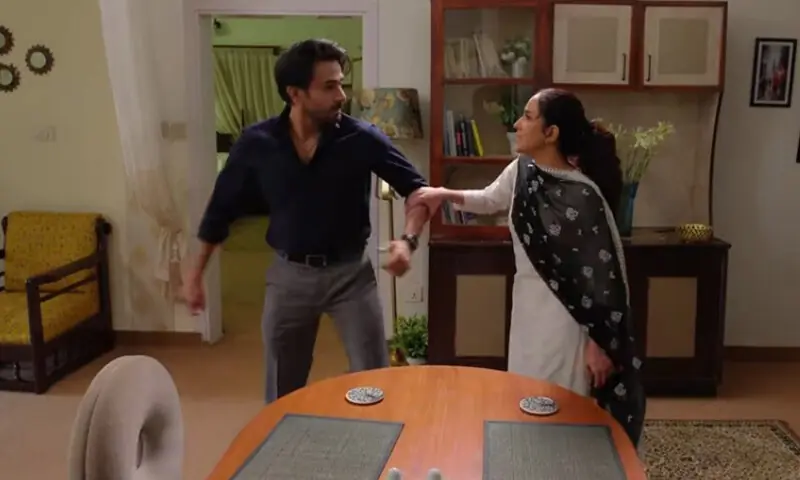
Every great psychological drama offers a rupture in the script. Muamma delivers one: a truly loyal husband, a noble man, Junaid (Ali Ansari), who does not fall into her trap.
He declines the carefully presented food. He politely refuses her invitations. When his wife, Myra (Anoushay Abbasi), is away, he remains faithful. And when Jehan Ara becomes desperate, and her scheme is finally exposed, he does not shame her. Instead, he says something disarming: “You must have been deeply hurt to need to test people like this.”
For the first time, her seductions fail. Her belief that all men are unfaithful cracks. This time, no one is playing the persecutor-victim-rescuer dance with her. That man simply steps away from the triangle.
This is not a magical cure. But it is the first genuine interruption of a decades-old pattern. For Jehan Ara, it is either the beginning of a collapse or the beginning of a waking up.
Breaking Free Is Possible
The hopeful truth that Muamma gestures toward — without cheap sentiment — is that healing from the Karpman Drama Triangle is possible. Not through a new lover, not through revenge, but through four difficult acts.
1. Stopping the experiment. No more renting the annexe to couples. No more cameras. No more mirrors.
2. Grieving. Not by exacting revenge on Sarmad, but by genuinely mourning for the girl abandoned on her wedding day, for the father and brother who betrayed her and for the weak man who did not stand up for her.
3. Recognising the triangle. Seeing that she has been Victim, Persecutor and Rescuer all at once — and that none of those roles creates a ‘whole’ person.
4. Building a new script without an audience. Being an adult who can be alone without destroying others’ relationships. A woman who allows herself to be seen without first designing a test.
Muamma is brilliant because it refuses to let Jehan Ara off the hook. Her trauma is real. Her perpetrators deserve condemnation. But her coping mechanism became a cage — and the cage had a door she herself constructed and eventually walks through.
And that’s the value of therapy. It lets you discover your own malfunctions and how stepping out of a dysfunctional script can liberate you mentally and emotionally. It is not about moving on from trauma, but about processing and resolving it — and coming to terms with it as a phase or incident in life, rather than a defining identity.
At the end of the day, Muamma suggests something unsettling but clear: you can be a victim and still become a persecutor and that you can rescue others while drowning yourself. However, you can stop — not because a good man saves you, but because you finally grow tired of repeating the same painful pattern by stepping out of it.
That is not an easy redemption, but it is the only real one.
The writer is an integrative therapist and founder of Khudi Wellness. She can be reached at shah.n.sarwat@gmail.com
Published in Dawn, ICON, May 17th, 2026