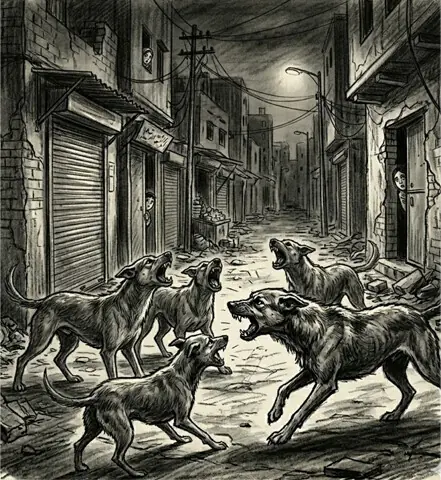
WE were sent a picture in our neighbour-hood WhatsApp group — without a disclaimer — of a young boy whose mouth and cheek had been torn apart by a dog on the premises of Karachi University. The image, as one may well imagine, was shocking.
Unfortunately, public discourse in Karachi for years has been shaped by a well-intentioned but increasingly dis-connected idea — that the only ethical response to the city’s stray dog population is non-lethal control. To suggest otherwise is often framed as cruelty against dogs.
A recent report confirmed that rabies virus RNA was present in 64 per cent of sampled dog-bite wounds, indicating a strikingly high level of viral circulation among Karachi’s stray dog population. Rabies is not merely dangerous; it is almost universally fatal once symptoms appear. We must now confront an ethical paradox: can a policy still be called ‘humane’ if it results in predictable human suffering?
Much of the resistance to culling comes from a moral instinct — a desire to prevent animal suffering. This instinct is not wrong. The religious tradition is rich with nar-rations emphasising mercy towards animals.
However, the faith does not operate on sentiment alone; it operates on public welfare and the prevention of harm. What we are witnessing in Karachi is actual, imminent and recurring. Children are being chased. Motorcyclists are being attacked. Families are altering their daily lives out of fear. And sometimes, as in the case of the boy at Karachi University, the consequences are permanently disfiguring. In other cases, they are fatal.
Doctors in the city have already called for humane dog culling as the last resort after repeated rabies deaths and systemic failure to control the canine population.
This is the key point: a controlled, professionally conducted culling prog-ramme is not being proposed as the first option, but as the last remaining one when all other options have already failed.
Saman Khalid
Karachi
Published in Dawn, May 14th, 2026