Bhayth mosque reflects lost stone artistry
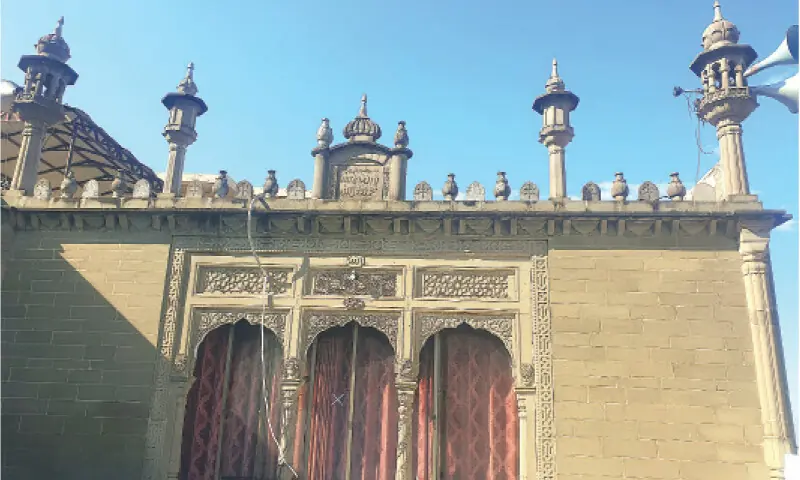


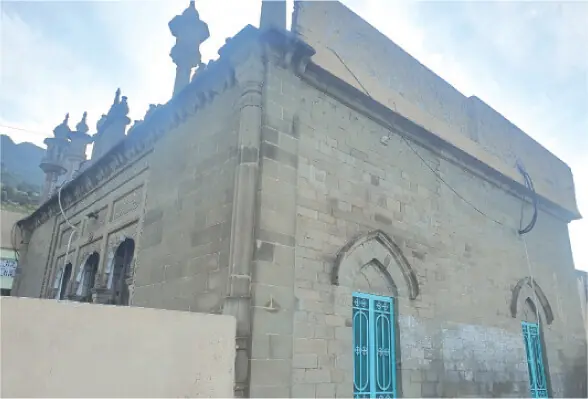
The rare artistic work on a stone facade of a small mosque in Bhayth village, at the foothills of Tilla Jogian in Jhelum, remains a marvellous architectural wonder.
Bhayth is a small village located at the start of the track to Tilla Jogian from the Domeli end.
Stones from the Tarraki mountains, between Domeli and Sohawa, have long been transported far and wide for the construction of forts, large buildings and bridges. During the British era, Tarraki Railway Station served as the main hub for transporting these stones to remote areas. Not only were these stones cut into blocks to build tall, strong walls, but artisans were also skilled in carving marvellous designs on pillars, blocks and slabs, using these masterpieces to create striking facades of mosques and mansions.
A small mosque in Bhayth village, right under the shadow of the Tilla Jogian hills, remains a testimony to the refined taste of art lovers in the region.
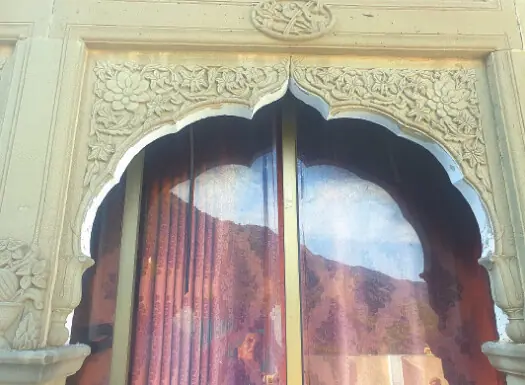
The facade of the mosque is built entirely of long and wide slabs and pillars, intricately carved with sculptural designs resembling Mughal monuments such as the Sheesh Mahal of Lahore Fort.
Large single-piece slabs have been cut and carved into rectangular and geometrically symmetrical designs, joined together to form a magnificent facade, while the walls are constructed with blocks cut into proper sizes.
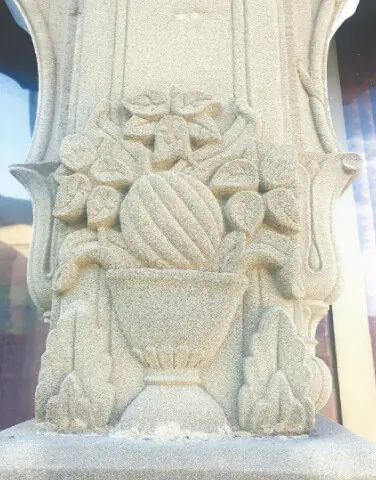
The single-piece round pillars similarly feature sculptural images of flowers and birds, displaying remarkable craftsmanship on the main base stones.
Chaudhry Sarmad Ehsan Sadiq, a student of history and scholar at a US university, who was trekking to Tilla Jogian, said upon seeing the mosque that it was a wonderful example of ancient stone artistry using local stones from the Tarraki terrain.
Raja Lehrasib, a resident of Bhayth village, told Dawn that the mosque was founded by Pir Fazal Hussain Shah of Jalalpur Sharif (Jhelum) in 1921. He said his uncle, Raja Pavenda Khan, now 103 years old and living in the UK, had witnessed its construction.
He added that Lieutenant Nadir Ali and Colonel Raja Lehrasib were prominent natives of the village who contributed to the completion of the mosque by engaging highly skilled artisans. Huge stones were transported from the Tarraki mountains on camels, and masons cut and carved them according to the required sizes and designs.
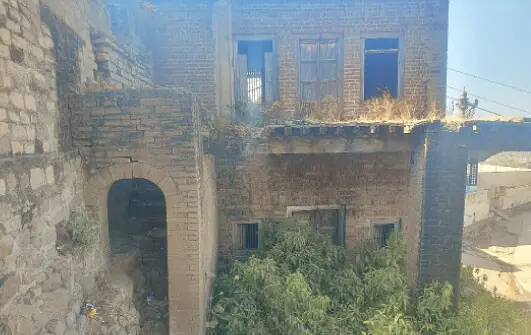
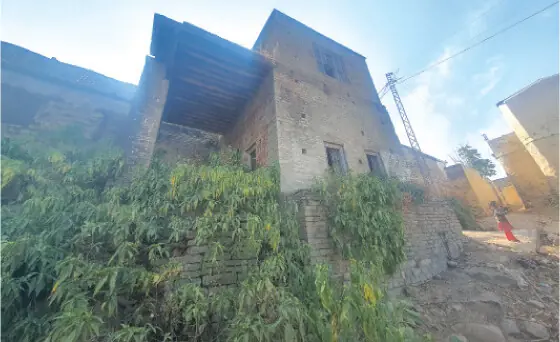
He said Nadir Ali was highly respected by British officers and was appointed as an ilaqa dar (notable of the area). His tall and prominent house below the hill once overlooked surrounding villages, while a circular arena at the back of the mosque was used by Raja Nadir Ali to settle disputes.
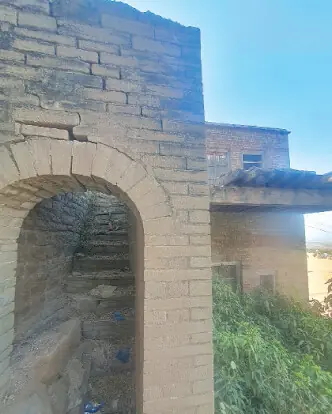
Today, only the crumbling remains of his large house exist and its wooden balconies have been dismantled. However, the mosque, with its fascinating facade, still stands.
Those who trek to the Tilla Jogian monuments from the Domeli end pass through the starting point of Bhayth village, navigating stony and uneven paths leading up to Tilla Jogian. The name of Colonel Lehrasib Khan, however, is still remembered by older residents for his role in the construction of this rare and beautifully crafted mosque.
Raja Lehrasib said the mosque continues to attract visitors who take photographs and often return with family and friends. He regretted that artisans capable of crafting such intricate stone designs are no longer present in the region and such masterpieces are no longer affordable in modern times.
Published in Dawn, May 4th, 2026