CM Afridi blames US war on terror for ‘keeping an entire generation in KP illiterate’
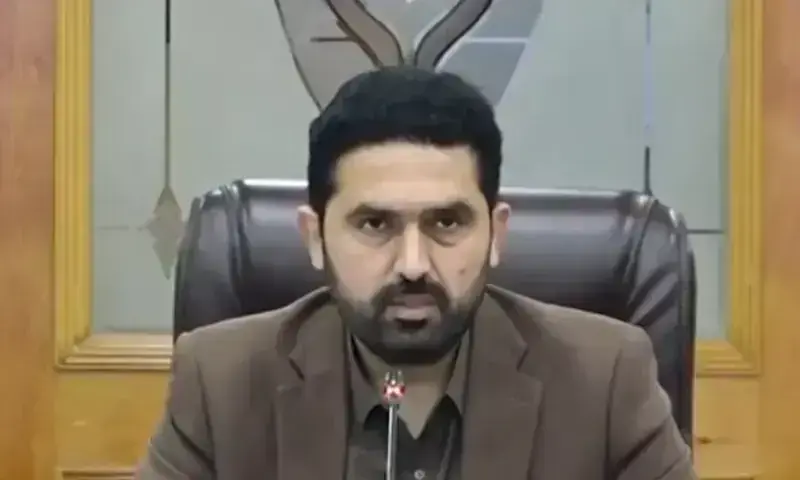


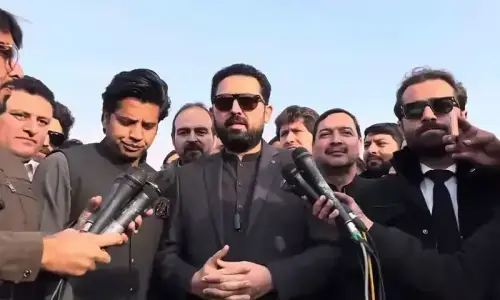
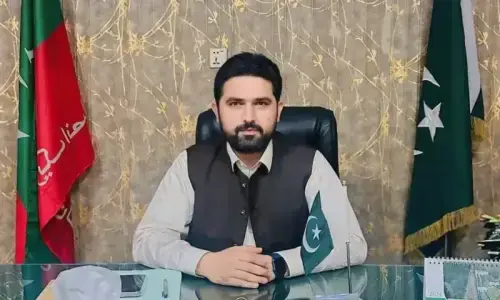
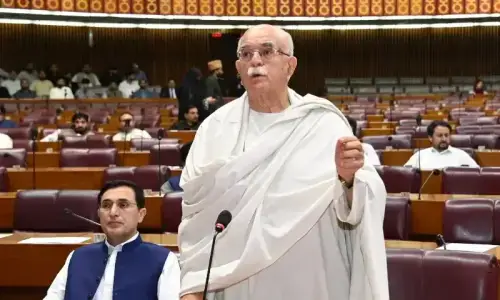
PESHAWAR: Chief Minister Mohammad Sohail Afridi on Wednesday blamed the US-led war on terror responsible for keeping a whole generation of young men illiterate which, he argued, was why Khyber Pakhtunkhwa couldn’t compete with other provinces.
He said that the provincial government was changing the syllabus, converting it into market oriented courses by introducing Artificial Intelligence, robotics and data analytics.
“The government will provide youth with modern education,” he said after the inauguration of the Centre of Excellence for Digital and High Tech Skills, developed with the support of the European Union, at Institute of Management Sciences here.
The CM said that he was hopeful that the collaboration between the KP government and EU went further and expressed that there should be a collaboration in student and faculty exchange programs in order to enhance their capacity.
Afridi says govt introducing market-oriented courses
He said the students must know that the PTI government wanted to invest in youth, so it was offering youth with such programmes to equip themselves with modern skills.
Afridi said that there was zero tolerance for corrupt practices and that everything was being done on merit.
He said that 16,000 teachers and 2,400 doctors were being recruited “purely on merit”.
“I invite all of you [students] to point out corruption. My doors are open to you all if you have any complaints. Action on them is my job,” he said.
The CM said that students were his strength and he could fight against the corrupt system with their support only.
He said that the provincial government was introducing youth and internship policy, while the number of scholarships was being enhanced.
Afridi said youth must not be discouraged as those with weak financial positions would be completely supported by the government.
“You have to move ahead as you are the country’s future. Imran Khan has high hopes in you. We’ll collectively make KP and this country great. We will continue to raise our voice for the truth,” he said.
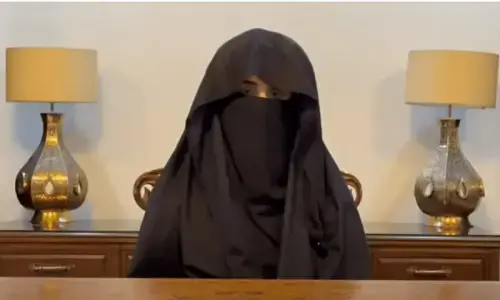
The CM said that PTI founder Imran Khan and his wife Bushra Bibi were in solitary confinement in jail and weren’t allowed to meet family members and personal physicians and were not even allowed to go to the hospital.
He said that Imran had lost 80 per cent of eyesight due to the negligence of the Adiala Jail’s administration.
Meanwhile, CM Afridi met with a European Union delegation led by EU Ambassador to Pakistan Raimundas Karoblis.
During the meeting, the EU envoy sought the chief minister’s perspective on relations with Afghanistan and the prevailing situation, according to an official statement from the CM’s Office.
The CM underscored that KP and Afghanistan shared centuries old historical and cultural linkages, and emphasised that dialogue remained the only viable and effective pathway for resolving bilateral challenges.
He said that Imran had consistently maintained that war and military operations didn’t offer a sustainable solution and that negotiations must remain the central approach.
Afridi observed that the prolonged conflict in Afghanistan had significant adverse spillover effects for KP, disproportionately impacting the local youth.
He added that instability in Afghanistan directly affected KP, given the province’s geographic proximity and deep economic and social linkages with its neighbour.
The CM noted that the province’s annual trade volume with Afghanistan, previously exceeding Rs10 billion, had been severely disrupted in recent months due to border closures and heightened cross-border tensions.
He said that his government was prioritising investment in youth in line with the vision of Imran Khan, reflected in a substantial increase in the education budget and a focused push towards quality education and research.
Afridi highlighted the introduction of the Education Card to provide free education at the intermediate level to female students and orphans, alongside ongoing curriculum reforms aligned with evolving market demands.
He appreciated the EU’s support in establishing the Centre of Excellence, describing it as a milestone initiative for strengthening employable skills among young people.
Both sides reviewed matters of mutual interest and explored potential avenues for future collaboration.
Karoblis said that technology and skills development remained priority areas for cooperation. He declared the centre a “forward-looking and effective model aligned with future workforce needs”.
He said he was satisfied with ongoing cooperation with Pakistan and that the EU had keen interest in expanding development initiatives in KP.
Published in Dawn, April 30th, 2026