0
0

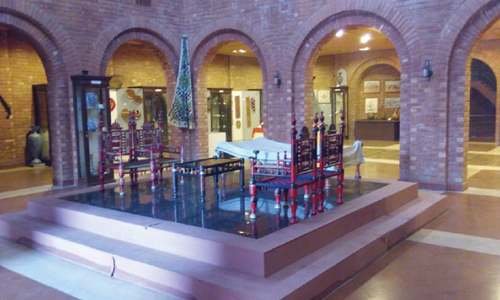
LAHORE: The Punjab Institute of Language, Art and Culture (Pilac) is set to unveil the newly upgraded Punjab Cultural Museum to offer the visitors a rich and immersive journey into the history, folklore and creative spirit of the province.
Officials associated with the project describe the revamped museum as a vibrant cultural landmark where Punjabi traditions have been thoughtfully curated under one roof. By combining traditional displays with modern technological interventions, the museum reflects not only the tangible heritage of Punjab but also its intangible essence, preserved through oral traditions, music, poetry, and craftsmanship.
The visitor experience begins at the main entrance, which immediately evokes the rustic charm of rural Punjab. A restored traditional tonga, alongside a buffalo diorama, welcomes guests with familiar and nostalgic imagery.
This carefully designed entry point sets the tone for the journey ahead, introducing visitors to the agrarian roots and everyday life that define much of Punjab’s cultural fabric.
Moving further inside, an impressive array of handicrafts showcases artistry of Punjabi craftsmen. Intricately designed objects reflect generations of skill and creativity, highlighting the enduring legacy of indigenous craftsmanship. The museum also brings to life the region’s most beloved folktales through detailed and lifelike dioramas. Timeless romances such as Heer Ranjha and Sohni Mahiwal are recreated with attention to detail, accompanied by evocative background music.
Music, an integral component of Punjabi culture, has been given dedicated space within the museum. Displays of traditional musical instruments illustrate the diversity and richness of the region’s musical heritage. A carefully constructed diorama on block printing and embroidery sheds light on Punjab’s vibrant textile traditions while a recreated Sufi Baithak offers visitors an immersive experience of spiritual poetry and musical expression in a traditional setting.
The museum also celebrates the cultural diversity of Punjab through thematic exhibits. A Cholistani village scene provides insight into the life and traditions of desert communities while a series of portraits highlights some of the province’s most iconic architectural landmarks. These include the Noor Mahal, the Lahore Fort, Gurdwara Dera Sahib, Rohtas Fort, the Tomb of Shah Rukn-e-Alam, and Hiran Minar.
The museum integrates modern technology to enhance visitor engagement. A dedicated virtual reality (VR) section allows visitors, particularly younger audiences, to experience Punjab’s cultural landscape in an interactive and immersive manner. Complementing this is a large geographical map of Punjab, depicting its rivers, the Potohar Plateau, fertile plains, the Salt Range, Cholistan, and the Thal desert.
The museum also presents a vivid portrayal of everyday life in Punjab through depictions of traditional fairs, professions, and agricultural practices. Exhibits on puppetry, basketry, spinning, weaving, and indigenous games highlight the ingenuity and simplicity of rural life. The colorful tradition of kite flying has also been thoughtfully included.
A special section dedicated to Punjabi Sufi wisdom underscores the intellectual and spiritual richness of the region. Portraits and works of nine great Sufi poets, Baba Farid, Guru Nanak, Shah Hussain, Sultan Bahu, Bulleh Shah, Waris Shah, Ghulam Rasool Alampuri, Khawaja Ghulam Farid, and Mian Muhammad Bakhsh, offer visitors a glimpse into the profound philosophical traditions that have shaped Punjabi thought and literature.
Adding further artistic depth to the museum is the monumental mural of the creative past of Punjab, created by the late Aslam Kamal. Two additional works from his renowned series Sufi Poetry on Canvas, featuring verses of Sultan Bahu and Mian Muhammad Bakhsh, have also been displayed.
According to a Pilac official: “The museum not only preserves our cultural heritage but also presents it in ways that resonate with the younger generation while guided tours and educational visits are being planned to maximize its outreach and impact”.
With its diverse exhibits, thoughtful curation, and modern presentation, the Punjab Cultural Museum stands poised to become a living narrative of Punjab’s glorious past and vibrant present.
Published in Dawn, April 28th, 2026