Starmer admits ‘wrongdoing’ in appointing Mandelson as US envoy

LONDON: Seeking to quell anger over a scandal surrounding Jeffrey Epstein’s long-time associate Peter Mandelson, embattled Prime Minister Keir Starmer has admitted that he had been wrong to appoint the Labour politician as UK envoy to Washington.
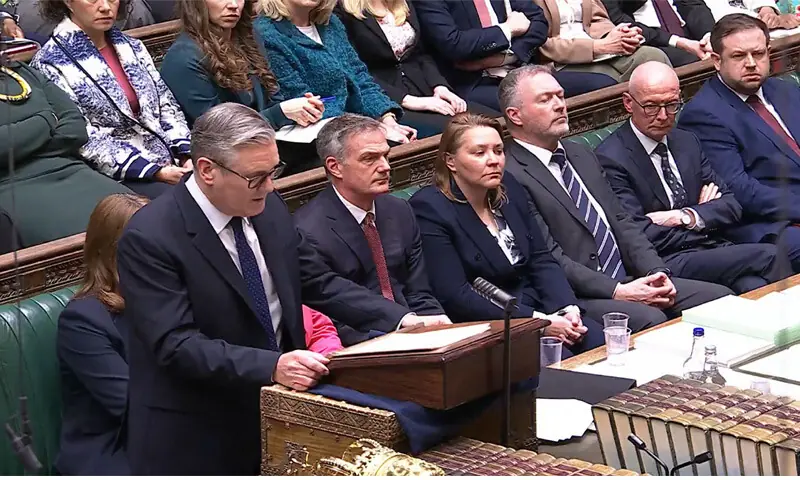
Addressing parliament on Monday about the deepening political row, Starmer said: “At the heart of this, there is also a judgement I made that was wrong. I should not have appointed Peter Mandelson.”
Starmer, already widely unpopular with the public and many Labour MPs, is struggling to manage a controversy that has threatened to bring down his leadership.
He faces fresh calls to quit after it was revealed that Mandelson, whose friendship with the late convicted US sex offender was long known, had become Britain’s envoy to Washington last year “despite failing security checks”.
Recently sacked FO official to testify before parliamentary watchdog today
The UK premier claimed he and other ministers were not told until last week that Mandelson had failed the independent vetting process. “It beggars belief that throughout the whole timeline of events, officials in the Foreign Office saw fit to withhold this information from the most senior ministers in our system, in government,” he said.
“If I had known before he took up his post that (the) recommendation was that developed vetting clearance should be denied, I would not have gone ahead with the appointment.”
Only last Thursday, Starmer sacked the Foreign Office’s top civil servant, Olly Robbins, telling MPs that he had set in motion a review of the security vetting process. But ex-civil servants accuse Starmer of scapegoating Robbins, who will give his own account to a parliamentary watchdog committee on Tuesday.
Opposition leaders have called for the centre-left Labour leader to step down, with accusations ranging from incompetence to wilful misleading of parliamentarians and the public.
Starmer told parliament in February that “full due process” was followed when Mandelson was vetted and cleared for the key role.
His Downing Street office has insisted that remains true because government rules meant the Foreign Office had the power to overrule vetting concerns, without the knowledge of Starmer and his top team.
On April 17, Downing Street took the unusual step of releasing a memo that insisted he had only found out about the vetting failure on April 14.
Senior ministers have so far rallied around Starmer. “A judgement was made that the Trump administration was an unconventional administration and an unconventional ambassador could do a job for the United Kingdom,” Scotland Secretary Douglas Alexander said.
“That judgement was wrong and the PM accepts that.”
Published in Dawn, April 21st, 2026