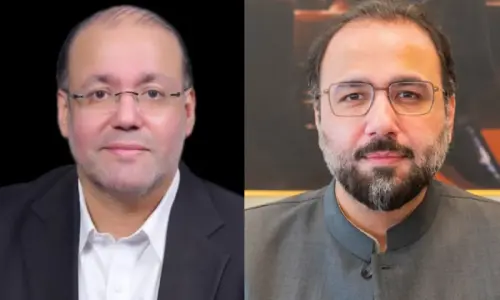
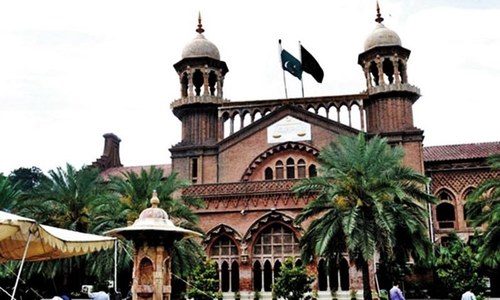
LAHORE: In a ruling seen as Pakistan’s first major case linked to the global #MeToo movement, a sessions court on Tuesday decreed a defamation suit filed by singer-cum-actor Ali Zafar, ordering fellow artiste Meesha Shafi to pay Rs5 million in damages.
The suit, seeking Rs1 billion in damages, was filed in 2018 after Shafi levelled allegations of sexual harassment against Zafar.
Additional District and Sessions Judge Asif Hayat announced a short order, with a detailed verdict to follow.
According to the short order — available with Dawn — the court held that an April 2018 social media post and an interview given to Instep Today “contain false, defamatory and injurious imputations against the plaintiff (Zafar), whereby allegations of sexual harassment of a physical nature were levelled, which have not been proved to be true or made for public good, and thus constitute actionable defamation.”
The court observed that Zafar was entitled to compensatory damages for harm caused to his reputation, dignity and mental well-being.
After eight-year trial, court finds sexual harassment charges unproven; counsel for Shafi says verdict fails to meet requirements of Section 3 of Defamation Ordinance, 2002
However, it held that the claim for special damages “has not been proved through cogent and reliable evidence”.
“Accordingly, a sum of Rs5,000,000 is awarded to the plaintiff as general damages only, recoverable from the defendant,” the order stated.
The court further restrained the defendant from repeating or publishing the allegations in any form.
“The defendant is further permanently restrained from repeating, publishing, or causing to be published, directly or indirectly, the aforesaid defamatory allegations of sexual harassment of a physical nature against the plaintiff, in any form of media, including print, electronic or social media,” it added.
Speaking to media persons outside the court, Advocate Umar Tariq Gill, counsel for the plaintiff, said the judgment reaffirmed the principle that allegations must be substantiated through evidence and due process.
He said reputations could not be damaged on the basis of unproven and defamatory claims circulated publicly. He added that the case was fully contested, with both parties heard, witnesses examined under oath, and documentary as well as electronic evidence placed on record.
Meanwhile, Advocate Saqib Jillani, counsel for Shafi, told Dawn that the verdict was contrary to law and failed to meet the requirements of Section 3 of the Defamation Ordinance, 2002.
He termed the decision inconsistent with the facts of the case and said it could have a chilling effect on victims of sexual harassment seeking to raise their voices through lawful forums.
The counsel pointed out that the Supreme Court of Pakistan had already granted leave to appeal in Shafi’s case against earlier decisions of the ombudsperson and the Lahore High Court, adding that the matter remains pending before the apex court.
He said an appeal against the sessions court verdict would be filed before the high court after the detailed judgment is issued.
The case took nearly eight years to conclude, during which nine presiding judges were changed. A total of 284 hearings were held, including recording of witness testimonies, cross-examinations, and examination of documentary and electronic evidence.
Both Zafar and Shafi appeared before the court on multiple occasions for cross-examination.
A sessions court and the Lahore High Court had dismissed Shafi’s requests to record her remaining cross-examination via video link after she travelled to Canada. However, the Supreme Court later allowed her to complete the process through video link due to her inability to return to Pakistan.
Published in Dawn, April 1st, 2026