0
0

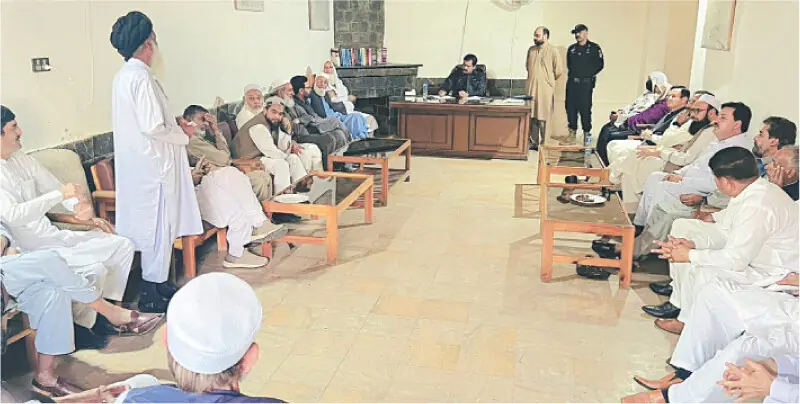
MANSEHRA: The informal courts, known as the Dispute Resolution Councils (DRCs), adjudicated 84 per cent of the cases referred to them across the Hazara division during 2025.
A total of 6,163 cases of petty nature were referred to 28 DRCs, and they managed to settle 5,164 of them. The cases of domestic violence, including divorce and denial of a share to women in inheritance, topped the list with almost 50 per cent of cases.
The jurists, mostly retired officers from armed forces, police, judiciary, education, and other departments, settled the cases in consultations with the warring parties.
Data collected by this correspondent from the police department revealed five DRCs in Mansehra, three each in Torghar and Haripur, six in Abbottabad, two each in Battagram, Upper and Lower Kohistan, and five in Kolai-Palas exist.
Thirteen women, six from Mansehra, four from Abbottabad and three from Haripur, are members of the DRCs.
Ex-member says young women can help bring positive change in society
Of the 2,173 applications moved with the Abbottabad DRCs, 1,994 were decided. Mansehra DRC received 1,902 applications, settling 1,746 of them. Torghar forum settled all 11 cases it received. Battagram received 156 cases and settled 106 of them. Haripur DRC also settled all of the 1,922 cases entrusted to it.
Upper and Lower Kohistan and Kolai-Palas DRCs received 18, six, and 21 cases, respectively, and settled all of them.
“All DRCs across Hazara have been working tremendously well, gaining people’s confidence as the entire process is free and takes place directly involving complainants and respondents in the shortest possible period,” Nasir Mehmood Satti, the Deputy Inspector General of Police Hazara range, said.
“These councils, which have been working in collaboration with the police department, settle petty nature cases, sharing the burden of the lower judiciary, and bringing a significant decline in the crime ratio in the society,” Mr Satti said.
The DRCs were established under the KP Police Act, 2017, empowering the IGP to constitute these bodies at the district, subdivision, or police station levels.
“The ratio of settling cases taken to DRC is over 90 per cent as we decide them after hearing the parties to the dispute,” Syed Mazhar Shah, a member of Mansehra DRC, said.
“We also settled cases relating to the section 302 of Pakistan Penal Code,” Mr Shah said.
“We are approached by both men and women in cases related to marital and other affairs, divorce, land disputes, as well as share in inheritance, and we settle them in a friendly environment, and the outcome is highly encouraging,” Azhara Shah, a retired educationist and pioneer member of Mansehra DRC, said.
She stressed that young women should be part of these ‘informal courts’ to play an active role in bringing positive change in society and for protecting the rights of their own gender.
The DRCs in Torghar, Upper and Lower Kohistan, Battagram and Kolai-Palas have no women representation owing to local culture and traditions, which put bars on their political and other activities. “The then Lower Kohistan district police officer removed me from the chairmanship of the DRC Pattan two years ago as I led a rally protest water shortage in my area,” Maulana Kareemdad, a cleric, said.
He said during his nine years of affiliation with that forum, only a single woman had moved the forum, seeking custody of her children from her husband and the case was settled amicably.
“Women usually don’t move such forums, as their cases are settled through their families or jirgas,” Mr Kareemdad said.
Momina Basit, a former lawmaker from Abbottabad, who vied for Kolai-Palas’s PK-33 constituency in the 2024 general elections, said a lot more needed to be done to bring Kohistan out of the clutches of patriarchy. “The local clerics stood against me and proclaimed a decree that a woman cannot vie in the elections,” she said.
“I am utterly speechless when I recall Kohistan’s life, as during my entire election campaign, I couldn’t see a single woman anywhere, even in a traditional veil (burqa),” she said.
Published in Dawn, March 23th, 2026