Pakistan lashes out at India for ‘weaponisation of water’ over baseless allegations at UN


 4
4

UNITED NATIONS: Pakistan has lashed out at India at the UN for weaponising water by unilaterally suspending the 1960 Indus Waters Treaty (IWT) over “baseless” terrorism allegations, calling New Delhi’s actions a direct threat to its agriculture, livelihoods and regional stability.
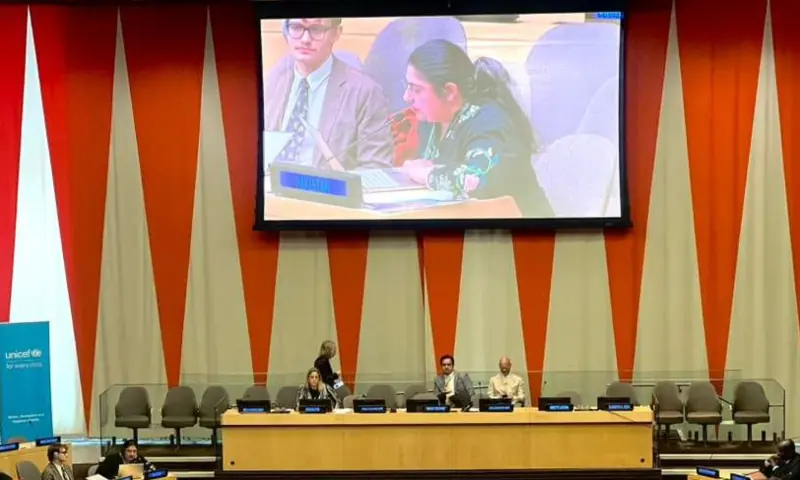
The exchange between the two neighbours took place at a high-level UN event held ahead of World Water Day on March 22, according to a statement issued by Pakistan’s UN mission on Thursday.
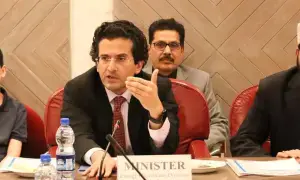
The spat followed a video message by Minister of Climate Change Dr Musadik Malik, who said India’s decision to place the treaty “in abeyance” undermined decades of cooperation and violates international law.
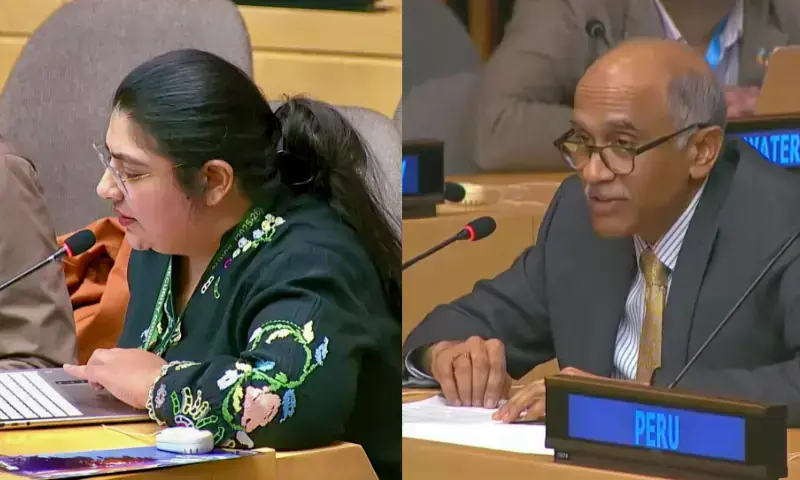
Indian Permanent Representative to the UN, Ambassador Harish Parvathaneni, told the world body that New Delhi would continue to hold the treaty “in abeyance until Pakistan … credibly and irrevocably ends its support for all forms of terrorism” — an allegation that Islamabad has already repeatedly rejected as baseless.
The Indian envoy also claimed that there have been fundamental changes over the last 65 years, adding that “technology for dam infrastructure, growing need for clean energy, climate and demographic changes warrant amendments to the treaty”.
He insisted that India had made several efforts to engage Pakistan to discuss these changes but “all our efforts to discuss modifications to the treaty with Pakistan were rebuffed”.
Pakistan has multiple times offered India to hold a dialogue to settle their disputes, including the water issue.
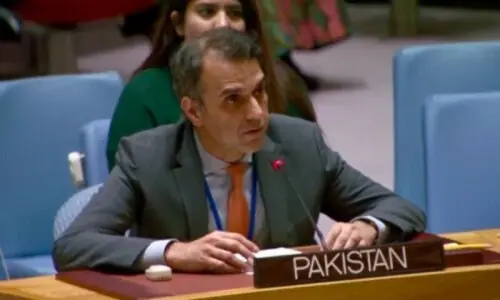
In a Right of Reply, Pakistan’s Second Secretary Aleena Majeed dismissed India’s claims and reaffirmed Pakistan’s legal position.
She rejected India’s attempt to link the water dispute to terrorism, calling such accusations “entirely baseless” and aimed at deflecting attention from India’s own record of state-sponsored violence and cross-border aggression.
“India’s attempts to deflect attention through unfounded allegations of terrorism cannot conceal its record of sponsorship of terrorism across its borders, perpetration of state terrorism in occupied Jammu and Kashmir, global state-backed assassination campaign including in North America, and state patronage of violence against its minorities,” Majeed said.
She also assailed India’s “sponsorship of terrorist groups” that have carried out attacks in Pakistan.
“The unilateral holding in abeyance of the Indus Waters Treaty by India represents a grave departure from this legal and historical legacy,” she said, adding that a 2025 Court of Arbitration award confirmed the treaty remains fully in force and binding.
“We reiterate our firm and unequivocal rejection of all attempts to weaponise water and to use it for political gains. Pakistan remains firmly committed to international law and to the faithful performance of treaty obligations,” Majeed said.
‘Fight for water rights is fight for women’s rights’
In his statement made before the envoy’s exchange, Malik highlighted: “For us, water is nature. Water is humanity. Water is our civilisation. For us, water is agriculture.”
He emphasised that 25–30 per cent of Pakistan’s GDP and nearly half of its workforce depended on agriculture, which is entirely linked to water availability.
The climate minister warned that the unilateral politicisation of water is not just a legal issue but a humanitarian one.
Highlighting recent climate disasters, he said floods in Pakistan have killed nearly 6,000 people, displaced 40 million and disrupted education for millions of children.
“When we fight for water rights, we are also fighting for women’s rights,” Malik told the event, which had the theme of Water and Gender Equality.
He noting that over 61 per cent of women’s employment is tied to agriculture, underlining the link between water access, gender empowerment, and national prosperity.
Malik also highlighted Pakistan’s climate and water management policies, including integration of gender inclusion, community participation, and youth engagement in sustainable development strategies.
He announced the launch of a Green Virtual University, a platform for research and innovation on agriculture, water, and climate resilience.
The minister said that World Water Day is not just a celebration of water but also a reaffirmation of water rights, women’s rights, and the rights of vulnerable communities, stressing that Pakistan will continue to defend these rights at every international forum.
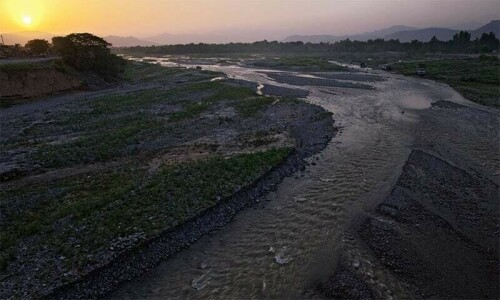
The IWT, brokered by the World Bank in 1960, allocates the three western rivers — Indus, Jhelum and Chenab — largely to Pakistan, and the three eastern rivers — Ravi, Beas and Sutlej — to India.
The treaty has survived wars, crises, and political tensions for more than six decades and is considered a rare example of durable water-sharing cooperation between the two neighbours.
In April 2025, India announced a unilateral suspension of its obligations under the IWT — linking the move to the Pahalgam attack — which has now brought the decades-old water accord into the centre of broader geopolitical tensions.