THE world’s water systems are changing before our eyes. Glaciers are retreating, monsoons are growing erratic, floods are more intense, and droughts more prolonged. These shifts are not simply environmental; they are profoundly political. As the hydrological cycle becomes unstable, the politics of water are hardening. The question is no longer about who controls land, but who controls flow.
In the 21st century, new theatres of conflict will emerge around river basins, glacier-fed watersheds and aquifers. Headwaters and dam infrastructure will carry strategic weight comparable to ports or oil pipelines. Water management, once the domain of engineers and irrigation departments, is already moving into the realm of national security thinking and military planning. Water scarcity and uncertainty will be increasingly leveraged for control.
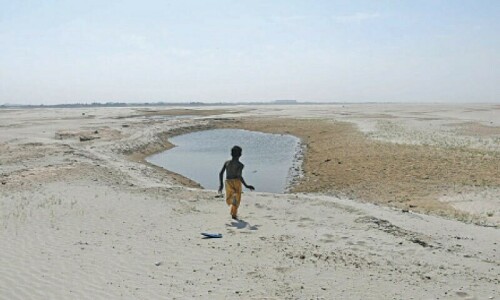
Nowhere is this dynamic as stark as in the Hindu Kush-Himalaya, Asia’s great ‘water tower’. Its glaciers and snowfields feed 10 major river systems, including the Indus, sustaining nearly two billion people downstream. The fragility of the HKH manifested by accelerated glacier melt, increase in the number of hazardous glacial lakes and extreme rainfall events are intensifying risks. In such a landscape, even minor disruptions can cascade into humanitarian and ecological crises. The rivers here are not mere channels of water; they are also sacred geographies and civilisational lifelines that define culture, faith and identity.
However, in recent times, the imbalance between supply and demand of water has increased riparian tensions escalating conflict potential.
In the 21st century, new theatres of conflict will emerge around river basins, glacier-fed watersheds and aquifers.
The Indus basin embodies the geopolitics of hydrology and mounting strain between riparian relations. The Indus Waters Treaty (IWT), signed in 1960 with World Bank support, divided the six rivers of the Indus system between India and Pakistan with certain rights preserved for both sides. Despite wars and prolonged hostility, the treaty survived. It was long cited as proof that water could remain insulated from politics.
Today, however, the strain is visible. Disputes over Indian hydroelectric projects such as the Baglihar and Kishanganga dams have triggered arbitration and neutral expert proceedings under the treaty’s dispute-resolution mechanisms. Pakistan has raised concerns about design features that could potentially allow upstream control of timing and flows. India maintains that these are run-of-the-river projects consistent with treaty provisions. Legally, these disagreements fall within the treaty framework. Politically, however, they feed deeper anxieties in a climate-stressed basin.
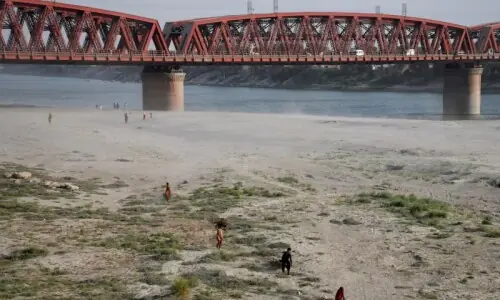
For Pakistan, the Indus is existential. Nearly 90 per cent of its agriculture depends on the system, and its population (over 240 million) relies on its waters for food, energy, and daily survival. Any upstream infrastructure that alters the timing or volume of flows, particularly during critical sowing seasons, carries economic and social implications. In a country already facing groundwater depletion and catastrophic floods, such as those of 2022, hydrological uncertainty magnifies national insecurity.
A more troubling trend is the linkage of water cooperation to allegations of cross-border terrorism. When political rhetoric in India suggests revisiting or suspending treaty cooperation in response to security incidents, it conflates two separate domains governed by distinct legal frameworks into one punitive narrative. This is a dangerous precedent. Weaponising water, or even threatening to do so, erodes the normative firewall that has normally insulated the IWT from broader hostility. In a nuclear-armed region, actions perceived as threatening survival, risk becoming red lines. Escalation dynamics in such contexts are unpredictable and perilous. It is important to remember that wilful disruption of flows will not just impact Pakistan, it will destabilise the entire region.
Interestingly, hydrology offers a metaphor for governance. Water is fluid. It adapts, taking the shape of its vessel, and finding pathways around obstacles. In cultural and even astrological symbolism, water represents resilience and transformative ability. Nature-based approaches to river management draw from this principle: protecting floodplains, conserving wetlands, safeguarding glaciers and giving rivers space to flow will enhance stability rather than impose rigid control through excessive infrastructure.
The HKH demands such sensitivity. Its seismic instability and steep terrain make large-scale structural interventions risky. Cooperative glacier research, transparent data sharing, and early warning systems offer an opportunity to reframe policy from competition to co-stewardship. In shared basins, sovereignty cannot mean unilateralism because upstream actions inevitably shape downstream realities.
At its core, the India-Pakistan conflict cannot be explained solely by water volumes or territorial claims. It reflects deep-seated resentment and political narratives that often mobilise anger for short-term gain. Moreover, electoral rhetoric that repeatedly denigrates the other, narrows space for diplomacy. Pakistan has signalled willingness to engage in dialogue on outstanding issues but India’s sustained refusal to talk has deepened the mistrust. Moves to suspend or downgrade treaty mechanisms signal more than technical dissatisfaction — they mirror a political climate that has been shaped by punitive sentiment.
Yet water itself resists such rigidity. It moves in cycles — evaporating, condensing, returning as rain — indifferent to borders. Attempts to dominate or interrupt this cycle carry unintended consequences. In the HKH watershed, even small perturbations can trigger disproportionate disasters. Responsible stewardship will therefore require rethinking beyond entrenched hostilities to a future that demands collective responsibility.
Water will most likely determine the future politics of power in South Asia. There is an opportunity within existing frameworks to move towards collaboration using platforms such as Saarc and benefiting from the scientific research generated by ICIMOD (International Centre for Integrated Mountain Development). A dispassionate approach could facilitate in developing a holistic roadmap for using water as a shared asset. The status quo will only be destructive and self-defeating.
The writer is a climate policy analyst.
Published in Dawn, March 11th, 2026