Health dept issues alert as KP records 26 mpox cases


 0
0
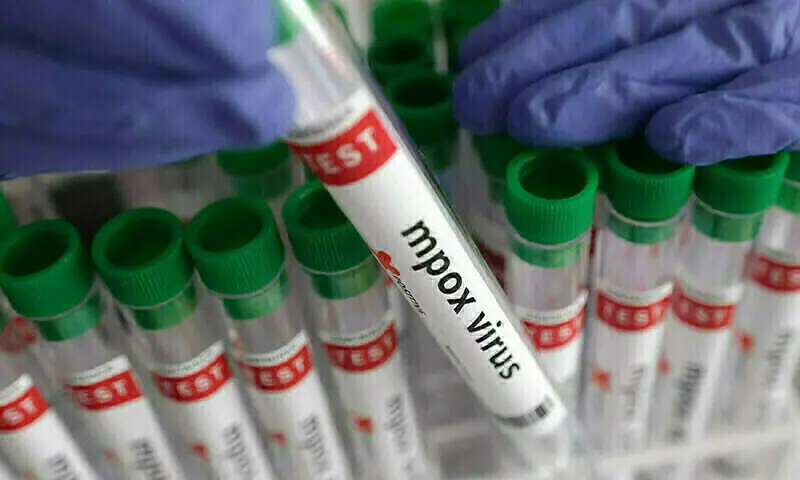

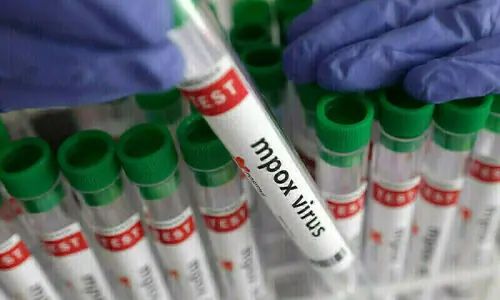
PESHAWAR: Health department has advised all public and private hospitals to remain vigilant for mpox to ensure timely isolation and testing of suspected patients after detection of more than two dozen cases in Khyber Pakhtunkhwa during the last one year.
The advisory follows an increase in suspected case referrals and laboratory-confirmed detections recorded through provincial surveillance and diagnostic services. Of the total 26 patients, 18 were men and six were women, said health officials.
They said that the zoonotic infection was initially attributed to Gulf countries from where people were deported after testing positive for the disease. However, the latest trend showed that there were also local infections, suspected to be transported from Punjab, they added.
Officials said that Punjab initially remained free of mpox but suddenly announced to have more than 25 cases late last year. They said that it might have been the cause of surge in mpox cases in Khyber Pakhtunkhwa.
Hospitals directed to promptly isolate suspected patients
Mpox continues to be reported internationally and public health agencies including World Health Organisation (WHO) and United States Centre for Disease Control and Prevention (US CDC) recommend sustained surveillance, early recognition, appropriate infection prevention and control (IPC) in healthcare settings, and prompt laboratory confirmation to limit spread of the disease.
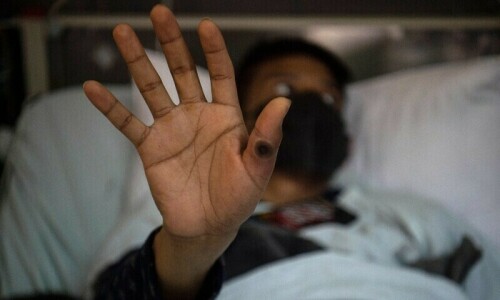
Officials said that clinicians had been advised to suspect mpox in patients presenting with a compatible rash, fever, body aches and swollen lymph nodes, particularly when there was a history of close contact with a suspected case.
Hospitals have been directed to promptly isolate suspected cases at first contact and follow standard IPC precautions while awaiting results. Particular attention has been requested from dermatology services, paediatrics, sexual health services and emergency/urgent care departments, where initial presentations are commonly received.
They said that health facilities were instructed to collect lesion swab specimens as per national guidance, complete clinical and exposure history on the laboratory request form and refer specimens for confirmation through designated district and surveillance channels to public health reference laboratory (PHRL) where real-time PCR testing was available.
Officials said that for case definitions, sampling procedures, contact management, and outbreak response measures, hospitals were advised to follow consolidated mpox guidelines of National Institute of Health (NIH) Islamabad. The advisory stated that early detection and rapid referral remained the most effective steps to protect patients, healthcare workers and wider community.
They said that the pattern of cases showed an increase in 2025 compared to 2024, with continued positives in early 2026. “It is consistent with more frequent case presentation and there is need for stronger surveillance and early containment,” they added.
Officials said that mpox cases were recorded in several hospitals and districts across the province, including referrals from tertiary care facilities as well as district-level services. The age range among confirmed cases is 10 to 80 years.
“This distribution may reflect healthcare-seeking behaviour and referral patterns and does not by itself indicate risk limited to any specific group,” they said. Two mpox cases were detected in 2023 in Khyber Pakhtunkhwa that were originated from Middle East while the first patient, who had no history of travel to foreign country and was locally-infected case, was diagnosed in February 2025.
Officials said that increasing mpox cases and possible local transmission and change in epidemiological pattern observed over time was a source of concern. In more recent detections, travel history has frequently not been present. In several cases, the contact history has not been ascertainable.
“This shift is suggestive of possible community transmission and raises concern that mpox may become endemic if timely measures are not strengthened,” they said. They added that hospitals were alerted in view of imported cases with travel history as well as local ones.
Published in Dawn, March 11th, 2026