TTAP expects Pakistan to act as nuclear power for Mideast peace

ISLAMABAD: As a nuclear power, Pakistan should play its role on the international stage to help bring peace to the Middle East, particularly in Iran, the opposition alliance demanded on Monday.
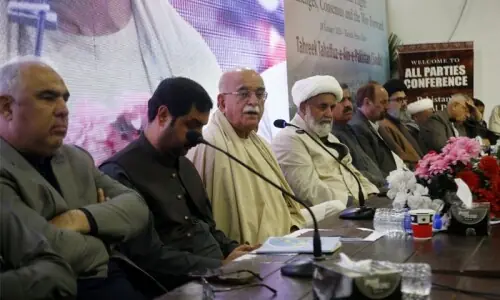
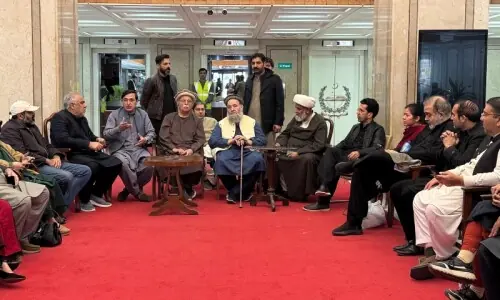
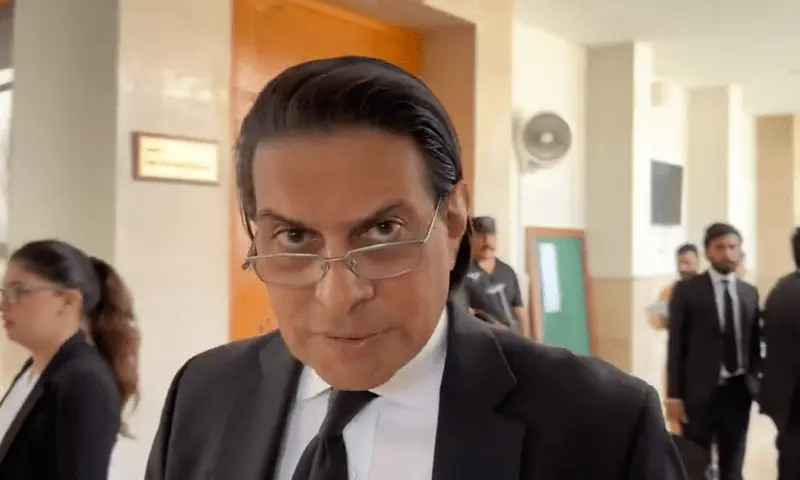
Addressing a press conference, Tehreek-i-Tahafuz Ayeen-i-Pakistan (TTAP) Secretary General Salman Akram Raja, Leader of the Opposition in the Senate Allama Raja Nasir Abbas, Dr Babar Awan and others pointed out that extraordinary situation demanded extraordinary measures.
Mr Raja said the nation was witnessing that brutality had been imposed across the region, while talks mediated by Oman were close to conclusion. He said “Zionist forces” derailed the progress.
Asserting that Pakistan should act like a nuclear state, he said that institutions in the country and people were being “pitted against each other through misinformation and division”.
Opposition leaders criticise petrol price hike, court rulings and ‘Board of Peace’ plan
Mr Raja alleged that a government lacking a public mandate had been imposed on the masses.
He urged those in power to learn from past mistakes and avoid repeating them.
Referring to recent court decisions, he said sentences had been announced against individuals in their absence, including punishments of up to 50 years.
About the Iranian retaliation, he believed that property should not be damaged in Arab countries and called for collective efforts to resolve issues through dialogue. He said, “All stakeholders must sit together at the negotiating table to find solutions.”
Allama Raja Nasir Abbas said the United States wanted control over oil and other resources while also pushing for a “Greater Israel”, but Iran was the main hurdle to those objectives.
“The attack on Iran is an attack on the entire Ummah and Iran is our frontline of defence for the Ummah. Everyone should understand that the US came into the Middle East to protect Israel. Negotiations were successful, but suddenly Iran was attacked,” the opposition leader said.
He made it clear that Iran had not targeted any Muslim country but the US and its military assets.
The senator said that the “Board of Peace” had been established to “capture” Palestinian land and regretted that Pakistan was eager to join it.
Israel had been occupying the land of Muslim countries, but the government was not ready even to speak against it, he said. He added that former prime minister Imran Khan could save the country and play a role in bringing peace to the region.
Dr Babar Awan urged the government to immediately suspend Pakistan’s participation in the Board of Peace, noting that Indonesia had already halted its decision to join the same platform.
He said Israeli Prime Minis-ter Benjamin Netanyahu had been declared an international criminal.
Dr Awan also criticised recent court rulings in Pakistan, stating that 47 persons had been sentenced in absentia, many of whom were not even accused of specific acts. He said such decisions carried no legitimacy.
Dr Awan criticised the establishment of a federal constitutional court, saying it was intended to hear constitutional matters but was also being assigned criminal cases.
“The Constitution was created to protect the people, not the walls of institutions,” he said. He was of the opinion that Pakistan should not become a party to any conflict between two Islamic countries.
He proposed that a public referendum be held if the government wanted to nominate Donald Trump for a peace award or join the so-called Board of Peace.
He also said that through NAB-related legislation, consultation with the leader of the opposition for the appointment of NAB chairman had been removed and a three-year extension had also been granted.
The TTAP secretary general also criticised the government’s economic policies, saying that the Rs55 per litre increase in petrol prices was clear evidence of the challenges Pakistan might face in the near future. He said no other country in the region had increased petroleum product prices by such a large percentage.
Published in Dawn, March 10th, 2026