UNHCR declares ‘major humanitarian crisis’ in Mideast


 0
0

• Refugee agency says its facing shortage of funds
• US, Israeli attacks on Iran choke aid corridors, obstructing global relief efforts
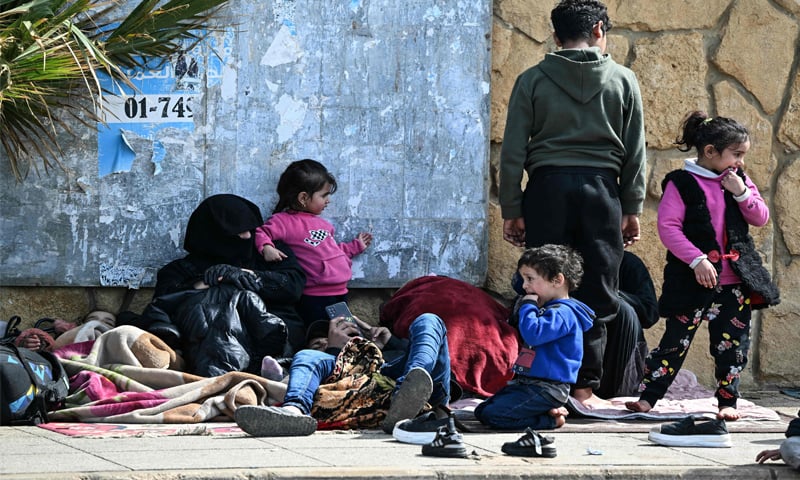
GENEVA / ISLAMABAD: The United Nations refugee agency on Friday declared the crisis in the Middle East “a major humanitarian emergency”, and insisted all fleeing civilians should be granted safe passage.
UNHCR said the Middle East crisis — which began on Saturday when Israel and the United States launched strikes on Iran and has spread since — had already caused large numbers of people to flee their homes.
“UNHCR has declared the escalating crisis in the Middle East as a major humanitarian emergency requiring an immediate response across the region,” Ayaki Ito, the agency’s emergency chief and its cross-regional refugee coordinator, told a press briefing in Geneva.
“The recent escalation of hostility and attacks in the Middle East have triggered significant population movements — while clashes along the border between Afghanistan and Pakistan have also forced many thousands of families to flee,” he said.
The affected regions already host nearly 25 million people as refugees, internally displaced people, or refugees who have recently returned from abroad, said Ito.
He said the UNHCR was trying to get life-saving assistance into affected countries across the region. Ito said it was imperative that all civilians who need to move, or cross borders, “find safety and safe passage”.
Funds shortage
In an ‘Emergency Flash Update’, the UNHCR elaborated that in South-West Asia, the agency required $454 million in 2026 to support forcibly displaced populations that fall under the Afghanistan situation.
It added that as of February’s end, only 15 per cent of this amount had been received. Funding shortfalls are particularly acute in Iran (8pc funded) and Afghanistan (17pc funded), where economic pressures and instability continue to drive humanitarian needs.
In light of the evolving humanitarian situation, UNHCR has urgency to support an enhanced immediate operational response across affected countries. However, humanitarian capacities are already stretched, and funding shortfalls may limit the ability to scale up and respond to significant emerging needs.
The update read that Iran hosted over 1.65m refugees and others in need of international protection. Since the start of the conflict, approximately 100,000 people have left Tehran, it noted, quoting the Iranian government.
“These figures likely underestimate the scale of displacement, as population movements are expected to be significantly higher across the country,” it added.
It further stated that since the start of 2025, more than 2.9m Afghans had returned, most of them from Iran (1.8m) and Pakistan (1m). In 2026, 108,500 Afghans returned from Iran, including 96,400 deportations, and 196,700 returned from Pakistan, including 22,100 deportations, as of February-end.
“UNHCR Afghanistan and Pakistan are preparing for a potential surge of returns should the Torkham crossing reopen, with preparedness planning based on projections of 10,000-15,000 returnees per day during the first three weeks,” the flash update stated.
Aid corridors choked
Key humanitarian air, sea and land routes are being obstructed by disruption from the war in the Middle East, delaying life-saving shipments to some of the world’s worst crises, 10 aid officials have told Reuters.
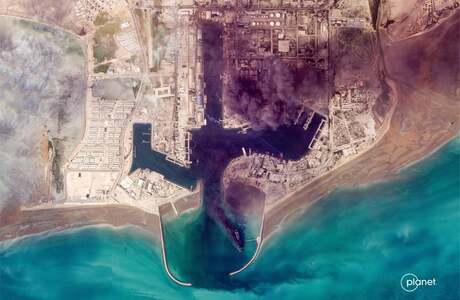
The US-Israeli war on Iran has entered its seventh day, convulsing global markets and disrupting supply chains with airspace closures and the halt of shipping through the critical Strait of Hormuz.
Aid to Gaza and Sudan is grinding to a halt and costs are soaring for help to the hundreds of millions suffering hunger crises around the world.
“People in dire need of assistance will have to wait longer for food,” said Jean-Martin Bauer, director of food security at the World Food Programme.
Already, tents, tarpaulins and lamps destined for the Israeli-occupied Palestinian territories of Gaza and the West Bank have become stuck in the supply chain, the International Organisation for Migration said.
Aid groups say higher operational costs are straining budgets already facing massive donor cuts. The IOM said shipping firms were demanding emergency surcharges of approximately $3,000 per container.
WHO supplies
Meanwhile, World Health Organisation (WHO) Eastern Mediterranean regional chief Hanan Balkhy said its global health emergencies logistics hub in Dubai was resuming operations on Friday after a pause caused by the war in the Middle East. She said the WHO would be working in the coming days to process urgent new shipments and clear priority backlogs.
However, the agency had earlier cautioned that $1.6m in polio laboratory supplies were held up, which could have dire impacts for Afghanistan and Pakistan, where the disease remains endemic.
It is still unclear how long it would it take the supplies to reach the two countries amid the conflict.—Agencies/Amin Ahmed
Published in Dawn, March 7th, 2026