President Zardari gives assent to bill for extending NAB chairman’s term by 3 years
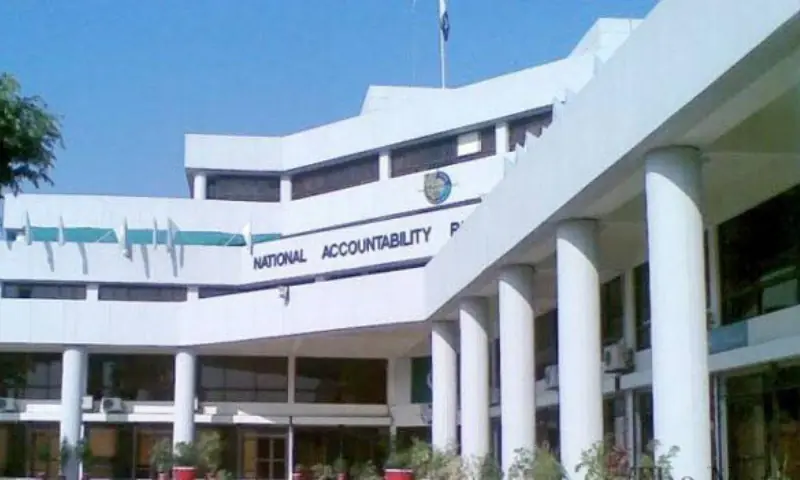


ISLAMABAD: President Asif Ali Zardari gave his assent on Thursday to the NAB (Amendment) Bill, 2026, which allows for an extension in the National Accountability Bureau (NAB) chairperson’s term by another three years.
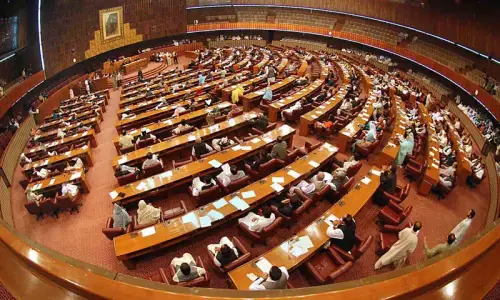
The president’s approval came hours after the bill was rushed through both Houses of Parliament amid the opposition’s outcry and a day before the term of incumbent NAB Chairman Lt General (retired) Nazir Ahmed was set to expire.
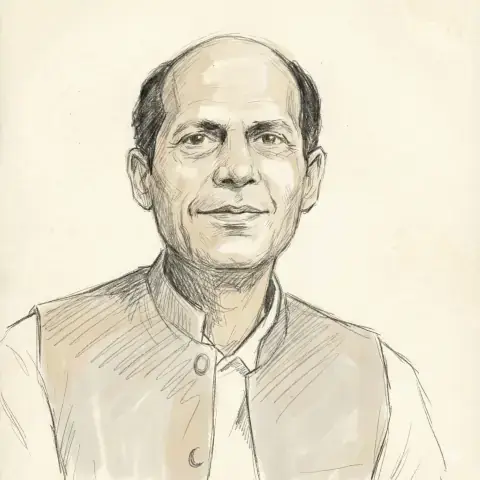
Ahmad became the NAB chairman on March 4, 2023, after his predecessor Aftab Sultan resigned, citing “interference” and “pressure” as the reasons for his departure.
An official source told Dawn that a notification extending the term of Lt General (retd) Nazir Ahmed for another three years had also been issued, and he would now hold the office till March 2029.
Amendments
Previously, a NAB chairman served a non‑extendable term of three years and was not eligible for reappointment under the NAB Ordinance. An amendment to its Section 6 now allows the chairman to serve a three‑year term that can be extended once for a period of three years by the federal government.
Under the NAB law, previously, the accountability watchdog is authorised to take cognisance of cases involving corruption exceeding Rs500 million. But now, this threshold will be revised annually in line with the inflation index published by the Pakistan Bureau of Statistics.
“This measure ensures that the financial limits prescribed under the law remain realistic and relevant over time and are not diminished due to inflation”, the statement of objects and reasons in the bill states.
An amendment to Section 4 of the NAB Ordinance, which deals with the jurisdiction and functions of accountability courts, expands the scope of accountability courts to cover both trials and appeals.
Moreover, an amendment to Section 9 of the ordinance empowers both accountability courts and the relevant high courts to grant bail or order the release of the accused under Sections 439, 496, 497, and 498 of the Code of Criminal Procedure.
A new provision to the law allows a second appeal following a conviction.
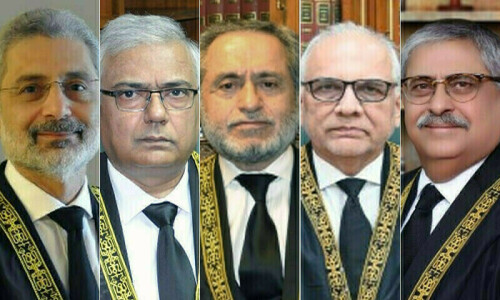
“Any person convicted or the prosecutor general accountability, if so directed by the NAB chairman, aggrieved by the decision made by the high court under section 32, may prefer a second appeal to the Federal Constitutional Court within a period of thirty days,” the provision reads.
The statement of objects and reasons of the bill says the National Accountability (Amendment) Bill, 2026 seeks to amend certain provisions of the National Accountability Ordinance, 1999 with the objective of improving procedural clarity, strengthening accountability mechanisms, and introducing additional safeguards in the appellate and administrative framework of NAB.
Passage through Parliament
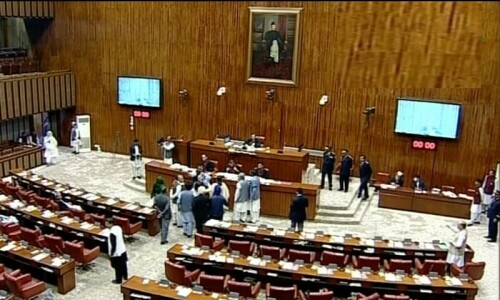
The private members’ bill was first moved in the Senate by Muhammad Abdul Qadir, an independent lawmaker from Balochistan.
The bill was tabled through a supplementary agenda on a non-private members’ day, which resulted in protest from opposition benches.
Opposing the legislation, PTI parliamentary leader Barrister Syed Ali Zafar made a cryptic remark, saying that the bill had come from “somewhere else”. He said moving criminal cases from high courts to constitutional courts — a reference to the FCC being authorised to hear appeals in NAB cases — would be tantamount to compromising the dignity of the judiciary.
He termed this change “a blot on Parliament’s reputation” and alleged that the NAB amendments under consideration were being made only to “politically target” PTI founder Imran Khan.
Zafar alleged that the cases were being transferred to the FCC as the “Supreme Court is not under control”, without further elaborating on this remark.
He also said the decision to extend the tenure of NAB chairman by three years was against public interest.
“Lawmakers elected through Form-47 (a reference to alleged rigging during 2024 general elections) are legislating against the will of the people. Citing past mistakes to bulldoze a legislation today is dangerous for democracy,” he remarked.
The PTI leader noted that “ignoring the opposition in legislation process is akin to diminishing Parliament’s credibility”.
Later, the bill was moved in the National Assembly (NA) through a supplementary agenda as well. It was moved by PML-N’s Mah Jabeen Abbasi for the House’s immediate consideration.
PTI Chairman Barrister Gohar Ali Khan voiced opposition to the bill in the NA, criticising the “one-sided extension in the term of the anti-graft watchdog’s chief and the increase in the threshold of Rs 500m”.
Gohar said the relevant amendments would allow “influential people to get cases registered against them dismissed”, and demanded that the bill be withdrawn.
Jamiat Ulema-i-Islam-Fazl’s Aaliya Kamran said the clause related to the appointment of NAB chairman was against the Charter of Democracy.
She wondered how the ideologies of people who used to talk about the abolition of NAB had changed. She also regretted the bypassing of the Supreme Court, with the right to hear appeals in corruption cases being transferred to the constitutional court.
Muttahida Qaumi Movement’s Izharul Hasan, meanwhile, said lawmakers should get the chance to go through such important pieces of legislation before voting on them.