2
2

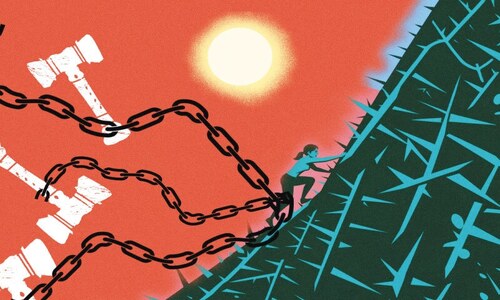
THE World Bank’s Women, Business and the Law 2026 report delivers a bleak assessment of the state of gender equality worldwide. No country has yet completely secured the legal rights necessary for women’s full economic participation.
On average, economies score 67 out of 100 for gender-equal laws on the books. Yet that figure drops to 53 when enforcement is measured, and to just 47 when the adequacy of supportive systems such as access to justice and childcare services is assessed. Clearly, while there has been progress in legislation, there has been little political will and administrative capacity to make those laws meaningful.
The gap between promise and practice is widest where women’s economic participation is most urgently needed. South Asia, Sub-Saharan Africa and the Middle East and North Africa, home to rapidly growing youth populations, continue to maintain some of the most restrictive legal barriers. At a time of sluggish global growth and demographic strain, excluding half the population from full economic opportunity is not merely unjust, it is economically self-defeating.
Within this global picture, Pakistan’s performance is deeply concerning. The report assigns Pakistan a legal frameworks score of 46.68, far below the global average of 67. Its supportive frameworks score stands at 50.68, only marginally above the global average of 47, suggesting that while some policies or institutional arrangements exist, they are limited.
However, the most troubling figure is its enforcement perceptions score — 27.35, barely half the global average of 53. In brief, even where rights exist on paper, experts perceive them to be weakly or inconsistently enforced. Pakistan’s position reflects the broader South Asian dilemma.
The country faces a youth bulge and chronic economic fragility, yet underutilises women’s labour and entrepreneurial potential. Legal barriers affecting workplace equality, inheritance, mobility, access to credit and childcare continue to shape women’s life chances. Even where statutory protections are present, such as provisions against workplace harassment or formal guarantees of certain rights, poor implementation weakens their impact. Laws without enforcement risk becoming symbolic gestures rather than instruments of change.
Notably, Pakistan is absent from the list of economies that enacted significant reforms between 2023 and 2025. At a time when other states are expanding parental leave, mandating equal remuneration and dismantling job restrictions, stagnation has its own cost.
For Pakistan, the path forward is not limited to new legislation. It requires strengthening courts, regulatory bodies and complaint mechanisms; investing in affordable childcare; ensuring equal access to finance; and collecting reliable data broken down separately for men and women. Above all, it requires political resolve to embed women’s participation at the heart of economic reform. Inaction is tantamount to surrendering growth.
Published in Dawn, February 26th, 2026