13
13

IF you are trying to follow the discussion around the government’s attempt to reduce net metering rates and find it too technical or too confusing, don’t worry. You’re not alone, and more importantly, as an ordinary consumer, you don’t need to get into the technicalities. All you need, as a user of electricity, is a clear and firm idea of where your specific interests lie.
Around 10 years ago, the electricity in my bills cost me Rs20 per unit, including taxes and everything. Today, the same cost is around Rs60 and sometimes as high as Rs70. All of us have been hit by this tsunami of inflation. Some of us tried to cope with it by investing in a rooftop solar system in the hopes that once it pays itself off, it will provide us with some protection from the skyrocketing price of electricity.
These prices did not skyrocket because of anything we did. They rose for two reasons. First, because the rupee fell against the dollar, and most of our electricity prices are indexed to the dollar since we rely on imported fuel and equipment in order to generate it. Second, the bureaucrats cannot run the power system and won’t let anyone else run it either. The most visible marker of their failure to operate the power system is the rise of the circular debt.
So they kept taking the costs of their failures and passing them on to us. When their failures to run the power system led to the rise of the circular debt in the years since 2005, they moved to make the rest of us pay the interest cost of carrying this debt. In 2014, they succeeded, and we have had interest payments on the circular debt as part of our bills ever since. This is just one example, though a stark one. In 2016, they decided to make costs of raising a CPEC security force a ‘pass-through item’, meaning it would be part of the costs of a project that consumers pay through their bills. In 2023, they also started applying a withholding tax on income from net metering benefits. Good luck getting this refunded at the end of the year when you come around to filing your tax returns!
Either way, we had no choice but to pay. We were prisoners inside this grid.
The story goes on and on. Over the years, so many costs were bundled into the system — some visible in the bills but many tucked away as ‘pass-through’ items from generation companies which you cannot see but that are inside the variable charges of your bill — that the power system became too large and too unwieldy for the bureaucrats and its losses mounted.
In 2007, when I was covering the rise of the circular debt, it made headlines when it crossed Rs30 billion. By 2024, it had crossed Rs2 trillion. There were many contributing factors behind this rise, including system losses, but also larger macroeconomic mismanagement by the government, which led to devaluation of the rupee and hikes in dollar-indexed payments, as well as higher interest costs. None of this was our fault, yours or mine. But the costs of it all were billed straight to us.
Then came the real killer: the devaluations of 2022 and 2023. As the rupee plummeted against the dollar, power bills skyrocketed. In rupee terms, my bills more than tripled in this period. In dollar terms, they barely rose a few cents.
Either way, we had no choice but to pay. We were prisoners inside this grid. Look at your bills over the past decade and work out what percentage of your household income was going to pay for electricity. The sharply rising proportion is your prisoner tax, and left to its own devices, this would have continued indefinitely, forever.
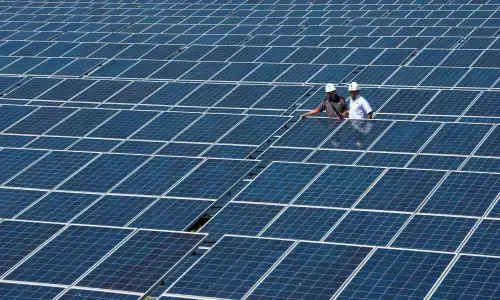
But the prison walls were breached at some point with the arrival of rooftop solar. At first, it moved slowly, between 2016 and 2020, as power utilities stonewalled people’s net metering licence applications. But once the stonewalling ended, a stampede ensued.
The sheer scale with which solar adoption grew in Pakistan post-2020 made global headlines. The scale of the defection from the grid was like a prison break, with people fleeing in growing numbers as the price of electricity spiralled out of control in the inflationary fire of 2022 and 2023.
The bureaucrats are angry because their best prisoners have found an alternative source of supply and can reduce their reliance on the grid. They are demanding that these people be rounded up and brought back and be made to buy the expensive electricity from the grid that has so many costs bundled into it that you need two separate Master’s degrees to be able to understand them, one in finance and the second in engineering.
You don’t need to get into the technical issues to get this. You just need to know your own mind. Are you happy paying for all those ‘fixed costs’ the bureaucrats want to saddle you with in their grid? If not, then make your exit.
The solar revolution has entered its next phase with the arrival of batteries. If the grid wants to pay me Rs11 for my electricity and charge me Rs60 for its electricity, I have a solution: simply store my electricity and use it myself. In the years ahead, more grid defections will take place and these will be permanent. The bureaucrats will probably try to halt these too, by adding sharp taxes and duties on batteries, but they will be unsuccessful because the local production of batteries has already begun.
The grid is in terminal decline. It would be better to just admit that and start managing the transition rather than thrashing around like this to first spur solar adoption, then swivel around to try and stop it. The state looks rather foolish now, first announcing a solar policy, then grinding its teeth at those who opted for it.
The writer is a business and economy journalist.
Published in Dawn, February 12th, 2026