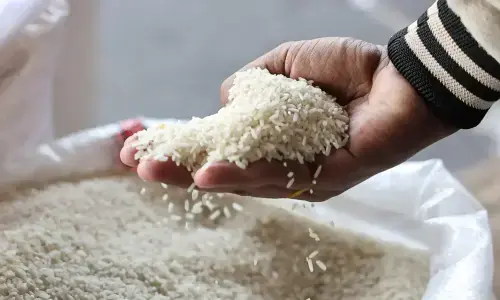
ISLAMABAD: Saudi Arabia has shown interest in investing in corporate farming in Pakistan’s rice sector to ensure a stable, reliable supply of rice through structured, long-term arrangements between the two countries.
The issue came up for discussion in a meeting between Commerce Minister Jam Kamal Khan and Assistant Minister of Investment of Saudi Arabia Ibrahim Al-Mubarak on Wednesday. The meeting reviewed and advanced bilateral cooperation in trade, investment, and joint engagement in regional markets.
An official announcement released after the meeting noted that the Saudi side expressed interest in pursuing corporate farming in the rice sector. It was observed that Pakistan already meets the required quality standards, and that investment in corporate-scale farming, mechanisation, storage, and logistics could support steady rice exports to Saudi Arabia. More broadly, discussions on agriculture and food security focused on cooperation in rice, fodder (including alfalfa), meat, and selected agricultural products. Both sides also examined the potential role of Saudi financing institutions in supporting export-linked agricultural and infrastructure projects in Pakistan, particularly those structured around guaranteed offtake arrangements with Saudi Arabia.
Kingdom keen on investing in corporate farming, long-term rice supply
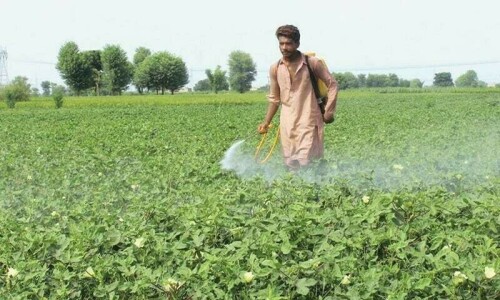
The meeting also reviewed corporate farming and mechanisation as long-term responses to productivity constraints, including in crops such as cotton, where declining yields and high labour input costs have weakened competitiveness.
Mr Kamal observed that export-oriented investment models could help restore agricultural output while strengthening downstream industries, including textiles and yarn.
The meeting reflected strong alignment on pursuing an investment-driven, partnership-based approach to economic cooperation. Both sides underscored the need to enhance competitiveness, expand production capacity, and strengthen value chains to unlock Pakistan’s export potential and respond to growing regional demand in a sustainable, coordinated manner.
A central focus of the discussions was the joint exploration of regional markets, particularly Central Asia, Africa, and ASEAN, which were identified as high-growth regions offering substantial opportunities for collaboration.
Both sides agreed that, by leveraging their respective strengths, Pakistan and Saudi Arabia can position themselves as complementary partners, combining Pakistan’s production capacity with Saudi Arabia’s capital, market access, and regional connectivity.
Human resource development emerged as another key area of collaboration. Both sides agreed that the most pressing shortages across healthcare, hospitality, and services are concentrated among nurses, caregivers, technicians, and mid-level hospitality staff rather than senior professionals.
Mr Al-Mubarak shared Saudi Arabia’s experience in vocational training and skills development. He conveyed openness to replicating the training to deploy models in Pakistan, linking structured training programs with employment opportunities overseas.
Opportunities in building materials and construction inputs were also discussed, with the Saudi side noting substantial import requirements for products such as limestone, marble, aggregates, and other materials not locally available. It was agreed that focused engagement between Pakistani suppliers and Saudi building material trading companies could deliver early outcomes through direct private-sector matchmaking.
Both sides also exchanged views on expanding cooperation in pharmaceuticals, sports goods, footwear, and light manufacturing, recognising Pakistan’s growing industrial base and the scope for joint ventures, contract manufacturing, and split-production models targeting regional and global markets.
Published in Dawn, February 12th, 2026