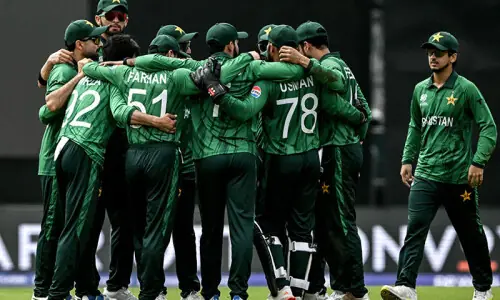
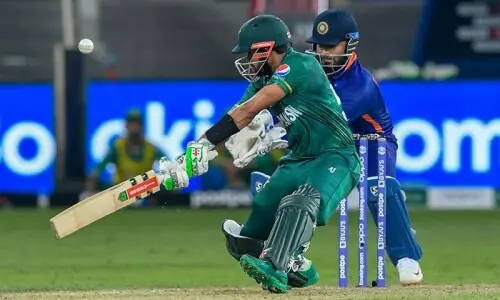
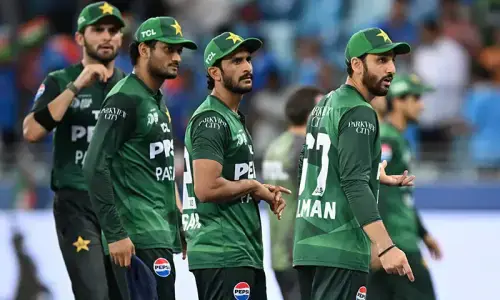
AFTER days-long negotiations, Pakistan moved for the greater good of world cricket when its government gave the national cricket team the go-ahead to play their Twenty20 World Cup match against India on Sunday.
Pakistan had earlier refused to play the blockbuster fixture, which is the revenue generator for the International Cricket Council, after Scotland had been drafted in to replace Bangladesh at the World Cup following the latter country’s refusal to travel to India for their matches due to security concerns. The Pakistan Cricket Board had protested the decision of the India-led ICC. While the team was allowed to travel to the tournament it was instructed to forfeit the match against India.
With its finances in danger, the ICC came to the table with its director Imran Khawaja flying to Pakistan over the weekend. Bangladesh Cricket Board chief Aminul Islam also arrived, with Pakistan Cricket Board chairman Mohsin Naqvi at the centre of negotiations. Pakistan had already been requested by Sri Lanka, where the national team is playing their matches of the World Cup, and the UAE to reconsider their decision. The PCB, however, was fighting a bigger battle: to ensure equality in world cricket against the governing body that has for long acted on India’s whims.
In many ways, it has succeeded. The ICC has not penalised Bangladesh, while also granting it hosting rights for a tournament in the 2028-2031 cycle to mitigate the impact from its ouster from the World Cup. It therefore made sense for Pakistan to change their stance; going ahead with the World Cup match against India means ensuring financial security for the cricket world, especially the associate members.
This should not be forgotten. It should also mark the start of a new era in cricket governance. The politicisation of the sport has been a menace that has hindered the growth of the game for long. Sports should not be used as a propagation of political messaging and it is high time this practice was stopped.
Once the arrangement between Pakistan and India, which sees both sides play their matches of an event in either country at neutral venues, ends, the ICC should look to ensuring that it normalises bilateral cricketing ties between the two arch-rivals. That would embellish the ICC’s legitimacy as a neutral body that is focused on making sure that the game stays above petty politicking.
Published in Dawn, February 11th, 2026