0
0
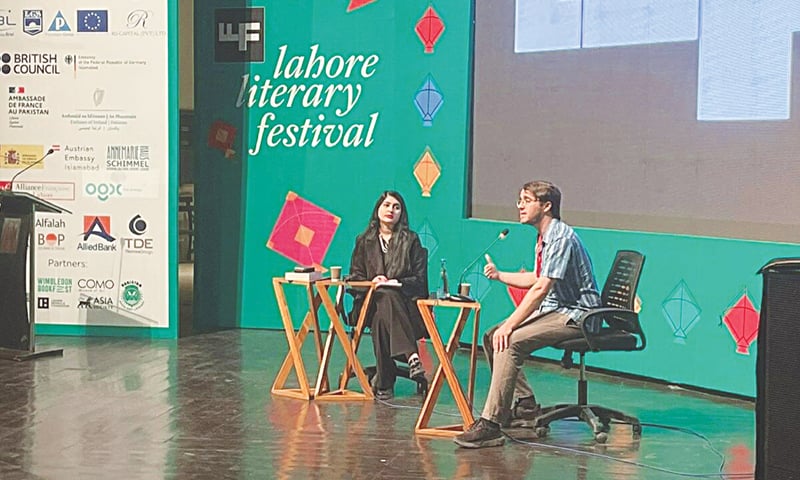

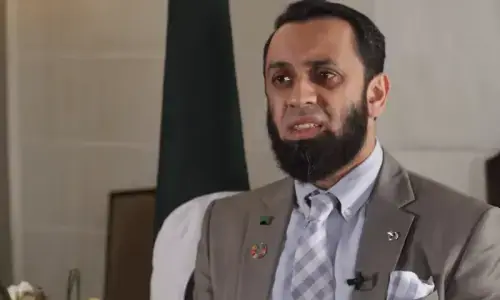
LAHORE: Historian Sam Dalrymple says when he came to Lahore for the first time in 2015, he found it very similar to Delhi and it was far more similar to Delhi than Delhi was to Jaipur or Lucknow. His friend Sparsh, founder of Project Dastaan, visited Lahore and they were constantly talking about the city. He found many localities in Lahore similar to those of Delhi like Jamia Masjid and the Fort.
He shared these views on the launch of his book, Shattered Lands,Five Partitions and the Making of Modern Asia,on the final day of the Lahore Literary Festival . The session was moderated by Noorzadeh Raja.
“I feel that it’s unusual outside their countries, Indians and Pakistanis become best friends, they work together and even date each other,” Sam said and added that it was not seen between any other enemy countries and conflict zones, e.g. Russians and Ukrainians.
Speaking about himself, he said he had been living in Delhi for much of his life from 2004 until now and had a kind of identity crisis whether he was Scottish or Indian. Sam is the son of famous historian William Dalrymple.
Speaking about Jinnah and why he came back from England to continue his struggle for Pakistan, Sam said Jinnah had gone for his daughter’s schooling and when he realised she had adjusted to the system he decided to come back. Another reason was political rivalry with Nehru who had said that “Jinnah’s political career has finished’ and there was this huge influence of Iqbal during his time in London, he said and added that all these reasons were the contributing factors. Besides, he saw that there was a momentum building for independence and that he could play a role in that which was impossible in the 1910s. After the war there was constant erosion of British authority, said Sam.
There were a lot of different reasons but I don’t think when he came back in the 1930s, he had not yet become a “Pakistani nationalist” in that sense, added young Dalrymple. He said what was most fascinating about Jinnah was that more than any other politician of his time, he changed his views, developed his ideas through the decades. “Jinnah of 1910 was very different from Jinnah of 1940”.
Sam said there was a whole generation of people collecting oral history in the wake of 70thanniversary of the Partition.
“One of the things that I was struck with the 1947 partition as opposed to 1971 etc it’s a rare moment of history where decisions of six men, notably no woman, Jinnah, Mountbatten, Gandhi, Patel and Liaqat Ali khan, these six men do essentially decide the fate of the subcontinent. Between their discussions you get the working of the decisions that created modern India and Pakistan.”
Speaking about himself, Sam said his background was in oral history. He worked with Project Dastaan, recording oral testimonies. “I bring together what was happening in the Viceroy house and government house in Karachi and what was the situation like on the ground. People were listening to the radio to find out what was happening and figuring out days after the partition.”
About Ambedkar’s book on the Partition, he said he had a whole chapter on the question of Pakistan. All reasons that he cites for Pakistan’s creation were based on precedent of Burma separation from India, which was fascinating, added Sam Dalrymple.
Published in Dawn, February 9th, 2026