PHC declares CM’s approval for posting police officers unconstitutional
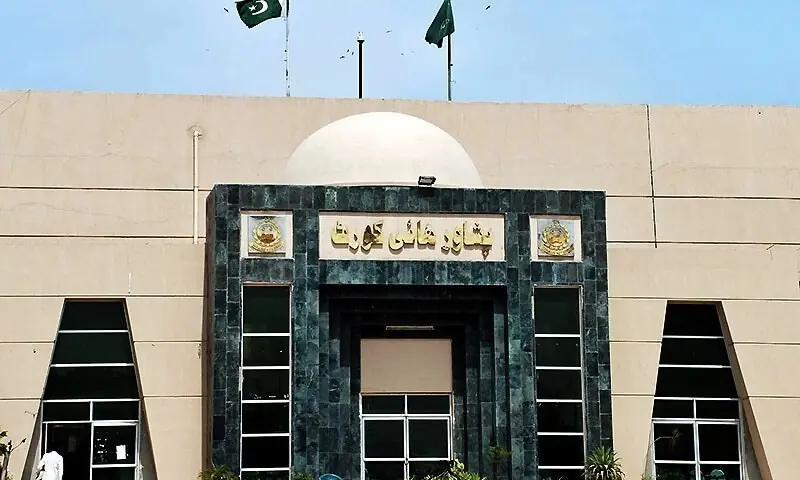

PESHAWAR: The Peshawar High Court has declared unconstitutional and void the provincial police law’s changes made to seek the chief minister’s approval for posting senior police officers (BPS-18 and above) and deprive the provincial police officer (PPO) of the authority to appoint field officers.
A bench consisting of Chief Justice SM Attique Shah and Justice Mohammad Ijaz Khan struck down two relevant provisions of the Khyber Pakhtunkhwa Police (Amendment) Act, 2024, and ordered restoration of three deleted provisions of the original KP Police Act, 2017, empowering the posting of high-ranking police officers by the PPO.
“These interventions unconstitutionally dismantled the operational autonomy indispensable to a professional police service and, in effect, impermissibly repositioned the police as an instrument of political expediency rather than a servant of the law,” it declared.
The court observed that the constitutional scheme admits of “superintendence” by the executive only in the limited sense of broad policy direction and oversight; the day-to-day administration of the force—postings, transfers, and internal management—must vest exclusively in the IGP (PPO) so that the chain of command remains coherent, discipline intact, and the police leadership does not devolve into a merely titular office.
Strikes down KP Police Act changes made to strip PPO of certain powers
It underscored that a depoliticized and functionally autonomous police was not a matter of administrative convenience but a constitutional necessity—sine qua non—for the effective protection of fundamental rights, particularly the guarantees of life (Article 9), fair trial (Article 10A), and equality (Article 25), all of which were directly imperiled when field command becomes dependent upon political favour.
The court ruled that through the said amendments made in the Khyber Pakhtunkhwa Police Act, 2017, the office of the Inspector General (PPO) was thereby rendered functionally ineffective, because accountability for law and order couldn’t be fairly imposed on an office holder who is denied authority to select and deploy principal field commanders, including SSPs, SPs, and DPOs.
While partially allowing a petition challenging several provisions of the KP Police (Amendment) Act 2024, it ruled: “The Chief Minister may legitimately set policing priorities, for example zero tolerance for street crime or enhanced focus on counterterrorism or any other kind of crime. However, decisions regarding which DPO or SP or SSP is posted in a particular district, and the timing and manner of such transfers, fall within the domain of administration.”
The bench added that the political executive handpicked district police officers and other BPS l8 field commanders, those officers were incentivised to bypass the inspector general and to look instead to political patronage, fracturing the chain of command and corroding discipline.
“If the political executive assumes direct control over transfers of field commanders, including RPOs, DPOs, and other Grade l8 officers and above, it fractures the organisational fabric of the force, reduces the Inspector General to a titular head, and renders meaningful discipline and strategy impossible. A police leadership deprived of essential administrative levers cannot ensure performance, accountability, or lawful command,” it declared.
Barrister Amir Khan Chamkani appeared for petitioner Barrister Mohammad Yousaf Khan and requested the bench to declare the KP Police (Amendment) Act 2024, particularly sections 3, 5, 6 and 7 as unconstitutional, void and of no legal effect.
He sought the court’s orders for restoration of the originally enacted provisions of the Police Act, 2017, to the extent of inconsistency with the impugned amendments.
He contended that these amendments had undermined and compromised the independence, autonomy and professional character of the provincial police as conceived under the Police Act, 2017,which was promulgated to ensure an efficient, depoliticised, accountable and operationally autonomous police service.
KP advocate general Shah Faisal Uthmankhel opposed the petition contending that in a democratic system, elected institutions exercised oversight over the executive organ of the state.
He added that since the police were an executive body, it remained subject to the control and supervision of the chief minister, being the elected representative of the people of the province.
The bench observed that the Police Act, 2017, was enacted precisely to depoliticise policing.
Referring to the proviso added to section 17 (4) of the Act, which requires approval of the chief minister for posting of officers (BPS 18 and above), the court ruled: “….the impugned proviso institutionalises political interference, particularly at the level of BPS 18 officers who constitute the operational pivot of policing. The amendment is arbitrary and unreasonable, and discloses no discernible administrative rationale for Chief Minister Control over mid-level operational postings beyond the exertion of political influence.”
Referring to superior court judgements, the bench ruled that operational autonomy was essential to ensure that policing remained impartial, accountable and faithful to legal duty, so that police authority was exercised for public protection rather than political ends.
“Operational autonomy or functional independence means the police remain accountable to law and government policy, but the intimal command structure shall be protected. Administration of the force, including internal management, operations, postings and transfers, shall vest in the IGP, while the role of Government is limited to superintendence, namely policy, oversight and resources,” it declared.
The court added that all operational directions must flow from the IGP downward, and political executives should not bypass the IGP to issue direct instructions to DPOs or other officers.
It, however, didn’t declare unconstitutional some other amendments made to the Act, including the provision stating that any direction given by the chief minister in matters related to law and order shall be complied with forthwith, observing that it concerned superintendence and police oversight.
Published in Dawn, February 7th, 2026