Unesco chief calls for Pakistan, Egypt archaeological partnership


 0
0
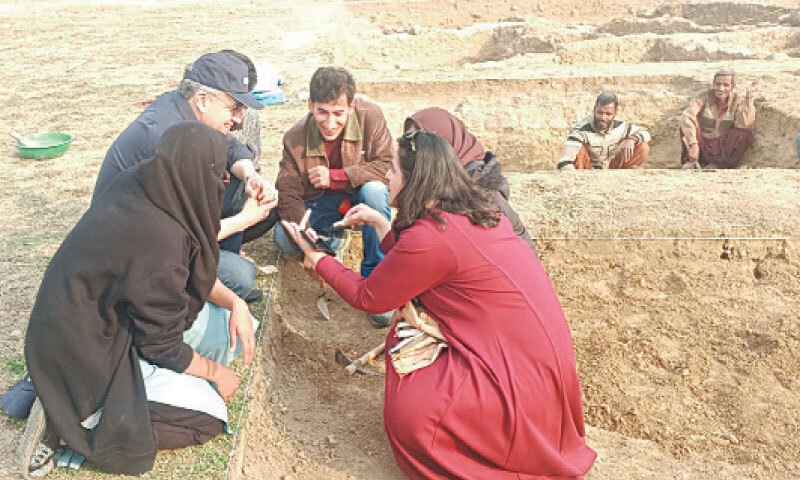

TAXILA: Director General of Unesco Dr Khaled El-Enany, on Sunday, called for strengthened cooperation between Pakistan and Egypt in the fields of history, archaeology and heritage studies, emphasising the importance of collaborative research and knowledge exchange between the two ancient civilisations.
Dr El-Enany expressed these views during his visit to the Bhir Mound, regarded as the earliest urban settlement of the Taxila civilisation and one of South Asia’s most significant archaeological sites. Interacting with members of the ongoing excavation team, the Unesco chief was briefed on current research activities and, in turn, shared insights into modern excavation techniques and scientific methodologies used in contemporary archaeological practice.
Highlighting the shared historical depth of Pakistan and Egypt, Dr El-Enany urged enhanced bilateral cooperation between Cairo and Islamabad in historical research, archaeological documentation and academic exchange, noting that such collaboration would contribute to the global understanding and preservation of ancient civilisations.
Later, the Unesco director general visited the Taxila Archaeological Museum and the remains of Sirkap – widely recognised as the first
metropolitan city of the Taxila civilisation, dating back to the 2nd century BC The ancient city bears strong influences of Greek urban planning, introduced following Alexander the Great’s conquest of the region in the 3rd century B.C.
Upon arrival at the museum, Dr El-Enany was received by Deputy Director of the Directorate General of Archaeology, Asim Dogar, who briefed him on the museum’s extensive collection. Mr Dogar informed the visiting delegation that more than 4,000 artefacts are on display, including items crafted from stone, stucco, terracotta, silver, gold, iron and semi-precious stones.
Dr El-Enany lauded the efforts of the Pakistani government and the authorities of the Taxila Museum for their commitment to preserving and showcasing the rich heritage of the Gandhara civilisation, describing Taxila as a site of outstanding universal value and a vital link in humanity’s shared past.
Published in Dawn, February 2nd, 2026