Concerns raised in Senate over massive tree felling in Islamabad


 1
1

ISLAMABAD: The controversy surrounding the recent massive tree cutting in the federal capital echoed in the Senate on Tuesday, two days ahead of a meeting of the Senate standing committee on climate change with the issue on top of its agenda.
Raising a Point of Order in the Senate, Barrister Syed Ali Zafar expressed grave concern over the large-scale cutting of trees in Islamabad, warning that the unchecked destruction of green cover posed a serious threat to future generations.
He said that trees are the primary source of oxygen, which is essential for life and forms part of the fundamental human right to a clean and healthy environment. He cautioned that continued deforestation in the federal capital would have irreversible consequences for climate resilience, air quality, and public health.
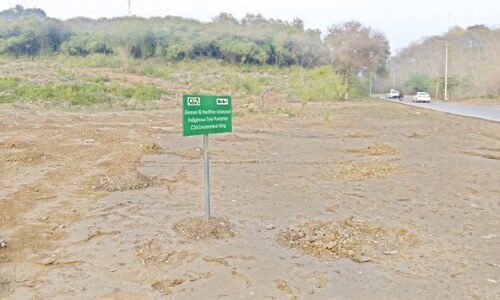
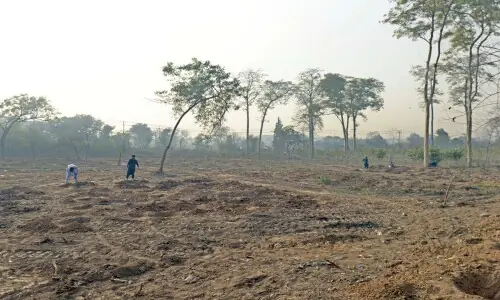
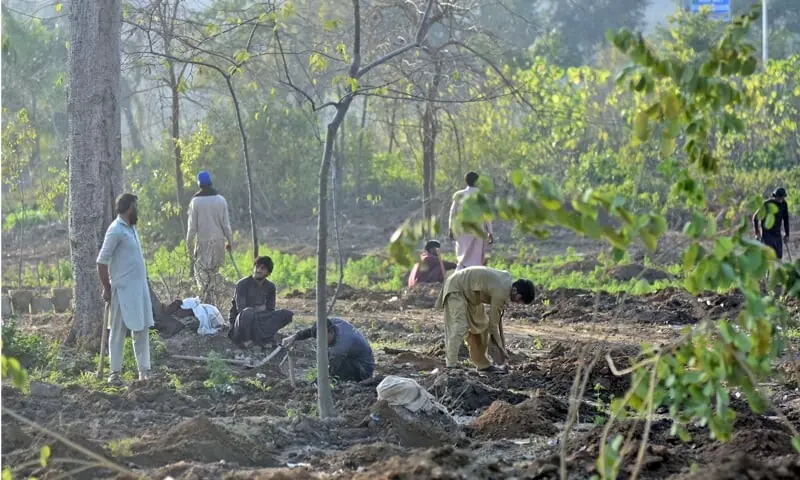
Recently, trees were cut down in Shakapairan area at a massive level under contesting view, as CDA says only paper mulberry trees were removed while citizens say besides paper mulberry trees of other species were also cut down. In addition to Shakarparian forest, trees were cut down in H-8 area during construction of a monument while a large number of grown trees were also felled in Chak Shahzad for the construction of a road for a housing society (without public hearing and EIA).
Barrister Zafar rejected the explanation offered by the government that mulberry trees were being cut to address allergy-related concerns, stating that mulberry trees had already been removed long ago and could not justify the current massacre of fully grown trees.
Standing committee on climate change set to take up issue tomorrow
He pointed out that other varieties of trees are now being felled, raising serious questions about the true purpose behind this activity. He stated that, upon examining satellite imagery and Google maps, it was clearly visible that once-green areas of Islamabad had been stripped of the tree cover, lending credence to concerns that this may be linked to housing schemes and commercial interests.
Calling the situation alarming and unacceptable, Barrister Zafar demanded that the government come clean and present a detailed and transparent report before the Senate, explaining who authorised the cutting, which areas were affected, and for what purpose. He stressed that parliament must be taken into confidence on an issue of such critical environmental and climate importance.
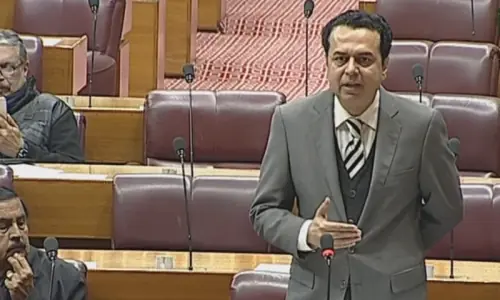
Minister for parliamentary affairs Dr Tariq Fazal Chaudhry, in his response, claimed that the green texture of the federal capital was not being disturbed, noting that only paper mulberry trees had been cut, which carried serious health hazards.
He said that the facts, which he would present before the House, could be checked through the Google imagery and argued that the trees in the lady one or two years could be checked through it. He explained that the paper mulberry plantation was carried out in 1970s, as it grew and spread fast.
The minister said that at that time there was a need for green texture of Islamabad but no study was conducted with regards to the trees’ health hazards. “However, it was found out in early 1990s that most of the pollen allergy and asthmatic cases were caused due to this tree and because of this, its cutting began in 2024 on the orders of the High Court,” he noted.
Due to the suo moto notice, taken by the Supreme Court and its order, it was stopped and as per the apex court’s direction, a commission was formed, which also fully supported the trees’ cutting and as a result 26000 trees were felled and the target was plantation of three against cutting of one such tree.
“So far, 46000 trees have been planted in F-9 Park alone, whereas substitute trees are being planted against cutting done at Shakarparian and related images will be presented in the House,” he assured the members.
In view of wide coverage of the matter, he explained that Suparco was invited for satellite imaging of Islamabad a year ago, two years and after trees were cut.
He added that on the orders of the CDA chairman or even the prime minister, not a single road could be built unless it was part of the Master Plan, and same was the case with sectors, private societies and avenues and roads.
Published in Dawn, January 21st, 2026