Cotton supply at ginning factories indicates stagnant production

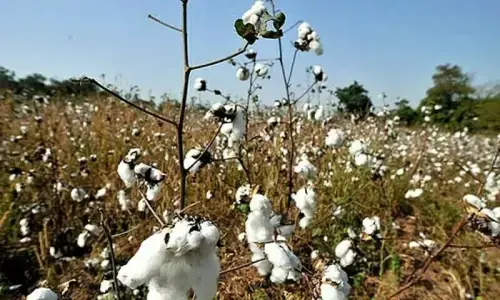
LAHORE: The Pakistan Cotton Ginners Association (PCGA) has released provisional national cotton production figures, showing that by Jan 15, 2026, a total of 5.49m bales arrived at ginning factories across the country.
This is only 7,000 bales higher than the output recorded during the same period last year, indicating near stagnation in cotton production.
According to the PCGA report, 2.58m bales reached ginning factories in Punjab, while 2.91m bales arrived in Sindh. Compared to the same period last year, cotton arrivals in Punjab declined by 4pc whereas Sindh recorded a 4pc increase.
The data reveals that textile mills purchased 4.84m bales from ginning factories while exporters bought 176,000 bales. Around 479,000 bales are still available for sale with the ginners.
At present, only 127 ginning factories are operational. Of them 91 are in Punjab while 36 are in Sindh.
Ginners call for ban on sugarcane cultivation in cotton zones; say the challenge has shifted from production to consumption
The PCGA officials noted that during the past two weeks alone, 46 ginning factories in Sindh and 50 in Punjab became non-operational—far more than market expectations.
The association also reported a sharp upward trend in cotton prices over the past week, with prices rising by Rs300 per maund to reach around Rs16,500 per maund. The increase has been attributed to the extremely limited availability of quality cotton in the domestic market and rising international prices of cotton yarn and fabric.
Cotton Ginners Forum Chairman Ihsanul Haq says that despite Pakistan’s cotton production remaining nearly 50pc below annual targets for several years, the real challenge has now shifted from production to consumption. He attributes this to the excessive cultivation of sugarcane in traditional cotton zones, which has not only reduced cotton acreage but also caused environmental pollution that had adversely affected cotton quality.
As a result, he says, many textile mills are forced to import high-quality cotton to fulfill export orders, putting severe pressure on the country’s foreign exchange reserves.
He urges federal and provincial governments to strictly enforce crop zoning laws instead of spending billions of rupees on cotton revival projects. He calls for a complete ban on sugarcane cultivation and the establishment of new sugar mills in cotton zones, which can help restore national cotton production to around 15m bales.
Haq warns that record decline in exports, soaring production costs for exporters and highly lenient import policies have pushed the cotton sector to the brink. More than 150 textile units have shut down completely, many others are operating partially, and hundreds of ginning factories have become inactive, placing the entire cotton industry ‘on a ventilator’.
He cautions that if ‘oxygen’ is not immediately provided to the cotton sector, the national economy itself can slip into ‘coma’. He points out that Pakistan’s cotton industry faces some of the highest electricity, gas, and markup rates in the world, along with multiple high-rate taxes and excessive intervention by various federal and provincial departments, all of which have sharply increased production costs and eroded export competitiveness.
Calling the current situation the worst economic crisis in the industry’s history, Ihsanul Haq urges governments to prioritise industrial revival over cash handouts.
He suggests that instead of spending around Rs1 trillion on welfare schemes such as the Benazir Income Support Programme (BISP) and Ramazan packages, these funds should be directed toward reviving industries, which would not only strengthen the economy but also significantly reduce unemployment and poverty.
Published in Dawn, January 19th, 2026