‘Mohenjo-Daro had fortified gates where people paid taxes to enter’
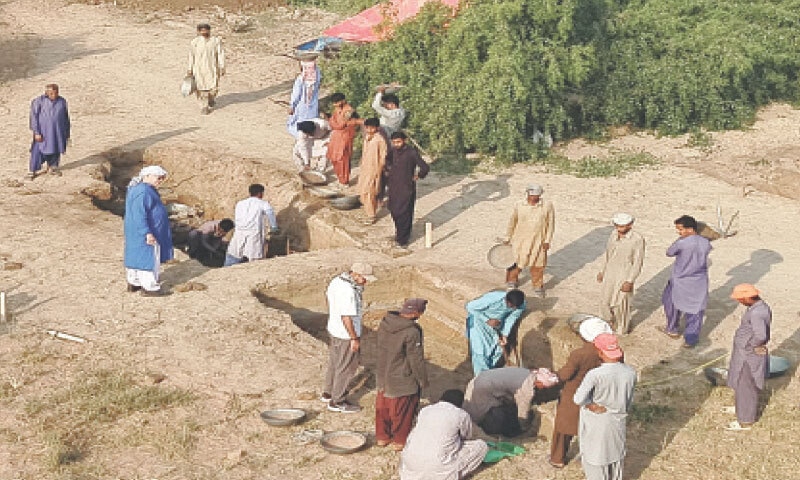
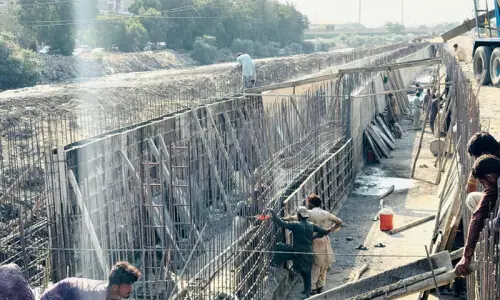
LARKANA: A team of experts, led by US archaeologist Dr Jonathan Mark Kenoyer, is conducting excavation work at the ancient Indus Valley site of Mohenjo-Daro at the “great wall” surrounding the historical city.
Director of State Bank Museum, Archives & Art Gallery Department Dr Asma Ibrahim and other specialists are members of the team.
Sources in the department of archaeology told Dawn on Friday that the team had been busy conducting research at the site over the past two weeks and it was close to winding up its second phase of work.
Speaking about the project, Dr Kenoyer explained that in earlier times, British archaeologist Dr Mortimer Wheeler had conducted trenching and excavation of a large pit at this location, but left it in half way labelling it an “embankment” but, according to him, it could be a “fortification wall” surrounding the city.
“We have re-excavated this wall for proper documentation and excavated trenches at three different locations to examine its structure. We hope to create a model of it,” Dr Kenoyer stated.
American archaeologist reveals the ancient city was surrounded by fortification wall; efforts on to uncover its urban planning and infrastructure
Dr Kenoyer said people visit Mohenjo-Daro to see the Stupa and the Great Bath, but they are unaware that the city was surrounded by fortification walls. “The fortification had main gates where anyone entering the city would pay taxes, which contributed to the city’s revenue. We will also search for these fortification gates,” he said.
He expressed the hope that there would have been a main gate for the fortification wall.
About his visit to the world heritage site, he said that he had been travelling here as a student back in 1989 and now was working where Dr George F. Dales had done some work in 1965.
The archaeologist revealed that evidence of sewage disposal systems has been found at Harappa, and similar drainage systems likely existed near the Great Bath’s western side and around the gates at Mohenjo Daro.
“We got bricks resembling the kutcha bricks of the Harappa period, measuring 10x30x40 centimetres and weighing 14 kilogrammes each. A man can only lift two such bricks. Small bricks were having size of 16x12x24 centimetres which were used in the construction of houses.
“We are searching for these drainage systems and will create models to show visitors. We will prepare models using raw materials so that people visiting Mohenjo Daro don’t think this was just ruins, but understand what kind of lifestyle and civilisation existed here,” Dr Kenoyer added.
The excavation aims to provide visitors with a comprehensive understanding of the sophisticated urban planning and infrastructure systems that characterised this 5,000-year-old Indus Valley civilisation.
Dr Asma Ibrahim said that their objective was to continue work on the fortification wall. She added that, fortunately, they had discovered a fortification wall with a width of “six meters”. “We will also look for its fortification walls of earliest period,” she added.
A member of the team, Ali Lashari, indicated that the project would last for next 10 years. He said under the project excavation would continue at certain “unidentified areas” too and students from different universities would be included in the trainings.
He said after the identification of fortification wall, the next part of the plan was submitted with the Technical Consultative Committee of National Fund for Mohenjo-Daro. The plan would be announced after getting approval from the committee, he added.
Nawazish Ali Dayo, field officer in the department of archaeology and antiquities, said they were working on the ‘defensive wall’ around the city of Mohenjo-Daro. He said the first round of work was done here in May 2025, and further work would continue.
They would undertake a survey to ascertain about the presence of other settlements, he said and hinted at doing surface collections.
Published in Dawn, January 17th, 2026