



 0
0

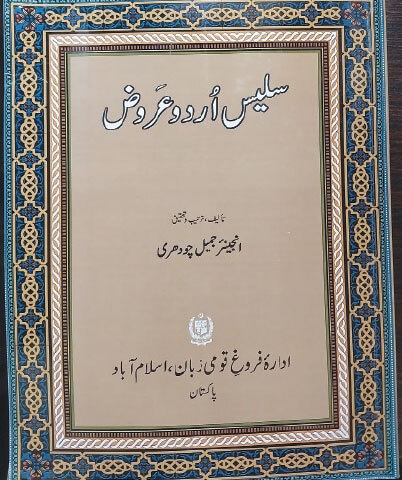
MUST a poet know ilm-i-arooz or prosody? Some poets say no and argue that prosodic metres teach us to measure the poetic rhythms and patterns of sounds as they occur in a poetic line, but prosodic harmony is something poets are born with and, therefore, they do not need to learn it. Some even quote the apocryphal Persian couplet that says “I compose poetry with sugar and candy, I do not know faaelaatun faaelaat (an allusion to ‘taqt’ee’, or prosodic scansion).
But the prosodic harmony of a metre (behr) is governed by several principles that are based on the innate linguistic rhythms of a language, including the syllabic stress and accentual peculiarities. Unless one knows those intricate phonetic patterns that create a distinct metre, one is likely to err. Secondly, a metre is not a mere collection of melodious sounds, rather the rhythms of a peculiar metre show a certain mood and tempo, which are suitable for a particular topic or genre.
As Urdu prosody is based on Arabic prosody and Arabic prosody recommends using a specific metre for a specific topic or particular sentiments, Urdu prosody, too, favours some particular metres for some special occasions or moods. For instance, majority of Urdu marsias, or elegies, are in two distinct metres as they have lamenting tone and the very theme of elegy may be felt from their modulations.
Also, Arabic war songs and marching verses, recited on the occasion of a battle, were composed in behr-ei-rajaz. Rajaz literally means perturbation and haste, writes Najmul Ghani Rampuri in his Behrul Fasaahat, since this metre’s pitch conveys a sense of commotion and quickness, truly reflecting a war’s mood. Without understanding these delicate aspects of prosody, poets cannot convey effectively what they say in their verses. So, learning prosody may not be a must for a poet, but it certainly increases the understanding of finer aspects of poetry and gives an edge over those who do not know prosody.
But students of Urdu literature have been alienated from prosody these days, says Jameel Chaudhry in the preface to his book titled Salees Urdu Arooz, or easy Urdu prosody. One of the reasons for this alienation is that most of the books written on prosody in Urdu use a language full of jargons and technical terms. Some of these books, such as Behrul Fasaahat, are in an outdated language, says Chaudhry. As the title suggests, he has used a simple and plain language in the book wherever possible. Another problem is that authors of books on prosody have blindly followed the older books, notably Hadaaequl Balaaghat and Qavaaedul Arooz. Though scholarly and useful, these books do not cover certain aspects, such as Hindi metres, and Urdu books are usually devoid of these aspects, adds Jameel Chaudhry.
The author has amply covered the aspects that are often ignored in books written on the topic, for instance, Urdu alphabet, consonants and vowels in Urdu, vowels that are allowed to be dropped from pronunciation for the sake of metric requirements, quiescent letters not reckoned in scansion, history of prosody, rules governing scansion, details of zihafaat (catalexis or the changes made to a foot or rukn of a metre), and certain words with two different pronunciations used in poetry, for example ummeed and umeed (hope), which makes the prosodic stress to shift and new comers often stumble on such words rendering a verse out of metre. Some charts included in the book showing the metres with each foot and its catalectic form, explaining a syllable omitted as per rules, are very helpful.
The book offers both phonetic and prosodic analysis of the couplets referred to for explaining the scansion. What is commendable is that unlike old books that copy the couplets from older books for scansion, the author has quoted new and fresh verses from modern poets which shows his hard work and a vast reading. What seems strange, however, is the fact that Jameel Chuadhry, the author, has reproduced a large number of his own couplets for explaining and scansion. Another aspect that deserves praise is that the book refrains from repeating old mantras and introduces some new techniques for explaining prosody and scansion. The author also advocates abolishing altogether some meters from Urdu as they are either hardly ever, or never, used in Urdu poetry.
This useful, 400-page, large-sized book has just been published by Idara-i-Farogh-i-Qaumi Zaban (IFQZ), Islamabad. In his intro Dr Saleem Mazhar, IFQZ’s director general, informs the readers that Jameel Chaudhry is an engineer by profession but is a poet and has deep interest in prosody.
Published in Dawn, January 12th, 2026


























