0
0

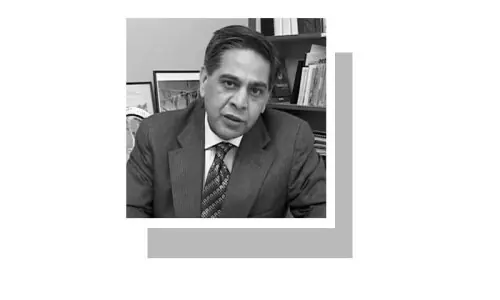
KARACHI: Pakistan Commissioner for Indus Waters Syed Muhammad Mehar Ali Shah on Sunday said India’s claim of placing the Indus Waters Treaty (IWT) in “abeyance” has no legal basis and that the treaty remains fully in force under international law.
Speaking to Geo News, Mr Shah talked about the legality of India holding the IWT in abeyance and said: “As far as holding the treaty in abeyance is concerned, the word ‘abeyance’ is not recognised under international treaty law. It is a coined term, because we believe India understands that it cannot suspend, breach or terminate the treaty.”
In April 2025, India held the IWT in abeyance following the attack on tourists in occupied Kashmir’s Pahalgam that killed 26 — an incident New Delhi blamed on Islamabad without evidence.
Pakistan termed any attempt to suspend its water share an “act of war”. In June, the Permanent Court of Arbitration held that India cannot unilaterally hold the treaty in abeyance.
However, Mr Shah cautioned that India’s continued non-cooperation within the rules-based framework, effectively sidestepping its obligations on self-created grounds, was “alarming” and prompted Pakistan to pursue a formal and carefully calibrated legal and diplomatic response.
“To address this, Pakistan is employing efforts carefully, and whatever steps are being taken are formal in nature,” he said.
He said the treaty was carefully negotiated to withstand political tensions and disputes, stressing that its dispute-resolution mechanism was designed to prevent unilateral actions.
“It was a well-thought-out pact. There was a clause in the pact that in the face of conflict, Pakistan and India will peacefully solve the water matter. Otherwise, they will hand it to a neutral party,” Mr Shah said.
He added, “The 12th and last article of this treaty has four provisions. In the last paragraph, it says that with the passage of time, some changes can be made to the pact, but both parties have to mutually agree; otherwise, the pact will remain fully enforced.
“And it clearly says that no one party can unilaterally change it,” the water commissioner stressed. Asked whether the IWT favoured India, Mr Shah replied that the three eastern rivers — Beas, Ravi and Sutlej — have a “geographic advantage”, unlike the western rivers.
Recalling the history of water disputes between the two neighbours, Mr Shah said India halted the rivers’ flow to Pakistan on March 31, 1948, which Pakistan protested on a bilateral level and took the issue to the United Nations.
The official noted there were two third-party forums where conflicts could be taken — “one is a neutral forum, and the other is the Court of Arbitration forum”. The procedure for it, Mr Shah added, was that the water commissioners must inform each other and suggest whether the matter should go to a neutral party or a court.
Published in Dawn, January 5th, 2026