Daducha Dam displacement sparks outcry in Barwala


 1
1

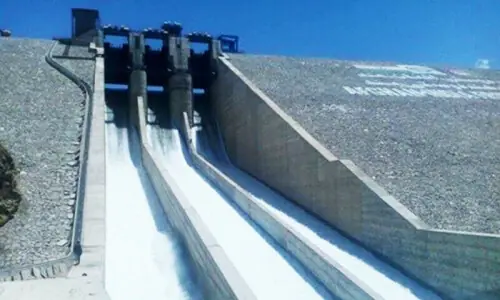
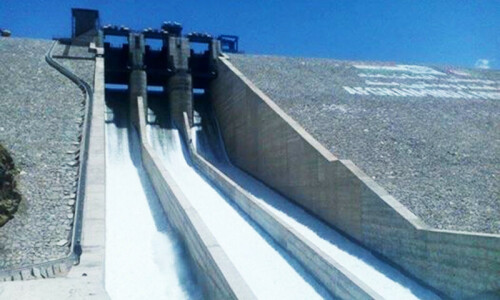
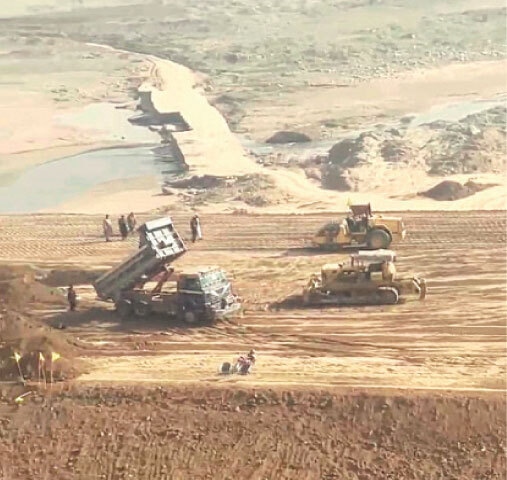
The long-awaited construction of Daducha Dam, now being renamed Barwala Dam, as the reservoir site falls at Barwala while Daducha village itself remains intact on higher ground, has gained momentum.
However, the related issue of displacement and resettlement of affected families has drawn sharp attention, as residents raise serious concerns and demand urgent intervention by the authorities.
Residents of Barwala and adjoining villages facing displacement have demanded that their community and clans should not be scattered. They have appealed to the chief minister of Punjab to provide sufficient assistance for the purchase of land and construction materials for new houses. According to them, the compensation paid by revenue authorities for acquired residential and agricultural land does not match prevailing market prices.
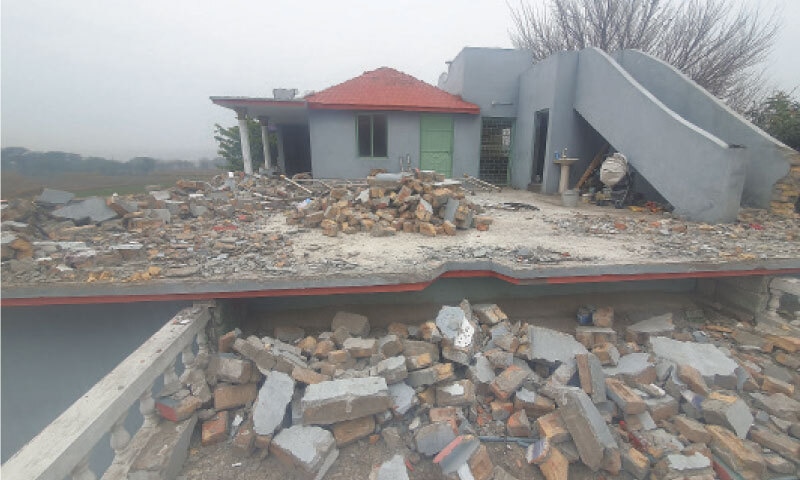
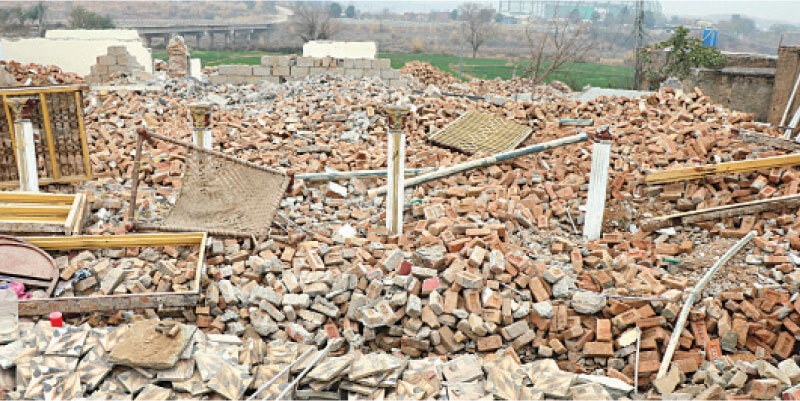
A visit to Barwala village, which is directly affected by the dam’s construction, revealed houses of all sizes being dismantled, with rubble strewn across the area.
The scene resembled an earthquake-hit locality or a war-torn town.
Homeowners who had built these houses with hard-earned money, earned while working abroad or elsewhere in Pakistan, were themselves demolishing their residences. Many of these were well-designed homes, reflecting aspirations of comfortable living in the vicinity of Kallar Syedan and Rawat.
Raja Mansoor Kiani, standing amid the debris of his partially dismantled house, told this reporter that the house had cost him over Rs60 million, but he was paid only Rs15 million as compensation. He broke down while pointing to ceramic fittings and accessories in the kitchen and bathrooms, and the spacious drawing rooms. He said residents were being paid “peanuts” and given extremely short deadlines to demolish their homes.
Another resident, Junaid Kiani, standing inside his brother Muneer’s house, embraced the remaining pillars of the veranda and said it was unimaginable that everything they had built would be destroyed by their own hands, as if it had all been a grave mistake.
He said they were left with no option but to dismantle their houses and migrate to unknown places.
Raja Fakhuruddin Babar Kiani, an elderly resident with a white beard, told this reporter that he had been running a dairy farm, which had now been razed to the ground. He said more than 35 kanals of ancestral land, inherited from his parents, had standing wheat crops cultivated with heavy expenditure on fertilisers and seeds.
The government, he said, acquired the land at Rs200,000 per kanal, while compensation for construction materials was also nominal.
He regretted that purchasing land in the surrounding areas with the awarded money was impossible for many affected families, forcing them to seek rented accommodation.
He added that rents and land prices in nearby localities had surged, driven up by landlords, and feared that all compensation would be exhausted on rent payments. After a year, he warned, displaced families could be pushed into poverty.
The elderly man stressed that none of the residents opposed the dam’s construction, acknowledging its importance for water storage and flood control. However, he said fair compensation and relocation in the form of land for establishing a new Barwala village were essential.
Another resident, Raja Aftab Kiani, told Dawn that their forefathers had migrated from Malik Pur Azizwaal to Barwala during a plague epidemic in the pre-Partition era. He said nearly 100 kanals of ancestral land existed there, and if revenue authorities conducted proper demarcation, their clan could be accommodated there as a single unit.
Raja Saifur Rehman, a social media activist from the area, said residents of Barwala and neighbouring Dhoke Faizullah should be compensated in the same manner as affectees of Mangla and Khanpur dams, through allotment of substitute land and assistance for rebuilding homes. This, he said, was necessary to keep the Ghakkar clans living together, as they had for generations.
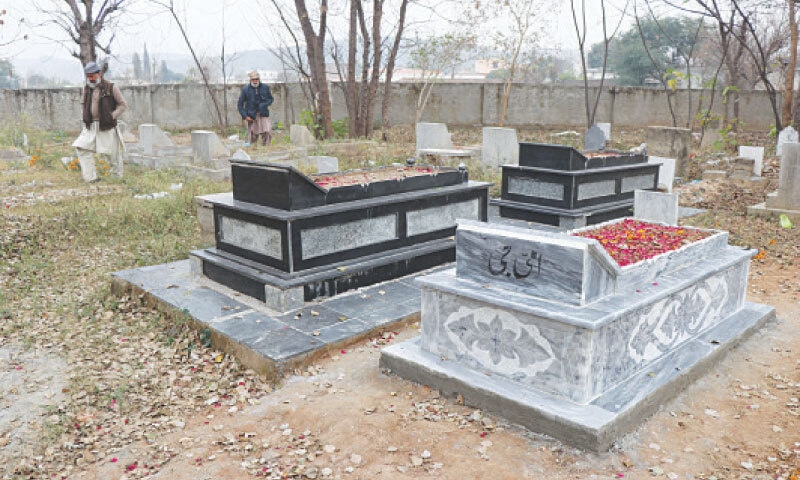
He also pointed out that the village had five graveyards where their relatives were buried.
He expressed concern that if anyone died in the coming weeks, families would not know where to bury their dead, as they had no certainty about relocation. With people forced to rent houses wherever available, the entire community faced the risk of permanent dispersal.
Aqib Jameel, an intermediate final-year student present at a dismantled house, told Dawn that his parents were compelled to leave their native land and home. With examinations approaching, he was unsure where he would continue his studies.
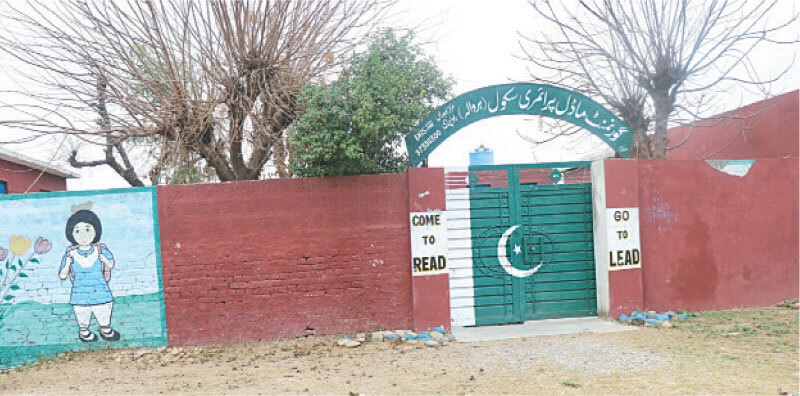
He said the family’s distress had affected his ability to prepare for exams and urged the Punjab government to ensure educational facilities for affected children by establishing a new colony with schools for boys and girls.
During a visit to the area, Senator Mushtaq Ahmed observed the large-scale demolition of houses. Addressing a gathering of villagers, he urged chief minister Punjab Maryam Nawaz Sharif to allocate land for a New Barwala colony at a suitable location, with facilities including schools, colleges, a hospital and Sui gas, to ease the pain of displacement.
Published in Dawn, January 5th, 2026