LAHORE: The University of Health Sciences (UHS) on Wednesday formally launched the final version of its MBBS Modular Integrated Curriculum 2K23 and the second revision of the BDS Integrated Curriculum 2K25.
The newly-launched curricula will be implemented in all public and private medical and dental colleges of Punjab.
The approval was granted by a joint meeting of the UHS Syndicate and the Boards of Studies for Medicine and Dentistry. UHS Registrar Kiran Fatima presented the formal resolution, which was signed by the conveners of the boards, the chairman of the syndicate and the provincial minister.
The launch ceremony in this regard, held at the UHS Lahore, was attended by Punjab Specialised Healthcare and Medical Education Minister Khawaja Salman Rafique as chief guest, alongside senior academicians, university heads, former health ministers, principals of medical and dental colleges, and members of statutory bodies. The minister inaugurated both curricula by pressing a button on a laptop, making them live on the university’s website.
Minister announces large-scale recruitment of doctors, nurses and paramedical staff for newly-established hospitals in Punjab
Addressing the event, UHS Vice Chancellor Prof Ahsan Waheed Rathore said the development of the new curricula had full support of the Punjab government. He recalled that the World Health Organisation had first called for reforms in medical curricula in 1997. He said, “after decades of discussions, we have finally reached this milestone in 2025.” He said that the curriculum reforms were not limited to MBBS and BDS alone, but extended to nursing and postgraduate programmes as well. The new clerkship-based model, he added, would greatly improve the quality of medical training.
Former health minister Prof Javed Akram also congratulated UHS on the launch, describing the exercise as timely and much needed, while also sharing light moments about his long association with the provincial health leadership.
UHS Pro Vice Chancellor Prof Dr Nadia Naseem said that the MBBS Curriculum 2K23 was completed after three consecutive years of stakeholder review, involving around 700 faculty members.
In total, nearly a thousand medical and dental academics across Punjab participated in the preparation and continuous review of the curricula, a scale described by the university as unprecedented in Pakistan. Special emphasis was placed on faculty capacity development, professionalism and practical skills, moving away from purely traditional, discipline-based teaching.
The new MBBS curriculum had introduced a fully integrated, modular structure spread over five years, with strong focus on early clinical exposure, self-directed learning, professionalism, ethics, research and patient safety. Mandatory training in emergency life-saving skills had been embedded to ensure graduates were better prepared for real-world clinical settings.
The BDS Curriculum 2K25 Version 2.0 followed a similar integrated approach, aligning foundational sciences with clinical dentistry and community needs.
UHS officials said the new curricula had been aligned with national regulatory requirements and international standards, with the aim of producing graduates who were clinically competent, ethically grounded and responsive to the healthcare needs of society.
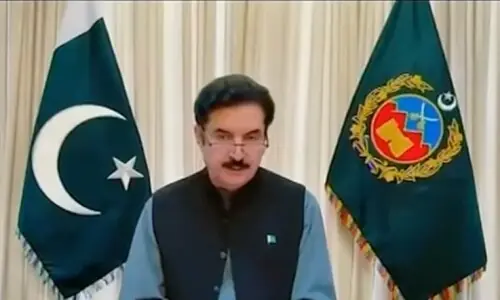
Addressing the gathering, Mr Rafique congratulated the UHS vice chancellor and his team on what he described as “work not of moments, but of generations.” He termed the participants of the ceremony “legends” of medical education and said that he felt fortunate to work alongside them. Stressing the importance of emergency care, he said that Punjab’s biggest challenge remained emergencies, which made proper training of medical students essential.
The minister said the Punjab government, under Chief Minister Maryam Nawaz, had made improvement in the health sector a top priority, citing initiatives such as the Chief Minister’s Children Heart Surgery Programme, kidney and liver transplant services, dialysis facilities, Clinics on Wheels and field hospitals.
He added that new institutions, including the Nawaz Sharif Institute of Cancer Treatment and Research in Lahore, new cardiology institutes in Lahore and Sargodha, and children’s hospitals in Bahawalpur and Rawalpindi, were either being built or expanded. He also announced a large-scale recruitment of doctors, nurses and paramedical staff for the newly-established hospitals.
Senior academic leaders present at the ceremony included Fatima Jinnah Medical University Vice Chancellor Prof Khalid Masood Gondal, former chief secretary Capt (retd) Zahid Saeed, King Edward Medical University Vice Chancellor Prof Mahmood Ayyaz, University of Child Health Sciences Vice Chancellor Prof Masood Sadiq, Prof Rashid Latif Khan and Justice (retd) Sheikh Ahmad Farooq.
Published in Dawn, January 1st, 2026