‘Weaponisation of water neither sane nor acceptable,’ Sherry says after India approves hydel project on Chenab


 6
6


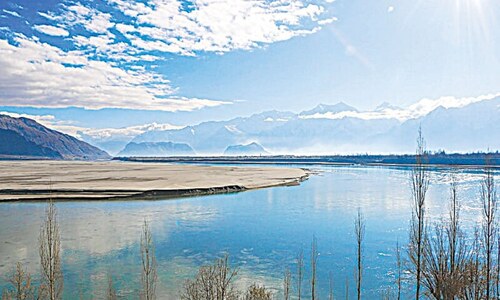
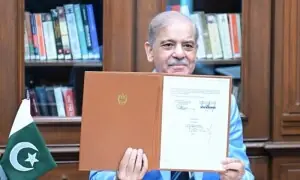
Senator Sherry Rehman on Monday said that the “weaponisation of water was neither sane nor acceptable” after Indian media reported that New Delhi had approved a hydel power project on the Chenab River.
In a post on the social media platform X, the PPP leader said, “In flagrant violation of the Indus Waters Treaty (IWT), India has just given approval to the Dulhasti Stage-II hydropower project on the Chenab River in Indian Illegally Occupied Jammu and Kashmir (IIOJ&K).
“As per the IWT, which cannot be unilaterally revoked, as recent UN rapporteurs have confirmed, Pakistan has control over the waters of the Indus, Jhelum, and Chenab rivers, while the Ravi, Beas and Sutlej rivers fall under India’s control,” she said.
“Following the illegal suspension of the treaty, India has decided to fast-track several disputed hydroelectric projects in the Indus Basin. These projects include Sawalkot, Ratle, Bursar, Pakal Dul, Kwar, Kiru, and Kirthai-1 and 2. Dulhasti Stage-II is considered part of this strategy,” she said.
“This weaponisation of water is neither sane nor acceptable in a region on the frontlines of climate change and environmental stress. It will inflame tensions in a bilateral relationship already bristling with hostility and distrust,” she said.
According to the Times of India, a panel of the Indian environment ministry has approved the Dulhasti State-II hydropower project on the Chenab River in the Kishtwar district of occupied Kashmir.
The report said that the 260MW project comes two months after the approval of the 1,856MW Sawalkot hydroelectric project on the same river. It said that both the projects aimed to “harness the potential of the Chenab”.
A similar report was also carried by The Hindu, which added, “With the IWT now in abeyance, the centre is pushing ahead with several hydroelectric projects in the Indus basin, such as Sawalkote, Ratle, Bursar, Pakal Dul, Kwar, Kiru, and Kirthai I and II.”
The development comes days after United Nations experts expressed concern that India’s “unlawful use of force” on Pakistan’s territory in response to the April 22 Pahalgam attack in occupied Kashmir appeared to have “violated the rights to life and security of person”. This observation by UN special rapporteurs was made in a correspondence dated Oct 16, which was made public on Dec 15.
In April, India had held the Indus Waters Treaty in abeyance following the attack on tourists in occupied Kashmir’s Pahalgam that killed 26 — an incident New Delhi blamed on Islamabad without evidence. Pakistan termed any attempt to suspend its water share under the treaty an “act of war”, noting the treaty had no provision for unilateral suspension. In June, the Permanent Court of Arbitration (PCA) — an organisation that provides a framework for international disputes — issued a Supplemental Award of Competence, stating that India cannot unilaterally hold the treaty in abeyance.
The five UN experts, who compiled the correspondence, also observed that New Delhi’s actions “may be taken to disrupt the flow of water to Pakistan” under the IWT.
Meanwhile, earlier this month, Foreign Office spokesperson Tahir Hussain Andrabi had stated that a letter had been written to India seeking clarification about the “abrupt variation” in the flow of the Chenab River, with the situation badly affecting wheat and other crops being fed through the Marala-Ravi link and other canals in various parts of Punjab.