Rupee gains 1.8pc in July-December
• Experts say exchange rate still ‘managed’, warn pressures may return in 2026
• Insist PKR’s path shaped by politics, financing, oil and not just valuation models
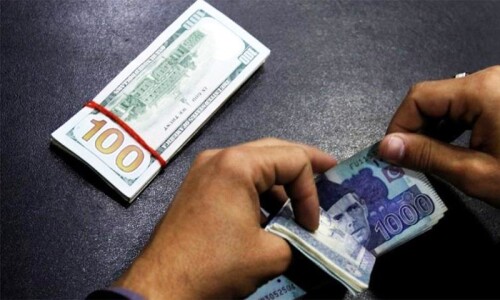
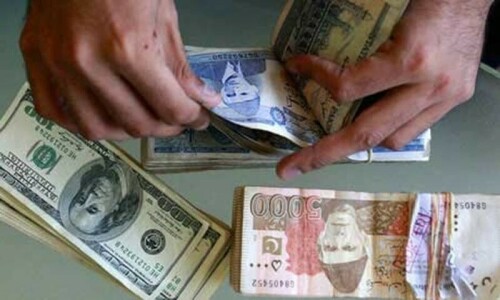
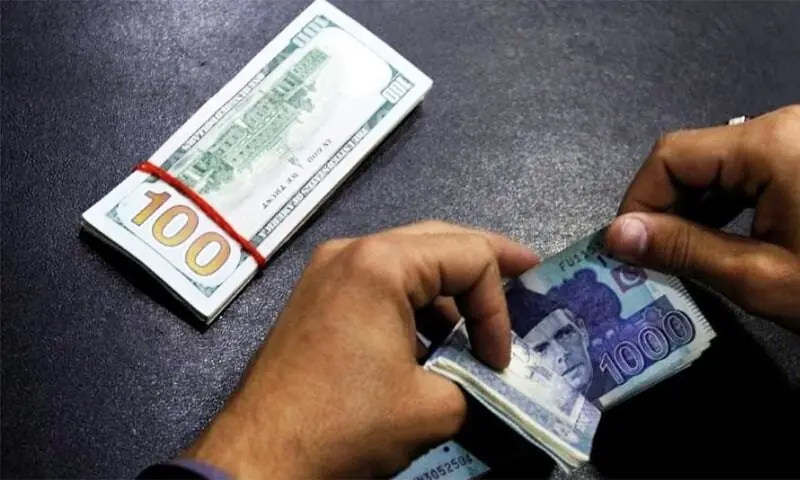
KARACHI: The first half of the current fiscal year saw the rupee post a net gain against the US dollar of Rs5.066, or 1.8 per cent, although it remains weaker than its level at the beginning of 2025.
The dollar closed at Rs280.13 in the interbank market on Friday compared to Rs285.22 on July 2, 2025. However, the rupee is still below its level on Jan 3, 2025, when the dollar traded at Rs278.56.
Currency market participants said the exchange rate remained “managed” but noted that the recent appreciation had helped stabilise the market and provided greater confidence for exporters and importers.
In a report issued on Saturday, Tresmark CEO Faisal Mamsa said the rupee’s behaviour often defies traditional valuation models because it moves in “regime shifts”, not smooth cycles.
“This history explains why models such as PPP, BEER or even simplified REER frameworks struggle with PKR. They assume stable policy regimes, political stability and continuous calibration. But PKR operates in regime shifts, not smooth cycles,” he wrote.
PPP refers to Purchasing Power Parity, which compares price levels to estimate a fair exchange rate, while BEER (the Behavioural Equilibrium Exchange Rate) uses economic fundamentals such as productivity and interest-rate differentials to gauge a currency’s value.
“Valuation matters in normal times. But at moments that define PKR’s trajectory, sentiment and policy dominate valuation. That is when these models offer false comfort,” Mr Mamsa said.
Reviewing major episodes in 2008, 2018 and 2022, he said past crises were typically triggered by factors outside the foreign exchange market, including political instability and policy paralysis, oil price spikes and inflation surges, geopolitical shocks and IMF programme disruptions.
“In each case, the initial trigger came from outside the FX (foreign exchange) market. The rupee was not the cause, it became the transmission channel,” he said.
Several currency analysts expect renewed dollar strength in calendar year 2026 despite higher foreign exchange reserves held by the State Bank of Pakistan, arguing that reserves alone may not offset widening trade and current account pressures, which have already started showing spikes in FY26.
They noted that import compression in November helped deliver a current account surplus but warned that further cuts could weigh on economic growth. Weak GDP growth has become a challenge for a government seeking to attract both foreign and domestic investment, they said.
“Further import cuts could bring another year of poor growth, around 2 per cent, increasing poverty without addressing the serious problem of joblessness,” said Atif Ahmed, a banker and currency expert in the interbank market.
Mr Mamsa said the rupee’s trajectory in 2026 would be driven less by valuation gaps and more by a set of structural forces, including inflation and interest-rate differentials, political continuity and policy credibility, external financing capacity and fiscal discipline, reserve accumulation behaviour, oil prices and export competitiveness, and geopolitical developments and global recession risks.
“These factors do not point to a single number. They determine the path the rupee takes, how volatile it becomes and whether deviations are absorbed or allowed to compound. For Pakistan, crises have never been about the endpoint alone, but more about how the path was managed,” he said.
Published in Dawn, December 28th, 2025