De-escalation urged as US-Venezuela tensions simmer
• Current trajectory serves no one’s interest, Pakistan tells Security Council
• China, Russia slam US ‘bullying’ and ‘cowboy-like’ conduct
• Caracas warns of self-defence against ‘oil grab’
• Islamabad seeks diplomatic approach to resolve Iran nuclear issue
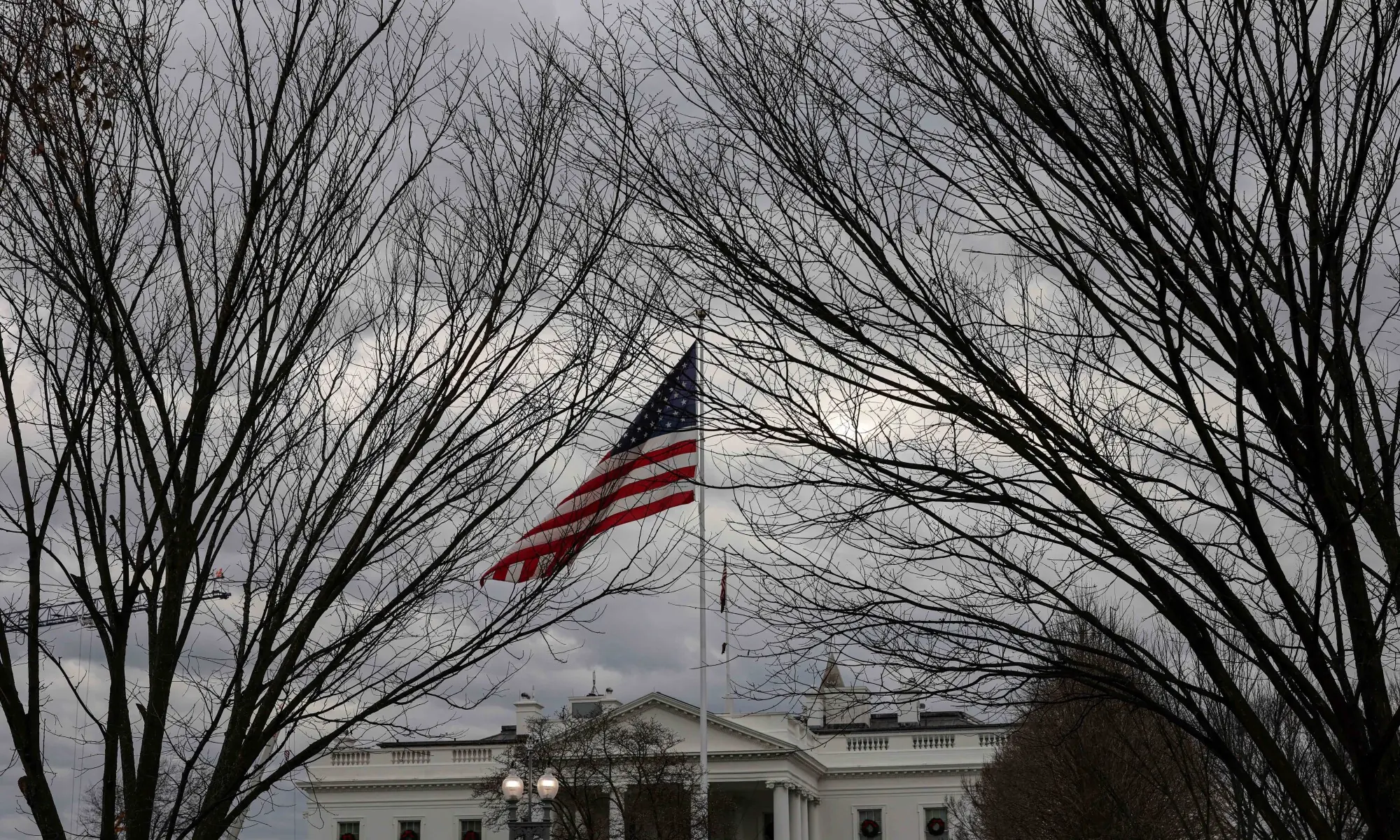
UNITED NATIONS: Pakistan has called on all sides to exercise maximum restraint and de-escalate tensions, as the United States continued to interdict vessels off the coast of Venezuela, a situation that drew sharp condemnation from China and Russia at the UN Security Council.
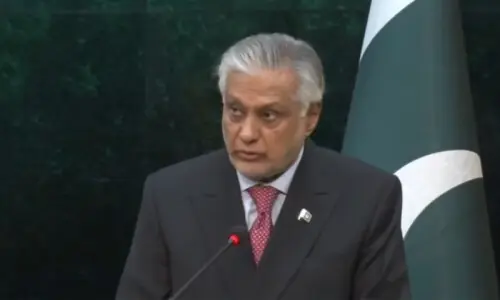
Pakistan’s deputy permanent representative to the UN Ambassador Usman Jadoon addressed the council during a meeting requested by Venezuela. He emphasised that the “current trajectory serves no one’s interest”.
“In a world marred by polarisation with conflicts affecting the lives and livelihoods of millions around the globe, it is all but imperative to once again underscore the centrality and inviolability of the UN Charter and its core principles,” Mr Jadoon said.
He specifically highlighted the prohibition on the threat or use of force against the territorial integrity or political independence of any state.
“We firmly believe that the principles of sovereignty, territorial integrity, and political independence of states, as enshrined in the UN Charter, are sacrosanct,” Mr Jadoon said.
Reaffirming Pakistan’s position, he noted that while measures to counter transnational organised crime or narcotics trafficking are necessary, they must be cooperative and conform to international law. He urged engaged diplomacy to ensure the region remains a “Zone of Peace”.
The sitting laid bare deep divisions between world powers. US Ambassador Mike Waltz asserted that sanctions would be enforced to the maximum extent to deprive Venezuelan President Nicolas Maduro of resources used to fund drug cartels.
“The United States will do everything in our considerable power to protect our hemisphere, our borders and the American people,” Waltz said, claiming oil sales enable Maduro’s “narco-terrorist activities.”
However, China and Russia slammed the US actions. Chinese envoy Sun Lei opposed “unilateralism and bullying”, demanding Washington heed the international community and uphold navigation safety.
Venezuelan Ambassador Samuel Moncada rejected the US narrative, stating the threat is not drugs or security, but a desire for Venezuela’s oil and land.
“The world knows that, if the scale of armed attacks continues, we will exercise, with all determination, our inalienable right to self-defence,” Moncada said.
UN’s Assistant Secretary-General Mohamed Khaled Khiari noted that Secretary-General Antonio Guterres stands ready to support diplomatic engagement, if requested by both parties.
Council split on Iran
Meanwhile, at another UN debate, Islamabad called for diplomatic engagement to resolve the Iran nuclear issue.
“It is deeply regrettable that in recent months, divisions in the council and beyond have widened, taking us further away from the resolution of the issue,” Ambassador Jadoon told the 15-member council during a discussion on nuclear non-proliferation.
He noted the situation has been complicated by unilateral actions and differing interpretations of the “snapback” mechanism.
The council remains split over the legitimacy of holding meetings regarding the 2015 Joint Comprehensive Plan of Action (JCPOA), an agreement from which the US withdrew in 2018.
Mr Jadoon cautioned that coercive measures would not bridge the gap and often hurt ordinary citizens.
“We strongly believe that diplomacy and dialogue should be the guiding principles for the resolution of all outstanding issues concerning Iran’s nuclear program,” he said.
He emphasised that the JCPOA framework could still prove useful if parties move forward with compromise. Mr Jadoon urged the restoration of trust in diplomatic engagement and stressed the critical role of the International Atomic Energy Agency in verifying compliance.
The session marked the first meeting since France, Germany and the United Kingdom triggered the snapback mechanism to reimpose sanctions, citing Iran’s non-performance.
Jay Dharmadhikari, France’s deputy permanent representative, warned that Iran’s lack of implementation constitutes a “grave threat”. He added that if brought to military enrichment levels, Iran’s stockpile would be sufficient “to produce 10 nuclear explosive devices”.
Published in Dawn, December 25th, 2025