Washington, New Delhi press for UN terror designations
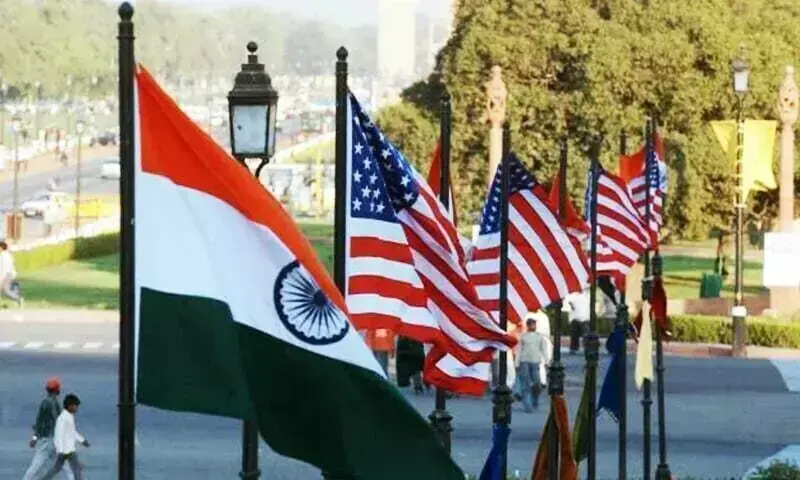


WASHINGTON: The United States and India have jointly called on the United Nations to impose fresh sanctions under the UN Security Council 1267 regime on affiliates of the militant Islamic State (IS) group and Al Qaeda, as well as on Lashkar-e-Taiba (LeT), Jaish-e-Mohammad (JeM) and their alleged proxy networks.
Both LeT and JeM were declared proscribed organisations by Pakistan in 2002.
The proposed sanctions — a global asset freeze, travel ban, and arms embargo — signal closer US-India counterterrorism cooperation. Yet, strikingly, the joint statement does not mention Pakistan.
That omission has not gone unnoticed, especially given India’s frequent charge that such groups operate from Pakistani soil — a claim Islamabad denies.
Joint call makes no mention of Islamabad, despite India’s wishes
Observers interpret the omission as deliberate and revealing of Washington’s strategic balancing act in South Asia.
As Washington-based analyst Shuja Nawaz noted: “The US may have avoided naming Pakistan. It has named India as a partner in the Indo-Pacific theatre. I wonder how long this straddling policy will last.”
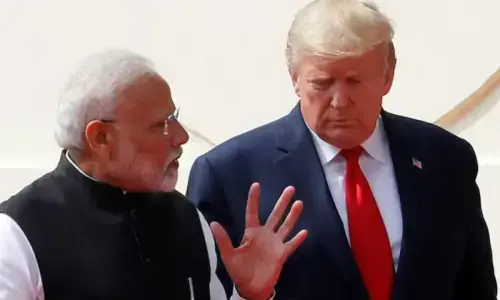
The US and Indian delegations, led respectively by Monica Jacobsen of the State Department’s Bureau of Counterterrorism and India’s Counterterrorism Joint Secretary Vinod Bahade, emphasised cooperation in training, cybersecurity, judicial coordination, mutual legal assistance and intelligence-sharing.
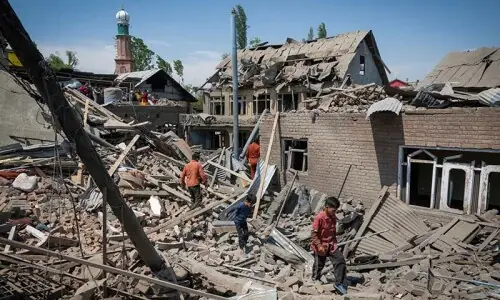
They condemned recent attacks notably the April 22 Pahalgam attack and the Nov 10 Red Fort incident in New Delhi — stressing that “those responsible for terrorism should be held accountable”.
They also welcomed the US designation of The Resistance Front (TRF), which India blames for being behind the Pahalgam attack, as both a Foreign Terrorist Organisation (FTO) and Specially-Designated Global Terrorist (SDGT).
But as observers noted, the silence on Pakistan reflects a US desire to continue counterterrorism cooperation with India, while keeping open diplomatic space with Pakistan, whose utility Washington appears to value anew.
The broader context helps explain this approach. According to a Dec 8 Foreign Policy article titled ‘Trump’s Pivot to Pakistan’, the warming of US-Pakistan relations since mid-2025 has been dramatic.
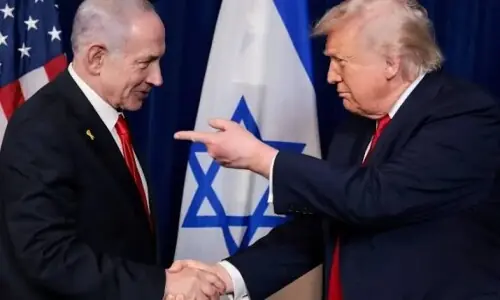
The piece noted that President Trump has “developed a close relationship with senior Pakistani leadership, including the country’s powerful military chief, Asim Munir, whom he hosted at the White House in June and again in September, and Prime Minister Shehbaz Sharif, whom he met three times this year.”
As the article reports, “The Pakistanis have done a very good job of developing a positive relationship with President Trump,” according to a former US diplomat who requested anonymity.
The logic seems tactical: Islamabad has offered “things of value” from cooperation on counterterrorism (including high-profile arrests of militants), to access to critical minerals, to interest in emerging sectors such as energy, mining, and even cryptocurrency — aligning with some of Trump’s strategic and personal predilections.
According to one former Pakistani ambassador to the US, the outreach has been carefully crafted: “They gave him the praise that he wanted,” the diplomat said.
In this context, the joint US-India terror-designation statement can be read as tactical: the US still wants to maintain the appearance of cooperation with India on counterterrorism, but avoids confrontation with Pakistan, preserving for Islamabad a renewed space in US foreign policy.
That’s why observers argue the omission of Pakistan in the joint statement is not a mere oversight, but a reflection of evolving US strategy in South Asia, where alliances are becoming more transactional, fluid and hedged.
The next session of the India-US JWGCT and Designations Dialogue scheduled in the United States will offer an early test of whether this balancing act can hold. In the meantime, the strategic triangle between Washington, New Delhi and Islamabad appears more complex and fragile than ever before.
Published in Dawn, December 15th, 2025