Evidence-based action can solve air pollution crisis: experts


 0
0


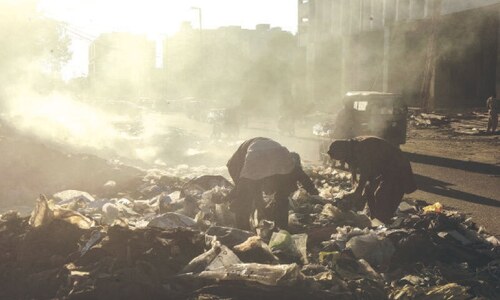
ISLAMABAD: Pakistan’s air pollution crisis is solvable through evidence-based action, experts said, stressing that the key lies in measuring the chemical composition of particulate matter and making the data publicly available.
They were speaking at a conference titled “ASIC Pakistan Mitigation Series”, which brought together stakeholders from finance, policy, industry, law, academia and civil society in Islamabad.
The event was co-organised by Fair Finance Pakistan and the Air Quality Research Center (AQRC), University of California, Davis, one of the world’s leading institutes in atmospheric science.
According to a statement issued on Saturday, the conference convened delegates from 11 countries, including financial sector leaders, State Bank of Pakistan officials, commercial bank CEOs, government ministers, leaders from the cement, steel and textile industries, international ambassadors, Supreme Court officials, members of parliament, world-renowned scientists, academics and frontline community representatives.
Conference stresses transparent air-quality data, policy reform and financial alignment to tackle pollution
At the keynote plenary, Alexandra Berg von Linde, Ambassador of Sweden to Pakistan, framed industrial transition as both an economic and environmental opportunity.
Nissanka (Amila) Salgado, Country Operations Head at the Asian Development Bank Pakistan, outlined multilateral pathways linking clean air, climate finance and inclusive development.
Lei Zhang of the ADB Energy Sector Office shared China’s air quality transformation, demonstrating that rapidly industrialising economies can reverse pollution trends through coordinated policy, finance and technology.
Featuring air-quality experts and regulators, plenary sessions discussed Pakistan’s scientific evidence-based approach, identifying which emissions must be reduced to achieve measurable gains.
Speaking on a panel, MNA Munaza Hasan, Chairperson of the Parliamentary Standing Committee on Climate Change, emphasised Parliament’s responsibility in upholding Article 9A, noting that where air is unfit to breathe, the Constitution is being violated.
She underscored Pakistan’s rights-based environmental framework, strengthened through institutional action and parliamentary oversight.
“The purpose of ASIC is to build a credible, nationally owned mechanism for defining Pakistan’s clean air and industrial transition pathway, where science guides policy, finance supports transition, industry leads innovation, and governance upholds its moral duty to every citizen,” said Asim Jaffry, founder of the ASIC series and Country Programme Lead at Fair Finance Pakistan.
“There is a powerful synergy here, cleaning up Pakistan’s air and reducing fossil fuel consumption to lower the carbon footprint are not separate goals,” said Professor Anthony Wexler, Director of the UC Davis Air Quality Research Center, in the inaugural session.
Fair Finance Pakistan also launched a policy brief titled “Air Pollution is a Solvable Problem”, presenting an assessment of Pakistan’s National Clean Air Policy (NCAP) and Punjab Clean Air Policy (PCAP). Grounded in empirical evidence and global best practices, the brief offers a critical evaluation of existing frameworks.
The 2025–2030 National Clean Air Transition Statement issued at the conference called on Pakistan’s financial institutions, as well as policy and regulatory bodies, to adopt robust sector-specific ESG (Environmental, Social and Governance) and air-pollution standards for heavy industry, agriculture and transport.
It stressed the need to translate Pakistan’s Green Taxonomy and National Clean Air Policy into binding due diligence, aligned with international climate disclosure standards, portfolio risk assessments and improved urban governance.
Published in Dawn, December 14th, 2025