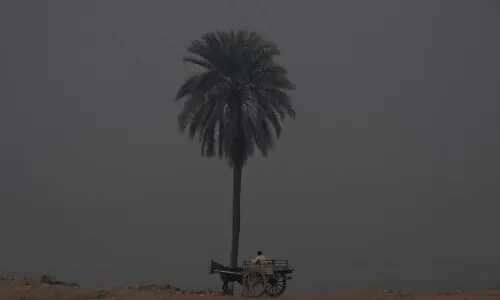
Lahore’s worst air quality persists with no rain in sight
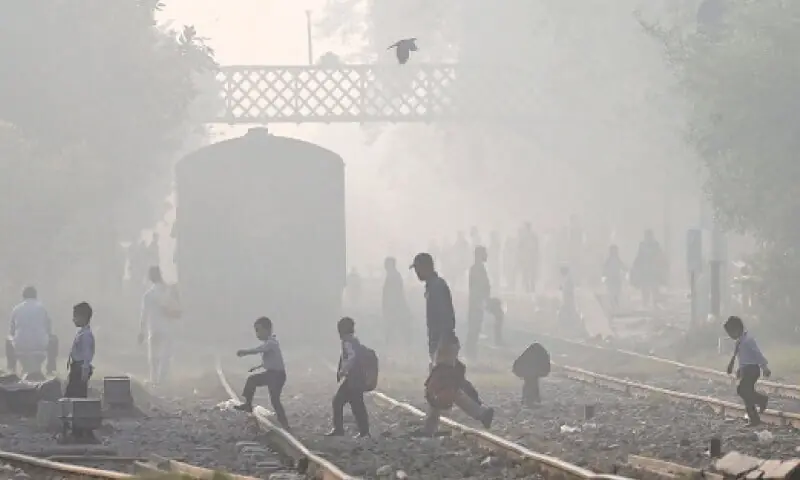

LAHORE: Punjab’s air quality has plunged to alarming levels this week, with Lahore emerging as one of the most polluted cities in the world, according to real-time data from IQAir.
The situation looks bad even in the coming days with no rain prediction that may bring some respite.
On Saturday, the city recorded an Air Quality Index (AQI) of 527 at 8pm, classified as hazardous, following Delhi (710).
Lahore’s three-day average AQI hovered above 300. Some hotspots in the city such as Allama Iqbal Town (802), Bedian Road (674) and CERP Office (672) performed worst.
The air pollution crisis in the country extends beyond Lahore. Cities across Punjab reported AQI readings well above safe thresholds between December 11 and 13, prompting widespread health warnings.
Khurrianwala registered an AQI of 558, Faisalabad 547, Kahna Nau 350, Gujranwala 284, Gujrat 254, Islamabad 246, and both Bahawalpur and Sialkot at 244.
Health experts warned that such high concentrations of PM2.5 particulate matter that penetrates deep into the lungs and pose serious risks to public health, especially for children, the elderly and those with respiratory conditions.
Residents have been advised to avoid outdoor activities, keep windows closed, wear protective masks and use air purifiers indoors.
Pakistan’s average PM2.5 concentration in 2024 stood at 73.7 µg/m³, nearly 15 times higher than the World Health Organisation’s annual guideline of 5µg/m³. This places Pakistan as the third most polluted country globally, underscoring the scale of the environmental challenge.
Experts say the pollution is due to a combination of industrial emissions, vehicular exhaust, crop residue burning, biomass and waste incineration and domestic fires.
Winter conditions exacerbate the crisis with temperature inversions, low wind speed and reduced rainfall trapping pollutants close to the ground.
Trans-boundary pollution from India further compounds the issue, especially during the post-harvest stubble burning season.
Published in Dawn, December 14th, 2025