0
0

PESHAWAR: A report analysing violence against women and girls (VAWG) was released here on Tuesday, disclosing that an average of 7.6 women in Khyber Pakhtunkhwa approached the police daily to report violence.
Aurat Foundation has prepared the report titled ‘violence against women and girls in KP’ under the Rule of Law Project with support from UN Women and the European Union. It covers the period from January 1 to November 15, 2025.
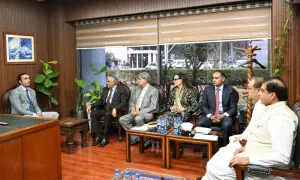
The report was launched during a workshop, also attended by MPAs Amna Sardar, Shazia Tehmas, Shazia Jadoon, programme manager KP Commission on the Status of Women Amna Durrani, regional director Aurat Foundation Shabina Ayaz, journalists and other officials.
The report covers murder, honour killings, rape, gang rape, domestic abuse, child marriage, and suicides.
These findings reveal a troubling contradiction: while violence was frequent, reporting of such crimes in public spaces remained remarkably limited.
Shows on average, 7.6 women approach police daily to report violence
The study reviewed coverage from leading newspapers, including Dawn, Express, Aaj, and Shumal, and found that print media reported only a small fraction of the violence cases documented by police. While incidents of murder, honour killing, and rape appeared in news columns, cases involving domestic abuse, suicides, and child marriages were either absent or reduced to brief mentions, with minimal detail on follow-up investigations, arrests, or legal actions. Reporting remained episodic and event-driven, lacking consistency or continuity.
The analysis further reveals that 16 districts of KP did not report a single case of violence against women in print media, while six districts reported only one case. Across 10 categories of violence, no media coverage appeared at all. Among categories that were reported, murder emerged as the most prevalent, with 104 cases out of 186 having been reported. Additionally, 19 suicide cases, 17 honour killings, seven gang rapes, and 13 rapes were reported. A notable trend surfaced in terms of geography: 124 cases originated from rural areas, compared to 37 cases from urban areas, underscoring rural invisibility and gendered vulnerabilities in remote regions.
This gap widens further in the digital space. Pages with millions of followers in Swat, Mardan, Hazara, Parachinar and beyond show almost no reporting on VAWG. In a world where information travels instantly, the suffering of women remains invisible. This silence enables communities to dismiss violence as private or ordinary and allows perpetrators to continue without public accountability.
The justice system echoes this silence. Data from the KP Prosecution Office indicate acquittal rates ranging from 93pc to 100pc. Investigations drag, evidence is poorly managed, survivors confront intimidation, and many women withdraw their cases long before reaching court. For a survivor, the journey to justice becomes more traumatic than the violence itself, the report notes.
It is not surprising then that many women never report abuse at all. Cultural shame, fear of retaliation, social isolation, absence of legal aid, lack of psychosocial support and informal family pressure combine to suppress their voices, it further added.
In the report, Aurat Foundation urged media to report VAWG consistently and ethically, police to enhance survivor-friendly mechanisms, judicial and prosecution authorities to address delays and improve evidence handling, and government institutions to build integrated data systems. Community leaders and civil society must challenge stigma, honour-based silence, and harmful social norms
“When women’s suffering is unreported, it becomes normalised. Breaking silence in homes, on news pages, in police stations, and in digital spaces is essential not only to document violence, but to end it,” the foundation stated.
Published in Dawn, December 10th, 2025