Turkish delegation’s visit delayed due to Afghan Taliban’s lack of cooperation: FO
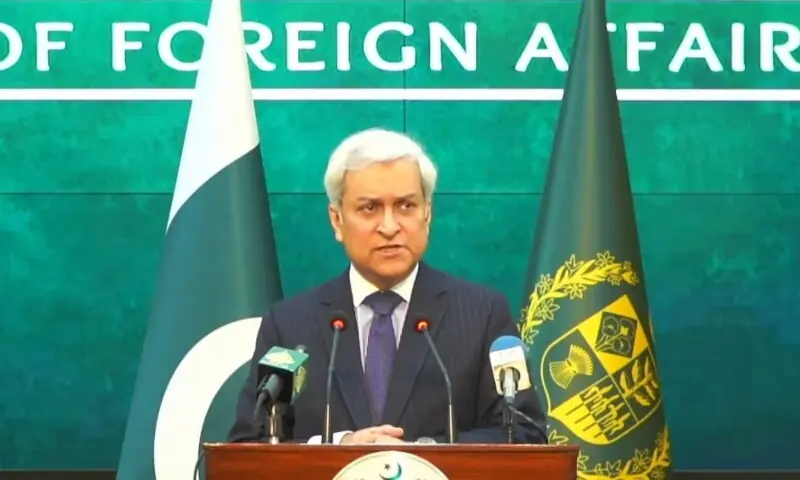

The Foreign Office (FO) said on Friday that the continued absence of a top Turkish delegation meant to mediate tensions between Afghanistan and Pakistan was due to a lack of cooperation from the Taliban regime.
Turkiye, one of the mediators alongside Qatar, recently hosted multiple rounds of talks between Islamabad and Kabul following an escalation of tensions between the two neighbours over the past weeks.
Turkish President Recep Tayyip Erdogan had earlier signalled plans to send a delegation to Islamabad, but the visit has not materialised. The Turkiye-Qatar effort had produced a fragile ceasefire, though the FO spokesperson said the truce had faltered because it was “contingent on a halt in terrorist activities”.
Questioned in his weekly press briefing about the lack of a visit thus far from the Turkish delegation, the FO spokesperson responded: “Pakistan was open, and stands ready. And I believe that the delegation has not arrived because of scheduling issues, and perhaps by a lack of cooperation from the Taliban. This, you have to ask the Taliban regime. So, our position on this remains firm.”
The spokesperson maintained that Pakistan had welcomed the announcement made by President Erdogan about the mediation effort and reiterated the government’s readiness to receive the Turkish delegation and hold negotiations and discussions.
The spokesperson said he was not aware of any schedule for its arrival.
He further stressed: “During last week’s briefing, I was asked that Pakistan and the Taliban regime were not cooperating with this mediation framework initiated by Turkiye and Qatar. Let me emphasise that it is not attributable to Pakistan’s cooperation that the Turkish delegation has not arrived yet.”
Saudi Arabia is also engaged in a separate peacemaking initiative and intends to stay engaged with another round of talks possible in the near future. Pakistan and Afghanistan held a brief but high-stakes round of unannounced talks in Riyadh on Sunday, but the engagement ended swiftly and without progress, as both sides stuck rigidly to their positions, multiple diplomatic sources had told Dawn.
However, the FO spokesperson said he did not know anything about the Saudi talks when pressed for details in today’s briefing.
“Our position on this mediation, as I have expressed it in the last few press briefings and today, is that we, in principle, welcome the mediations. We believe that our position on terrorism from Afghanistan is on moral principles strongly rooted in national and international legality. So, any objective mediation would naturally favour Pakistan.”
“As regards any country offering its mediation, we will react if we receive any request for official proposal for a mechanism of mediation process.”
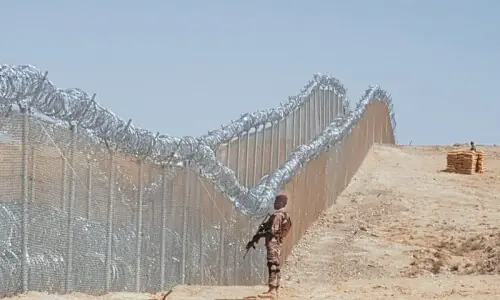
The spokesperson also elaborated on the government clearing humanitarian consignments for Afghanistan, marking the first controlled reopening of transit trade since routine trade was suspended in October, saying it was done at the United Nations’ request.
“Consistent with our own commitment to humanitarian access and the requests made by UN agencies, the government has officially approved the movement of humanitarian assistance to Afghanistan which will take place in three phases: in the first phase, the containers with food items will be allowed; in the second phase, containers carrying pharmaceutical products and medical equipment will be granted access; and in the final phase, containers transporting other essential goods related to education and health will be allowed.”
He said the FO did not intend to categorise the three phases for any purpose other than to ensure the process would be seamless and to determine how humanitarian aid would flow into Afghanistan.
The spokesperson said there were meetings between the FO and the commerce ministry, with the former directed to expedite the procedural formalities.
He said the utilisation of border crossings for the resumption of trade and overall movement would remain closed.
“This decision to allow UN aid was taken in line with our obligation to humanitarian access, and, secondly, Pakistan does not have anything against the people of Afghanistan. The people of Afghanistan are our brothers and sisters. We intend them no harm.”
“While the closure of borders, has a specific context and the rationale behind it still stands. On the issue of aid to the Afghan people, we remain positive and engaged. On the issue of border closure, we would see how far the Afghan Taliban regime in Kabul supports our position to stop the flow of terrorism and terrorist elements from their soil into Pakistan.”