Egypt FM says Gaza peace force should ‘monitor’ ceasefire, backs bigger Pakistani role in reconstruction
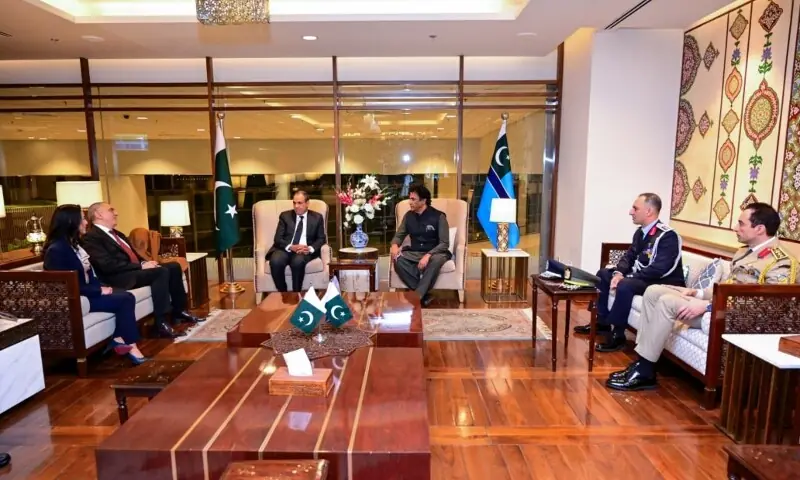


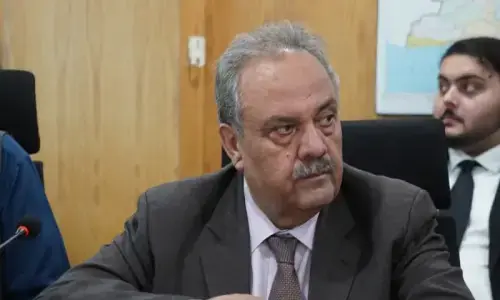
Egyptian Foreign Minister Badr Abdelatty on Saturday emphasised that the mandate of the planned International Stabilisation Force (ISF) for Gaza should be focused on monitoring the ceasefire and securing the territory’s borders, as he suggested a broader Pakistani role in the reconstruction and recovery of the conflict-battered territory.
“Our position on the stabilisation force is clear that its main mandate must be monitoring the ceasefire on the ground to ensure that both sides abide by their commitments, and securing the borders of Gaza,” he said while talking to Dawn shortly after landing in Islamabad for a two-day visit during which he would discuss with Pakistani leaders a wide agenda — from consultations on conflicts, including Gaza and Sudan, and the dispute over the Iranian nuclear programme, to ways of intensifying economic cooperation.
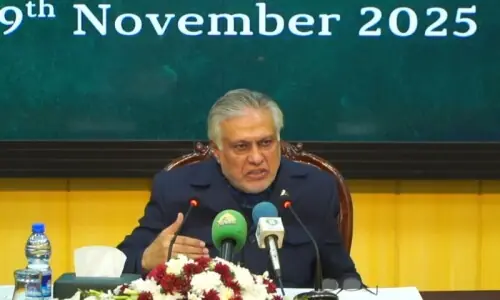
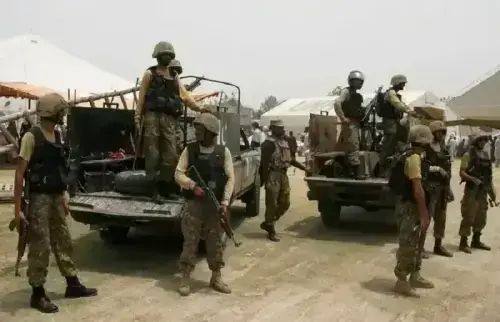
His comments came after Deputy Prime Minister and Foreign Minister Ishaq Dar disclosed publicly for the first time that Islamabad had conveyed to international partners its willingness to contribute troops to the stabilisation force.
Much like Pakistan’s position that seeks to avoid involvement in the controversial issue of disarming Hamas, Abdelatty said the details of the force were still being negotiated.
“We are working with various partners, including the United States, to agree on a specific mission and mandate which should be focused on peacekeeping, not peace enforcement.
“We must agree on the countries that will contribute troops, the mission, the mandate, the guarantees, and the safeguards,” he said, noting that everything remained under discussion.
Abdelatty said Egypt is hosting a reconstruction conference on Gaza and looked to Pakistan for an expanded role.
“Regarding Gaza, we need everything from Pakistan, not only funding, but also participation from private companies in reconstruction and recovery efforts. We also need technical assistance and medical support. There are 50,000 medical cases in Gaza that require urgent intervention.
“We are expecting a more engaged role from your great country,” he added.
Abdelatty noted that both Pakistan and Egypt viewed the realisation of a Palestinian state as the only path to sustainable peace.
Gaza is not the only conflict on his agenda.
“We are also discussing other issues, including Sudan, where the situation is disastrous. We must intensify efforts to stop this ugly war and the killing of civilians.
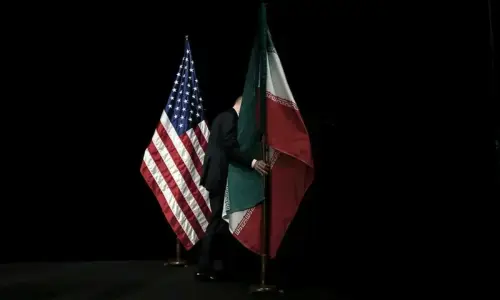
“The same applies to other regional files, including the Iranian nuclear issue. We need de-escalation, dialogue and peaceful settlement of disputes. Egypt and Pakistan share the same views. We believe in de-escalation with Iran, resuming peaceful processes, and upholding the principles of international law and the UN Charter.
“There are no military solutions, only political and peaceful ones. We must work together for de-escalation.”
On the bilateral front, he called for scaling up economic ties. He said both countries must double trade volume, boost mutual investments, and strengthen South-South cooperation.
He noted proposals under discussion, including reformulating the Pakistan-Egypt Business Council and convening a business forum in either Karachi or Cairo to connect the private sectors of both countries.
He said Egypt and Pakistan should enhance cooperation in energy, textiles, food processing, agriculture, information technology, digitisation, artificial intelligence and petrochemicals, while also expanding collaboration on counter-terrorism, combatting illegal migration and trafficking, and pursuing defence cooperation centred on technology transfer and joint projects.