Furnace oil-based electricity costs Rs33 per unit, Nepra told

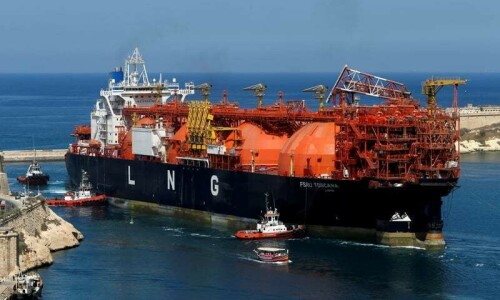
ISLAMABAD: The government on Thursday said that it operated furnace oil-based power plants at Rs33 per unit fuel cost in October in ‘good faith’ instead of Rs21 per unit unutilised LNG-based plant because “of lower LNG allocation”.
At a public hearing arranged by the National Electric Power Regulatory Authority (Nepra), a Power Division team, led by Central Power Purchasing Agency (CPPA) Chief Executive Officer Rehan Akhtar, confirmed that net-metered consumers were reducing the average fuel costs of the grid.
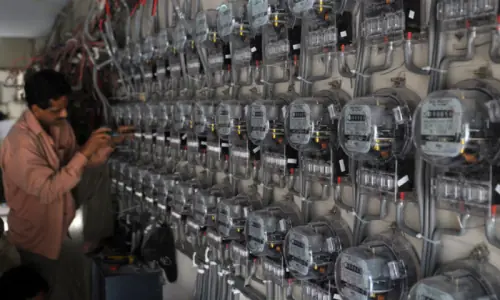
“The units produced by Distribution companies (Discos) from net-metering consumers have zero fuel cost. Therefore, the monthly FCA is reduced due to net metering units,” a presentation to the regulator showed, with 574 million units purchased by Discos.
It was also reported that K-Electric’s power drawl from national grid also had positive impact for consumers — both Discos and KE — in terms of lower fuel costs ranging between 9 paise and 34 paise per unit in August to September period.
Mr Rehan confirmed that more than 40 million units of electricity were produced on furnace oil to meet the shortfall caused by the forced outage of the Sahiwal Coal Plant and two nuclear plants in October.
This resulted in higher average fuel costs. The fuel cost on furnace oil averaged Rs33 per unit compared to Rs21 per unit of LNG-based plants that remained underutilised. The additional financial burden on consumers worked out at around Rs520 million. Asked as to why oil-based plants were used instead of cheaper LNG-based power houses, Mr Rehan Akhtar said: “The world system works on good faith, not in bad faith.”
Another official aid RLNG-based plants were operated to the full as per RLNG availability of 600 million cubic feet per day because the SNGPL did not make additional supply. “Sometimes we used up to 615mmcfd,” he said.
This is despite the fact that the government has been claiming surplus LNG quantities and diverting long-term contract cargos to the cheaper global spot market and capping local gas output from cheaper fields at the cost of security challenges in pipelines and gas fields and financial losses to major oil and gas producers. Mr Akhtar conceded that fuel cost would have been lower for consumers in the absence of furnace oil-based generation.
Responding to a question from Nepra’s member development Maqsood Anwar Khan as to why the government and its entities had been claiming a reduction in demand when data showed industrial consumption had actually increased by 21pc, Mr Akhtar said the July-October 2025 consumption in the industrial sector was actually 25 per cent higher than the same period last year. He said the industrial growth was in fact 27pc in the first three months and slightly dropped to 25pc in the four months.
He guessed that there could be multiple factors, including diversion of captive load from LNG to grid, but said it would require in-depth analysis, not instantly available. He agreed with Mr Anwar that captive load diversion alone could not have made such a big impact. Mr Akhtar said the net reduction in fuel cost on account of October consumption would come down to 17 paisa per unit, given the fact that a 48paisa per unit negative fuel adjustment for September would be replaced by a 65 paisa per unit negative FCA in October.
Published in Dawn, November 28th, 2025