Nasa set to release new images of interstellar object
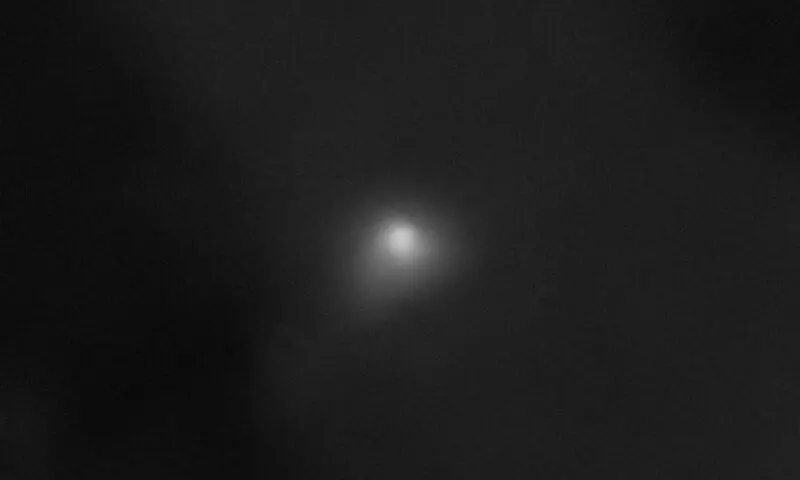
WASHINGTON: Nasa is set to release new images of an interstellar object called 3I/ATLAS that astronomers have determined is a comet probably even older than our solar system.
The object was first spotted in July by an Asteroid Terrestrial-impact Last Alert System, or ATLAS, telescope located in Rio Hurtado, Chile, and has been tracked by astronomers since then. Its unusual trajectory indicated that it was passing through our solar system from parts unknown.
Nasa said 3I/ATLAS poses no threat to Earth and will get no closer than about 275 million kilometres to our planet. 3I/ATLAS flew within 30m km of Mars last month.
Nasa officials intend to discuss 3I/ATLAS at a briefing in Greenbelt, Maryland, to release the new imagery from telescopes and spacecraft.
Astronomers have intensively studied 3I/ATLAS since it was first detected.
“This is a comet that formed in another solar system, most likely more than eight billion years ago - which means it is older than our solar system, and the oldest thing we’ve ever seen close up,” University of Oxford astrophysicist Chris Lintott said.
Our solar system formed roughly 4.5 billion years ago.
3I/ATLAS is only the third interstellar object ever observed by astronomers travelling through the solar system. The others were objects called 1I/’Oumuamua, detected in 2017, and 2I/Borisov, discovered in 2019.
“So far, it seems to be made of the same sort of stuff we see for comets in our solar system - plenty of carbon dioxide and some water, carbon monoxide and other such molecules. We’ve also seen cyanide - normal for a comet - and lots of nickel, which is a bit surprising but not too unprecedented. We saw similar things in a previous interstellar comet, 2I/Borisov, and in some solar system comets,” Lintott said.
3I/ATLAS is now on its way out of the solar system, according to University of Hawaii astronomer Larry Denneau, co-principal investigator for ATLAS. Its closest approach to the sun came last month, and its closest approach to the Earth will come in about a month.
Published in Dawn, November 20th, 2025